Africa
Will Obaseki Leave Edo State In A Better Shape?, by Isaac Asabor

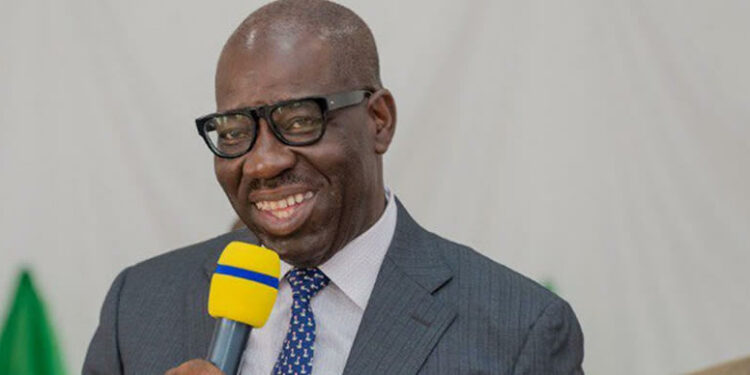
As Governor Godwin Obaseki prepares to leave office on November 14, 2024, Edo State residents, political analysts, and stakeholders are reflecting on his administration’s impact. While Obaseki’s tenure has been marked by efforts toward economic reform and infrastructural projects, opinions remain split on whether the state is genuinely better off after his leadership.
Against the foregoing backdrop, it is expedient to opine that this article examines the successes and shortcomings of Obaseki’s administration, weighing its achievements against the challenges it encountered. Therefore, it will not be out of place to look at areas of significant progress, ongoing concerns, and the legacy that Obaseki leaves behind for Edo’s future.
Governor Obaseki’s background as an investment banker and economist shaped his approach to governance. Early in his tenure, he championed economic policies aimed at creating job opportunities and improving the business environment. One of his flagship initiatives was the “Edo State Skills Development Agency” (EDOJOBS), which sought to equip young people with skills and connect them with employment opportunities. EDOJOBS reportedly trained thousands of youths, helping reduce unemployment in the state.
In addition, Obaseki launched the “Industrial Park Project” in Benin City, designed to attract investments and boost local manufacturing. While this ambitious project held promise, it faced delays and funding issues that hindered its impact on the state’s economy. Critics argue that though the governor had a clear vision for economic transformation, some of the initiatives have yet to fully materialize, making it difficult to assess their long-term value.
Education became one of Obaseki’s core priorities through the “Edo Basic Education Sector Transformation (EdoBEST)” program, a flagship reform initiative aimed at revamping the quality of education. Under EdoBEST, the state witnessed improvements in infrastructure, teacher training, and classroom technology, especially in primary and secondary schools. Leveraging technology, the program provided digital teaching aids and tablets to help teachers deliver lessons effectively, raising hopes for a generation of well-prepared students.
The results of EdoBEST are visible in improved student performance in the state. Parents and educators have praised the program for giving students in Edo State access to better educational resources. However, critics argue that rural areas were not equally impacted, as schools in remote regions received fewer resources, which left some children behind. Nevertheless, EdoBEST is viewed as a hallmark achievement of Obaseki’s tenure and sets a strong foundation for the incoming administration to build upon.
Infrastructure development was another major pillar of Obaseki’s governance. His administration invested heavily in road construction, bridges, and drainage systems, especially in the state capital, Benin City. The “Benin Stormwater Project”, initially designed to tackle perennial flooding, stands as a significant, albeit controversial, infrastructure project. Although there were delays and cost overruns, the project has improved the situation in some flood-prone areas.
Governor Obaseki’s urban renewal efforts also extended to restoring cultural and historical sites in Benin City. However, while infrastructure investments were commendable, they were often criticized for their uneven distribution across the state. Areas outside Benin City, such as Esanland and Edo North, sometimes felt neglected, with citizens in those regions arguing that they saw little benefit from the infrastructure projects.
In health, Obaseki launched the “Edo Health Improvement Programme (Edo-HIP)”, an initiative aimed at providing universal healthcare coverage for residents through the Edo State Health Insurance Scheme. With a focus on upgrading healthcare facilities, the scheme aimed to reduce the financial burden of medical services on low-income families and make healthcare more accessible.
While Edo-HIP was well-received by health professionals and the public, it faced challenges in terms of implementation and funding. Some healthcare facilities reportedly struggled with resource constraints, leading to limited access for patients. Furthermore, critics point out that healthcare funding remains below the recommended levels, raising concerns about the sustainability of the improvements initiated under Edo-HIP.
The rise in crime rates in parts of Edo State posed a significant challenge for the Obaseki administration. His government’s response included efforts to strengthen local security forces and increase police presence in hotspots. Through the “Operation Wabaizigan Initiative”, Obaseki worked to address crime and improve collaboration between local law enforcement and community vigilantes.
Despite these efforts, insecurity remains a concern, with kidnappings and armed robbery incidents reported in rural areas and major highways. Some citizens feel that security has not improved substantially and argue that Obaseki’s administration could have done more to tackle the root causes of crime. As a result, security remains one of the most debated aspects of Obaseki’s tenure, with some seeing it as an area where expectations were not fully met.
Obaseki’s tenure was also marked by political controversies. From his defection from the All Progressives Congress (APC) to the People’s Democratic Party (PDP) to disagreements with political allies and rivals, his administration faced considerable political friction. Obaseki’s move to the PDP in 2020, after falling out with former APC godfather Adams Oshiomhole, stirred the political landscape and created divisions among Edo’s political elite.
Public perception of Obaseki has also been mixed. While some view him as a visionary leader who attempted to shift Edo’s developmental trajectory, others argue that his political entanglements distracted from governance. This perception is further complicated by Obaseki’s conflicts with lawmakers and other politicians, which often resulted in legislative delays and stalled projects.
As Governor Obaseki prepares to exit office, the question remains: Has he truly left Edo State better than he found it? His tenure undeniably saw significant strides in education, economic reform, and infrastructure. Programs like EdoBEST and EDOJOBS have laid a foundation for future growth, while urban renewal efforts have modernized parts of Benin City and its surroundings.
Yet challenges persist. The success of economic reforms, healthcare improvements, and infrastructure projects largely depends on their continuity and the incoming administration’s commitment to building on Obaseki’s policies. If these programs are sustained and expanded, Obaseki’s legacy may well be one of progress and lasting reform.
For Edo State, the next steps are crucial. With a new administration set to take the reins, citizens hope that the positive changes made under Obaseki will be preserved, and the gaps left behind addressed. Ultimately, whether Obaseki leaves Edo better off is a question that history will answer over time, as the effectiveness of his reforms will be measured by the state’s future trajectory.
In fact, Obaseki’s time in office has been a mixed bag of achievements and unfulfilled promises. While his economic and educational reforms have been transformative, questions remain about their reach and sustainability. His administration’s focus on infrastructure has made strides, but critics argue that these efforts were limited to specific areas, leaving others feeling marginalized.
As Edo State looks to the future, it will be up to the next governor to continue the momentum and address the lingering challenges in healthcare, security, and equitable development. Only then will it be clear whether Obaseki has truly left Edo State in a better condition than he found it. For now, his legacy is a work in progress, and the judgment of history awaits.