Politics
With Obi And Kwankwaso, Nigeria Will Be OK -By Isaac Asabor
With Obi and Kwankwaso pulling in the same direction, whether through a wider NDC coalition, Nigeria may finally discover that governance does not have to feel like punishment. Not paradise. Not utopia. Just a nation that is finally, genuinely, OK.

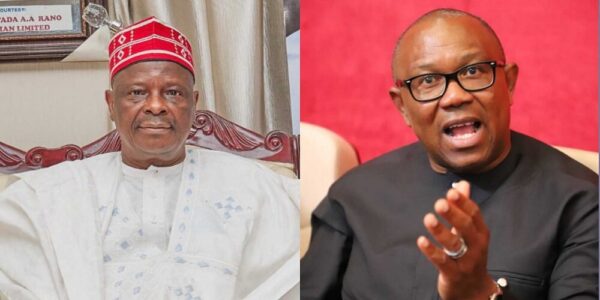
There is an old, almost mystical observation in Nigerian politics: whenever Peter Obi walks into a political space, the lifeless suddenly begin to breathe. Parties once dismissed as irrelevant rediscover purpose. Structures presumed buried begin to move again. Obi is not merely a politician; he has become a political stimulant, a transfusion of hope into the exhausted bloodstream of Nigeria’s democracy.
History has already shown Nigerians three distinct resurrections powered by him. First came the forensic mantra of “Go and verify,” a phrase that forced political conversations away from empty rhetoric and into the realm of facts, figures, and accountability. Then came the explosive rise of the “Obidient Movement,” a youth-driven political rebellion that transformed the Labour Party (LP) from a forgotten platform into a national force. And now, with the 2027 political horizon gradually emerging, Obi appears to be preparing yet another ideological rebirth through a simple but psychologically potent mantra dubbed “OK.”
But this new political equation is no longer about Obi alone. The “OK” movement is rapidly taking shape as a coalition of political survival, national reconciliation, and strategic realignment. Increasingly, the conversation is no longer just about Peter Obi. It is about Peter Obi and Rabiu Musa Kwankwaso. It is about the fusion of two powerful political energies that, separately, shook Nigeria’s establishment, but together could fundamentally redraw the nation’s political architecture.
Indeed, recent political alliance of both Obi and Kwankwaso toward the African Democratic Congress (ADC), and later toward National Democratic Coalition (NDC)-ahead of 2027, have altered the national conversation. What once sounded like speculative political gossip is now beginning to look like strategic inevitability. To understand why this matters, one must revisit the political miracles Obi has already performed.
In 2019, Peter Obi emerged as the Vice-Presidential candidate to Atiku Abubakar under the Peoples Democratic Party (PDP). At the time, the PDP was a wounded political giant struggling to regain public trust after sixteen years of poor governance. Obi entered the campaign not with noise, thuggery, or propaganda, but with data. His now-famous phrase, “Go and verify,” became a disruptive political doctrine. For the first time in a long while, Nigerians were debating debt profiles, GDP ratios, inflation, and fiscal discipline during campaigns.
The PDP did not ultimately win the election, but Obi injected intellectual seriousness into a party many had already mentally buried. For months, the PDP appeared politically alive again because Obi gave it oxygen.
After the internal betrayals and dysfunction within the PDP, Obi moved to the Labour Party (LP), then a marginal political structure with no governors, no serious national spread, and almost no electoral relevance. Political analysts mocked the move as career suicide. But what followed became one of the most extraordinary political awakenings in modern Nigerian history.
Through the “Obidient Movement,” Obi transformed the Labour Party into a national phenomenon. Young Nigerians, professionals, students, traders, and first-time voters rallied around a campaign that looked less like traditional politics and more like a social revolution. Obi did not merely join the Labour Party; he became the Labour Party. He animated the lifeless once again.
Now, another transition appears underway as the Labour Party is fractured by internal crises. The PDP remains trapped in endless identity battles. The APC, despite controlling federal power, increasingly appears exhausted under the weight of economic hardship, insecurity, and public frustration. Nigeria’s political environment is once again searching for a fresh center of gravity. This is where the reported convergence of Obi and Kwankwaso around the ADC becomes politically explosive.
The NDC, though historically a minor platform, suddenly finds itself at the center of coalition discussions because both Obi and Kwankwaso understand a brutal political reality: no single movement can defeat the entrenched structures of the APC without a broader alliance. Obi commands emotional loyalty, urban youth energy, and credibility among the educated class. Kwankwaso commands one of the strongest grassroots political machines in northern Nigeria through the Kwankwasiyya movement. Separately, they are influential. Together, they become formidable.
Nigeria has seen this kind of coalition politics before. Historically, broad-based alliances emerge whenever national frustration reaches boiling point. The Obi-Kwankwaso (OK) convergence represents not just another electoral arrangement, but potentially the beginning of a national realignment built around competence, inclusion, and political survival.
The brilliance of the “OK” philosophy lies precisely in this fusion. “OK” is not a slogan of perfection. It is a slogan of restoration. It suggests that governance can become functional again. It suggests that institutions can work again. It suggests that Nigeria can return to basic competence after years of drift.
But Obi’s greatest challenge has always been structure. His movement is emotionally powerful but politically elastic. Many “Obidients” reject old-style political bargaining and grassroots transactional politics. That idealism is admirable, but elections in Nigeria are still won through physical structures, polling agents, local mobilizers, and rural networks.
This is where Kwankwaso becomes indispensable. Kwankwaso is not merely a politician; he is an institution. The Kwankwasiyya movement remains one of the most organized grassroots political structures in northern Nigeria. Unlike many northern politicians whose influence exists mainly in elite circles, Kwankwaso commands organic loyalty among ordinary people across multiple northern states. His political network understands the difficult village-by-village mechanics of Nigerian elections.
An Obi-Kwankwaso alliance under the NDC-style coalition, therefore becomes more than symbolic. It becomes strategic.
First, it addresses Nigeria’s deepening national trust deficit. An alliance involving a Christian from the South-East and a Muslim from the North-West immediately disrupts the dangerous narrative of ethnic exclusion and regional domination. It sends a message that national unity is still politically possible.
Second, it merges two complementary political energies. Obi brings fiscal discipline, accountability, technocratic thinking, and urban appeal. Kwankwaso brings grassroots organization, northern legitimacy, and operational political experience. Together, they create a balance Nigeria rarely sees.
Third, it offers the possibility of economic disruption in the positive sense. Obi’s obsession with production over consumption aligns naturally with Kwankwaso’s infrastructure and educational legacy in Kano. Their combined approach could shift Nigeria away from the politics of sharing national wealth toward the politics of creating national wealth.
The NDC itself would experience the same resurrection effect that previously transformed the PDP and Labour Party under Obi’s presence. A party once considered peripheral would instantly become nationally relevant. And if that NDC platform eventually evolves into a broader platform involving disenchanted politicians, technocrats, youth groups, civil society actors, and regional blocs.
Nigeria could witness the birth of the first truly competitive opposition force since 2015. Naturally, critics will attack the idea. They will call it opportunism. They will argue that Obi’s reformist image cannot coexist with Kwankwaso’s traditional political machinery. They will insist that both men possess egos too large for coexistence. Old disagreements, old interviews, and old suspicions will be resurrected endlessly.
But the real question Nigerians must ask is simple: what is the alternative? More inflation? More unemployment? More currency collapse? More insecurity? More hopelessness? More recycling of exhausted political dynasties?
Nigeria’s tragedy is no longer merely corruption. It is exhaustion. Citizens are tired. Young people are fleeing. Businesses are collapsing. The naira continues to struggle. Public confidence in governance is evaporating.
In moments like this, political coalitions stop being luxuries; they become necessities. This is why the Obi-Kwankwaso convergence matters beyond personalities. It represents the possibility that Nigeria’s fragmented opposition may finally understand the arithmetic of power: unity is no longer optional.
Peter Obi has repeatedly shown that he can awaken political movements. Rabiu Kwankwaso has repeatedly shown that he can sustain grassroots structures. The NDC may simply become the next political vehicle for that combined energy. And if a broader NDC-style coalition eventually emerges around them, 2027 could become less about party labels and more about national rescue.
The beauty of “OK” lies in its modesty. It does not promise heaven. It does not promise miracles overnight. It simply promises functionality, competence, accountability, and inclusion.
And perhaps that is exactly where Nigeria is now: at the point where citizens are no longer asking for perfection. They are simply asking for a country that works.
With Obi and Kwankwaso pulling in the same direction, whether through a wider NDC coalition, Nigeria may finally discover that governance does not have to feel like punishment. Not paradise. Not utopia. Just a nation that is finally, genuinely, OK.