
Africa
Would El-Rufai Be Making Noise If Tinubu Had Offered Him An Appointment? -By Isaac Asabor
If El-Rufai had been appointed a minister today, chances are that he would be defending this same administration he now speaks against. He would be seen singing “On your mandate we shall stand” to the admiration of Mr. President at every given political gathering. That alone discredits his current criticisms as nothing more than noise born of exclusion.

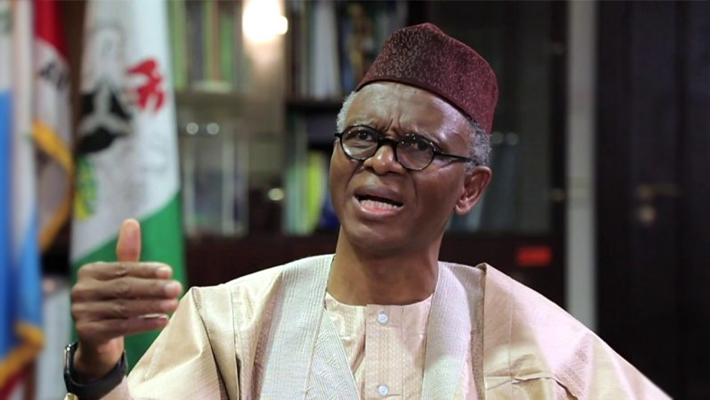
In the run-up to the 2023 general elections, former Kaduna State governor Nasir El-Rufai stood as one of President Bola Ahmed Tinubu’s most vocal supporters. He went to great lengths to defend the controversial Muslim-Muslim ticket, often confronting dissenters within and outside the northern establishment. He was a power broker, a strategist, and one of the engines that helped push Tinubu into Aso Rock. Yet, barely two years into Tinubu’s presidency, El-Rufai has seemingly turned into a restless critic, uttering veiled warnings, expressing disillusionment, and spitting fire against a government he once fought tooth and nail to enthrone.
It is no coincidence that this turncoat behavior began after he was dropped from the ministerial list, following what sources described as unresolved issues during security screening. Had he been given a plum appointment, say, Minister of Power or Chief of Staff, would we be hearing his voice today? The honest answer is capital NO. El-Rufai would likely have melted into the power circle of Abuja, singing the praises of Tinubu’s policies while issuing memos and statements justifying every unpopular decision.
But let us not make this about El-Rufai alone. He is not the exception, he is the poster child of a rotten political culture that pervades Nigeria.
In Nigeria, political loyalty is too often transactional. Most politicians are silent and supportive as long as they are within the corridors of power. The moment they are left in the cold, they suddenly “discover” the failings of the government and begin to masquerade as critics and patriots. Therefore, El-Rufai’s current disposition is not borne out of patriotism or concern for Nigeria’s masses, it is borne out of exclusion and frustration.
When his name was floated among potential ministerial nominees, his loyalists were already strategizing about the reforms he would bring to the power sector. But once his nomination was stalled and ultimately dropped, the tune changed. Suddenly, the government became slow, underperforming, and directionless. This contradiction reveals a much deeper rot in Nigerian politics, a system where public office is seen as a reward, not a responsibility.
In fact, what El-Rufai represents is a national pattern. Across the country, politicians only remember the masses and begin to speak the language of patriotism when they are no longer “carried along.” Their love for Nigeria is conditional, it lasts only as long as they are offered juicy appointments, contracts, or influence.
This behavior is replicated at state levels, within parties, and even at the local government tier. Party loyalty is now synonymous with “appointments or nothing.” Once denied, even former political apostles become critics overnight. This is not politics, it is opportunism masquerading as principle.
Given the unprogressive implication of this trend of politicking, it is germane to ask, “How can Nigerians demand genuine patriotism?” To aptly answer the foregoing question, it would not be out of place to opine that Nigerians must take a more active role in scrutinizing the motivations behind every political critique or public statement made by former office holders or political actors. Every time a political figure suddenly becomes a vocal critic after being denied a position, the people must ask: “Where were you when the ship was sinking and you were in the captain’s cabin?”
A culture of critical thinking and issue-based evaluation must replace blind loyalty. Civic groups, youth organizations, and electoral watchdogs must demand accountability beyond appointment cycles. A politician’s legacy should be measured not by how much he talks when out of office, but by how he led when he held power.
So, to institutionalize true patriotism and discourage opportunistic political behavior, Nigeria must introduce legal, structural, and civic reforms that make political office about service, not settlement.
There must be a leadership patriotism charter enshrined in law or enforced through INEC. All aspirants, elective or appointed, should sign a legally binding document committing to upholding national interest above personal or party loyalty. Failure to do so could trigger sanctions, including ineligibility for future positions.
Politicians who switch parties excessively or without ideological justification should face restrictions. Laws must discourage political prostitution by enforcing waiting periods or electoral penalties on habitual defectors. This will foster ideological consistency and discourage appointment-seeking cross-carpeting.
Appointments should be based on prior public contributions, not campaign loyalty. Those who served with visible impact should be prioritized. A minimum record of community service or non-partisan national contribution should be introduced as a precondition for political appointment.
The processes of nominating ministers and public officers should be opened to greater public scrutiny. Civil society should be allowed to question, challenge, or endorse nominations. This will make it more difficult for political job-seekers to game the system.
The media has a decisive role to play in shaping public perception and calling out hypocrisy. Unfortunately, a large portion of Nigerian media has become compromised, either financially captured or politically aligned. That must change.
Again, rather than rushing to publish every anti-government soundbite, media houses should fact-check politicians’ track records against their present claims. When a former governor criticizes insecurity today, reporters must contrast that with how he handled insecurity during his time in office.
A powerful tool the media can develop is a “Consistency Scorecard” for Nigerian politicians. This can be updated annually, showing their stance on major national issues, when in power and when out. It would reveal who is truly principled and who is just bitter.
Also, collaborations with civic tech organizations can help build digital archives of politicians’ speeches, actions, party affiliations, and appointments. With this resource, political opportunism can be tracked in real time and exposed immediately to the public.
In a similar vein, media platforms must resist the temptation to glorify every former insider now shouting from the rooftops. They should instead ask hard questions: “Why now? Why not when you were in power?” In fact, editorial independence must return to the core of journalism if democracy is to thrive.
On a final thought, let it be known that patriotism is not a bargaining chip. There is no honor in speaking truth to power only when you are no longer benefitting from it. True leadership demands that your voice remain consistent, whether you are seated at the table or watching from the window.
What El-Rufai and others like him are doing is not patriotism; it is political lamentation dressed in the robes of national concern. And until Nigerians start recognizing the difference between genuine critics and bitter power losers, this charade will continue.
The country is already bleeding from bad governance and economic hardship. It does not need politicians who only rediscover their “love” for the country after they have been denied a seat at the table.
If El-Rufai had been appointed a minister today, chances are that he would be defending this same administration he now speaks against. He would be seen singing “On your mandate we shall stand” to the admiration of Mr. President at every given political gathering. That alone discredits his current criticisms as nothing more than noise born of exclusion.
Without a doubt, Nigeria needs statesmen, not power-hungry actors. We need voices that speak truth at all times, not just when the doors to Aso Rock are shut. Until this becomes the standard, patriotism in Nigeria will remain a tool of convenience, not conviction.




















You must be logged in to post a comment Login