Connect with us

Africa

2026 Tax Reforms: Relief for the Poor or a Squeeze on Nigeria’s Middle Class? -By Abdulhamid Rabiu

Nigerians are repeatedly asked to pay more, yet roads are unsafe, public hospitals are overstretched, schools shut down over strikes, and insecurity remains widespread. When taxes do not translate into visible services, citizens see taxation not as a civic duty, but as an unfair demand.

Published

on

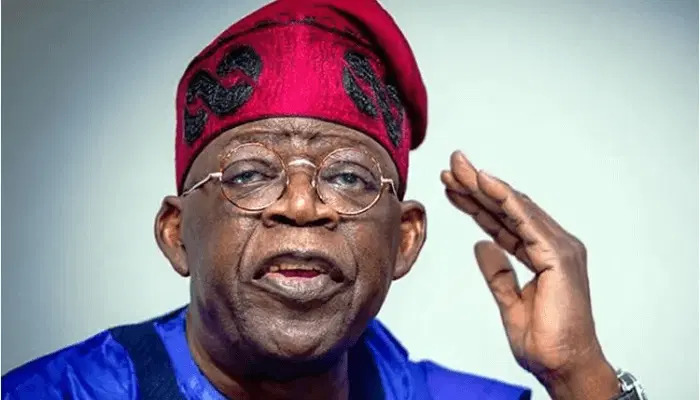
Tinubu

2026, Nigeria’s tax reforms will move from policy promises to lived reality. The Federal Government says the changes are designed to protect low-income earners, widen the tax base, and boost non-oil revenue. Yet for millions of Nigerians already struggling to stay afloat, the real question is simple: who truly pays the price?

At a time of rising inflation, weak purchasing power, and post-subsidy economic shocks, tax policy is no longer an abstract economic tool. It is now deeply personal.

The Case for Reform

Government officials argue that Nigeria’s tax-to-GDP ratio remains among the lowest globally, making reforms unavoidable. The 2026 tax direction includes exemptions for minimum wage earners, adjustments to personal income tax, and tighter enforcement through digital systems.

On the surface, these measures appear fair. Protect the poorest, demand more accountability, and reduce dependence on oil revenue. But policy success is not measured by intention—it is judged by impact.

Advertisement

A Middle Class Under Pressure

Nigeria’s middle class has become the economy’s silent casualty. Civil servants, professionals, and small business owners now face rising transport costs, higher electricity tariffs, increasing rent, school fees, and healthcare expenses.

For this group, taxation is unavoidable. Their incomes are visible, salaries are taxed at source, and compliance is mandatory. While the wealthy often find legal loopholes and the informal sector remains largely untaxed, the middle class carries the burden.

The danger in the 2026 tax reforms is not what they remove for the poor, but what they quietly add for everyone else.

Tax Without Trust

Advertisement

Perhaps the greatest weakness of Nigeria’s tax system is not policy design but public trust.

Nigerians are repeatedly asked to pay more, yet roads are unsafe, public hospitals are overstretched, schools shut down over strikes, and insecurity remains widespread. When taxes do not translate into visible services, citizens see taxation not as a civic duty, but as an unfair demand.

A functional tax system depends on a social contract. In Nigeria, that contract feels broken.

Continue Reading
Advertisement
Click to comment

Leave a Reply

Your email address will not be published. Required fields are marked *

Trending Contents

Topical Issues

Nigeria flag Nigeria flag
Forgotten Dairies11 hours ago

A Day of Triumph and Tragedy: Major Events That Shaped July 6, 2026 -By Halimah Usman Muhammad

Internationally, thousands gathered in Tehran for the state funeral of Iran’s Supreme Leader, Ayatollah Ali Khamenei, while a Russian missile...

fulani-herdsmen1 fulani-herdsmen1
Opinion11 hours ago

Brucellosis: The Hidden Plague Lurking in Our Livestock and Dinner Tables and Silent Zoonotic Threat Bridging Animal and Human Health -By Dr. Umoru Moris, DVM

Brucellosis has persisted for decades despite advances in veterinary medicine and food safety. In many parts of the world, it...

Congo Ebola Photo Essay Congo Ebola Photo Essay
Global Issues13 hours ago

Russia’s Rospotrebnadzor to help DRC, Uganda contain Ebola outbreak—MFA -By Kestér Kenn Klomegâh

The virus was first discovered in 1976, with outbreaks reported in Sudan, Gabon, the Republic of the Congo, Angola and...

Leonard Karshima Shilgba Leonard Karshima Shilgba
Forgotten Dairies13 hours ago

THE BENUE PARADOX: The Continuity of Politics or the Politics of Continuous Development – Lessons from the Akume–Suswam, Akume–Ortom and Akume–Alia Political Trajectories -By Prof. Leonard Karshima Shilgba

The public appeal by Vice President Kashim Shettima was equally significant. Addressing both leaders, he urged them to "mend fences...

FRSC FRSC
Forgotten Dairies13 hours ago

Need for Urgent Action Against the Alarming Rate of Road Traffic Crashes in Nigeria -By Tochukwu Jimo Obi

To strengthen road safety enforcement, the Federal Road Safety Corps should be granted greater statutory powers to deal decisively with...

ISHIE-JOHNSON EMMANUEL ESQ ISHIE-JOHNSON EMMANUEL ESQ
National Issues16 hours ago

Constitutionalising State Police in Nigeria: Distinguishing Real Challenges from Imagined Fears and Designing a Framework for Multi-Level Policing -By Dr. Ishie-Johnson Emmanuel

The Amotekun episode is Nigeria’s closest experiment with State Police. It revealed both the urgency for decentralization and the dangers...

Newspaper stand - journalism Newspaper stand - journalism
National Issues19 hours ago

The Battle Against Fake News: Can Traditional Media Still Be Trusted? -By Hajja kaka Faradin

Traditional media remains a cornerstone of democratic society, but its credibility depends on maintaining public trust. In an era dominated...

nigeria-bandits-lead-illustration-new nigeria-bandits-lead-illustration-new
Forgotten Dairies1 day ago

When the Classroom Becomes a Battlefield: The Tragedy of Borno’s Abducted NECO Candidates -By Muhammad Alhaji Konto

No child should have to choose between education and survival. Every examination hall should inspire confidence, not fear. Until Nigerian...

Kidnapping in Nigeria Kidnapping in Nigeria
Forgotten Dairies1 day ago

‌The Rising Threat Of Kidnapping In Nigeria -By Nzemeka Mercy. C

Several factors contribute to the persistence of kidnapping in Nigeria‌. Pover‌ty,​ unemployment, weak law enforcement​, corruption, and‌ inadequ​ate security infrastructur​e...

Leo Igwe Leo Igwe
Forgotten Dairies1 day ago

Revenge Attacks and Witch Hunts in Ebonyi State -By Leo Igwe

The Advocacy for Alleged Witches calls for the arrest and prosecution of those who perpetrated these savage attacks. AfAW urges...