
Africa
2026, Wike and the Politics of Premonition -By Oluwafemi Popoola
What intrigues me, therefore, is not whether Wike will defect or stay, fight or negotiate. Those are surface dramas. The deeper question is how the system responds to him. Will the ruling party absorb his contradictions and normalize his disruptions? Or will it eventually recoil from the chaos he carries with him?


Nigeria does not enter a new year quietly. It never has. It usually comes with a policy shock, a political tremor, or a decision taken when the nation is half-asleep. January is strategic. It is when policies that would be too controversial in October are quietly dropped. It is when political signals are sent without official announcements. It is when power counts who is still loyal and who is already shopping for a new platform. It is when governments test the waters, when power clears its throat and reminds citizens who truly controls the microphone. That is why every new year feels suspicious. We have learnt, the hard way, that silence at the turn of the calendar is often deceptive. If it is quiet, it is only because something is loading.
Election-bound years are even worse. They turn the new year into a rehearsal stage. Old party logos are folded carefully and kept in drawers, just in case. Nigeria entering an election year is like a family gathering where everyone is smiling but no one trusts the cutlery.
As 2026 opens its eyes, I feel the familiar tightening in the chest that comes whenever this country begins to tilt toward an election year. The air has thickened. Conversations have begun to grow louder, alliances are becoming fluid, and old convictions have suddenly discovered new homes. We have been here before, many times. Each approach feels different, as though the road has shifted slightly while we were not looking.
Our politics is too murky to feel less a straight line than a circle that keeps reinventing itself. Men and movements rise on the promise of rescue, only to later become part of the very storm they swore to calm.
That is why 2026 matters. It is not just a prelude to 2027, it is the year when intentions harden into strategies and loyalties are tested under pressure. This is the year when ambition stops whispering and begins to speak in public.
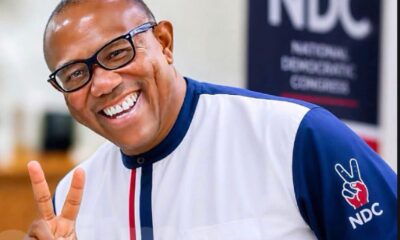
The defection of Peter Obi from the Labour Party to the African Democratic Congress feels, to me, like one of those moments history will later revisit with the benefit of hindsight. Our politics has always treated political parties as vehicles. From the days when politicians crossed carpets in the First Republic, to the era of AD, APP, PDP, ACN and their many reincarnations, ideology has often bowed to survival.
Obi’s movement is therefore not shocking. It is symbolic. It reminds us that even movements built on moral fervour eventually collide with the hard mathematics of power.
When Peter Obi spoke about rescuing Nigeria in Enugu, I heard echoes of past seasons. I remembered June 12 and the language of stolen mandates. I remembered 2015 and the rhetoric of change that felt almost religious in its intensity. I remembered how hope can gather crowds and how crowds can dissolve when power proves stubborn. Obi’s entry into the ADC is less about a party logo and more about a question Nigeria keeps asking itself: can moral clarity survive the compromises required to win power?
What fascinates me is not just Obi, but the reaction around him. ADC membership has swollen afterwards. Obi’s defection has begun to boost the party’s political strength in the South, with no fewer than eight federal lawmakers reportedly set to officially join the ADC, barring any last-minute change of plans. This suggests a quiet calculation underway. Nigerian politicians are excellent weather readers. They know when to carry umbrellas and when to pack sunglasses. Whether these defections mature or melt away, it signals that the opposition space is restless. The ruling APC has been unsettled.
However, this ADC must not die. Opposition is the lifeblood of democracy; without it, dictatorship fills the vacuum. Nigeria does not need dictators, disguised or otherwise. Today, the warning lights are flashing as the country drifts toward a one-party order. This is a familiar road. Obasanjo once attempted it after the return to civil rule. What is most troubling is the reversal of roles. Those who once stood firmly against such political dominance are now its most enthusiastic enablers, advancing it quietly and strategically.
Even here, history offers caution. The same Nigeria that applauded grand alliances in the past has also watched them fracture spectacularly. The AD–APP experiment, the internal wars of the PDP, the post-victory tensions within the APC, our coalitions are often marriages of convenience. As 2026 unfolds, the question will not be who gathers the biggest tent, but who can keep it from tearing under the weight of ambition.
Rivers Runs Red Before Elections
If Obi represents the moral argument, Rivers State represents raw power, stripped of sentiment. Rivers politics has never been for the faint-hearted. It is a theatre where loyalty is tested publicly and betrayal is punished theatrically. Watching the renewed tension between Nyesom Wike and Siminalayi Fubara feels like watching a familiar play with slightly altered costumes.
I have learned, especially in Rivers State, that truces are often only commas in a long sentence of conflict. They pause the noise but they do not end the argument. Wike understands this grammar of power better than most. His story is compelling. It is not merely because of his audacity but because it mirrors the strange paradox of Nigerian politics itself.
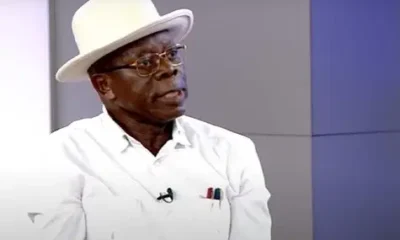
Here is a man officially planted in one political party, yet exercising influence in another. A man applauded by those he disrupts, feared by those who publicly dismiss him. He speaks with the bluntness of someone who believes politics is a battlefield, less about process, more about territory. His words are theatrical but beneath the drama lies something colder and more calculated: an instinctive understanding of leverage.
Wike has mastered the art of being unavoidable. In a system that thrives on selective attention, he forces attention. He understands that in Nigeria, relevance is not always earned by obedience but by disruption. He talks like a man convinced that power belongs not to the quiet or the patient, but to those who can make silence uncomfortable. Sadly, history has a way of humbling such confidence.
Nigeria has seen men like this before. We have witnessed power brokers who once looked untouchable, until they suddenly weren’t. During the last administration, Godwin Emefiele stood as one of the most powerful individuals in the country. He was widely perceived as the apple of the late former President Buhari’s eye, the darling of the inner circle. His naira redesign and cash confiscation policy unleashed untold hardship on millions of Nigerians. Markets froze. Families suffered. Voices protested. But power, at the time, was deaf. And there was nothing anyone could do about it.
Today, the emperor walks without his robes. The same man once surrounded by protocol is now dragged in and out of courtrooms. At a time there was image of him where DSS operatives and correctional officers were seen openly fighting over his custody, as though he were merchandise in a marketplace. It was a jarring image, one that brutally illustrates the transient nature of power and the cruelty of its reversals. Yesterday’s enforcer can become today’s exhibit.
In Ibadan, the name Lamidi Adedibu still echoes like a political myth. He held no official post, yet dictated outcomes. He bent parties and politicians to his will, powered purely by personality and proximity to power. But when his voice went silent, so did his empire. Influence untethered from institutions is noisy, not durable. It shakes the ground briefly, then leaves no footprint. Power, however, rarely learns this. This is the quiet warning power often ignores: the higher one climbs, the more visible one becomes. And visibility does not attract only applause, it attracts arrows.
What intrigues me, therefore, is not whether Wike will defect or stay, fight or negotiate. Those are surface dramas. The deeper question is how the system responds to him. Will the ruling party absorb his contradictions and normalize his disruptions? Or will it eventually recoil from the chaos he carries with him?
Will power in Nigeria continue to reward defiance, or will it finally discipline it?
These are not Rivers questions alone. They are Nigerian questions. They speak to our long struggle with strong personalities operating within weak institutions. They force us to ask whether our politics is built to outlive the men who dominate it or whether, once again, we are merely watching another powerful figure dance confidently on a stage that history has a habit of collapsing without warning. Beyond individuals, this year will test our collective memory.
As preparations for 2027 intensify, the language of resistance will grow sharper. Every camp will swear it stands for democracy. The challenge, as always, will be consistency.
I suspect this year will be noisy. Many masks will slip and intentions will harden. It is a year that will reveal whether our politics is capable of growth or condemned to repetition.
As the drumbeat changes, the dancers will adjust their steps. Some will stumble. Some will dominate the floor briefly. In the end, the music will stop, as it always does and we will take stock of who truly understood the rhythm.
Oluwafemi Popoola is a Nigerian journalist, media strategist, and columnist. He can be reached via bromeo2013@gmail.com














You must be logged in to post a comment Login