Breaking News
2027: Opposition’s 4-Year Presidency Plan Faces Trust, Legal Hurdles
The opposition’s 2027 plan for a common presidential candidate serving one four-year term has triggered debate over trust, constitutional rights and enforcement.

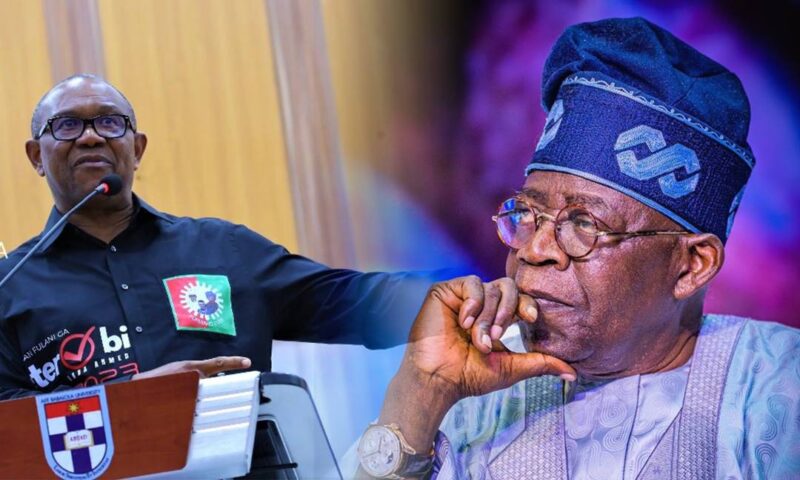
The opposition’s plan to unite behind a single presidential candidate for the 2027 election and restrict the eventual president to one four-year term has opened a fresh political firestorm, with lawyers, activists and political analysts questioning whether such a promise can survive the realities of power.
The proposal is designed to resolve competing presidential ambitions within the opposition, create a common front against the All Progressives Congress, APC, and present voters with what its proponents describe as a credible alternative to the ruling party.
But the plan has immediately raised questions about trust, legality and enforcement.
The central concern is straightforward: if an opposition candidate wins the presidency and is constitutionally entitled to seek a second term, what would stop the person from changing his or her mind after four years?
Nigeria’s political history provides little evidence of presidents voluntarily giving up the opportunity of a second term.
Since 1999, Olusegun Obasanjo and Muhammadu Buhari served two terms, while Umaru Musa Yar’Adua died in office before completing his first term. Goodluck Jonathan completed Yar’Adua’s tenure and later won the 2011 election, serving until 2015.
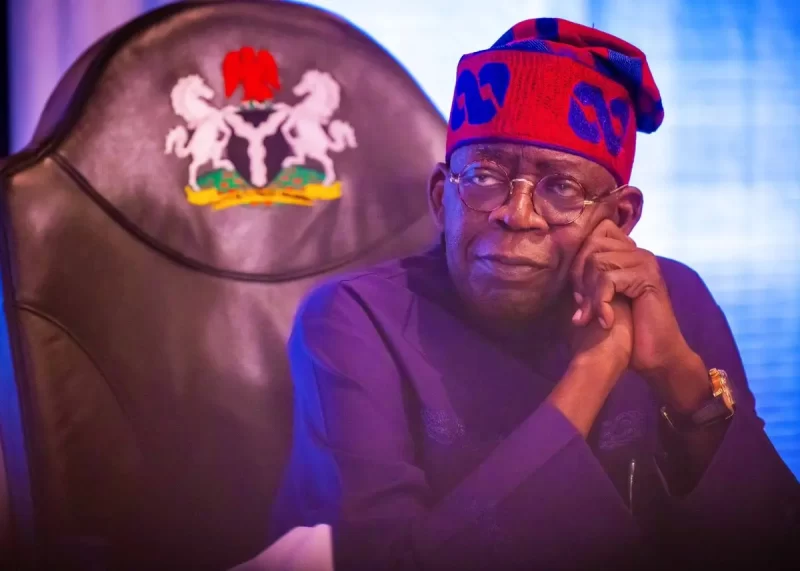
President Bola Tinubu, who won the 2023 election, is currently serving his first term and remains eligible to seek another four years.
G-100 Pushes Single-Term Agenda
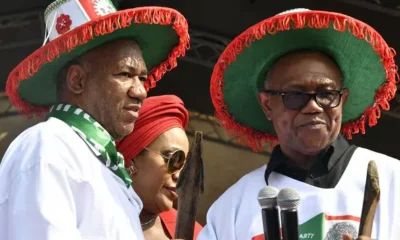
Opposition parties and political stakeholders gathered in Abuja under the G-100 platform for a summit aimed at developing greater cooperation ahead of the 2027 elections.
Among the proposals was a Government of National Competence based on a single four-year transition term.
Five working groups were proposed to develop a Single-Term Transition Charter and a roadmap for producing a common presidential candidate. The framework also includes a four-year National Reset Programme.
Proponents believe a single term could give a president the freedom to undertake difficult reforms without worrying about re-election.
The proposal’s critics, however, argue that it could amount to an unenforceable political pledge unless it is backed by constitutional changes and institutions capable of enforcing accountability.
‘Little or No Sense’
Akin Oshuntokun, former Special Adviser to former President Olusegun Obasanjo, said he doubted the proposal would significantly alter the political equation.
“I doubt if that suggestion will make any difference to the political arithmetic on ground. And frankly speaking, it makes little or no sense to me,” he said.
He questioned why a performing president should be expected to leave office after four years.
“If any candidate becomes president and he performs well in office, would it make sense for anyone to ask him to leave?” Oshuntokun asked.
He argued that the proposal could even suggest that the candidate would not be good enough to warrant a second term.
Chief Ademola Folarin, General Secretary of Afenifere, agreed that a politician could voluntarily choose to serve for only one term but warned that relying on such a promise would be politically naive.
“That’s possible, if a candidate chooses to serve only one term of four years. But it will be politically naive for anyone to bank on that,” Folarin said.
Constitution Stands in the Way
Dr Wumi Bewaji, former Minority Leader of the House of Representatives, said the opposition’s proposal faced a major constitutional hurdle.
“The Constitution, the highest law in the land, allows an individual to run two terms of four years apiece,” he said.
According to him, neither the Constitution nor the Electoral Act provides for the proposed four-year single-term presidency.
He also questioned the opposition’s ability to forge a consensus among the various political interests involved.
Bewaji argued that some of the political arrangements being discussed were coming too late in the electoral cycle and expressed doubts that the opposition could achieve the desired political realignment within the available timeframe.
‘A Mere Sign of Desperation’
Ayo Ologun of The Osun Masterminds described the proposal more bluntly as a strategy for accessing power.
“The plan for a single term of four years being proposed by the opposition party is a mere sign of desperation to get to power,” he said.
Ologun argued that the Constitution does not prevent a president from seeking a second term and warned that a future administration could simply invoke its constitutional rights after winning the election.
He urged opposition parties to focus instead on their vision, economic policies and plans for addressing Nigeria’s problems.
Legal Route Possible
Mr Moruff Balogun, former Vice Chairman of the Nigerian Bar Association, Ijebu-Ode Branch, said the idea was not impossible but could not be guaranteed through a political agreement alone.
“The truth is that, to determine the feasibility of this proposal, it should be examined from two perspectives: Is it feasible? Yes. But would its implementation be straightforward? I do not think so,” he said.
Balogun pointed to Section 9 of the 1999 Constitution, which provides a process for constitutional alteration.
He explained that if the opposition genuinely intended to create a single, non-renewable presidential term, it would have to pursue a constitutional amendment.
“If the Constitution, as the supreme law of the land, expressly provides for its supremacy, then a mere charter, agreement, political arrangement or proposal cannot override its provisions,” he said.
He added that a single-term system could encourage presidents to focus on reforms rather than re-election campaigns, but warned that it could also produce a leader less concerned about public accountability.
“The truth is that political leaders cannot simply be trusted to voluntarily commit themselves to a single four-year term,” Balogun said.
“But perhaps the objective should not be to trust them in the first place.”
According to him, Nigeria needs strong institutions capable of holding political leaders accountable regardless of whether they can seek re-election.
Nigerians Asked to Look Beyond Promise
Mr Niyi Rotimi of the Justice, Development and Peace Movement said the proposal should be judged against the existing constitutional framework.
He noted that a president elected for a first term is constitutionally entitled to seek a second term, raising the question of what happens if a candidate who initially agrees to serve once later changes his mind.
“If the Constitution permits a second term, such an agreement would be difficult to enforce unless the Constitution is first amended,” Rotimi said.
He also questioned how the opposition would settle competing claims over who should emerge as its presidential candidate.
Rotimi urged Nigerians to examine candidates’ records and policies instead of allowing the single-term pledge to dominate the political debate.
“Anyone advocating a single four-year presidency should therefore present a practical, measurable and implementable manifesto showing exactly what can be achieved within four years,” he said.
He further argued that the opposition’s alliance should be based on a credible programme for governing Nigeria rather than simply defeating the APC and President Bola Tinubu.
‘Promises Are Easy to Make’
Prof ’Gbade Ojo, a political scientist, said the proposal could appeal to voters seeking an alternative but stressed that the real challenge would be enforcing the pledge after power is secured.
“It may sound attractive politically, particularly at a time when Nigerians are looking for an alternative, but the critical question is whether such a promise can be trusted,” Ojo said.
He challenged the opposition to publish the agreement, have participating parties sign it and explain what legal or constitutional mechanism would make it binding.
Similarly, Dr Tola Winjobi of the Civil Society Coalition on Sustainable Development said trust would remain the biggest challenge.
“There may be good intentions behind it, but civil society cannot simply accept such a promise at face value,” he said.
He called for wider participation by civil society groups, labour, professional organisations, youth and women’s groups, traditional institutions, regional bodies and the media.
Rev David Ugolor of ANEEJ also warned Nigerians not to mistake a political pledge for an enforceable commitment.
“A one-term promise is politically attractive, but Nigerians should be careful not to confuse a political promise with a credible commitment,” he said.
He urged voters to ask opposition politicians what they intend to accomplish within four years, how much their programmes would cost and how they would measure their performance.
‘Cautiously Optimistic’
Yiaga Africa Executive Director Samson Itodo said the attempt to build a coalition deserved recognition but cautioned that Nigerians would remain sceptical if the single-term arrangement remained legally unenforceable.
“They deserve commendation for making an attempt to form a coalition or even build a consensus,” Itodo said.
He stressed the importance of inclusiveness and warned that Nigeria’s political realities must be taken into account.
Itodo also pointed to the history of political actors changing positions after securing power.
“We have seen how they shifted the goalpost, negotiated those stands because in this clime people love power so much that they don’t resign from office and they don’t concede power until it is forced out of their hands,” he said.
CISLAC Executive Director Auwal Rafsanjani described the proposal as legitimate but said its credibility would depend on how it was structured.
“Trust must be earned through conduct, not declarations,” Rafsanjani said.
He urged the opposition to produce a transparent political charter signed by the candidate and participating parties, with clear objectives and priorities for the proposed four-year administration.
The debate ultimately goes beyond whether a single-term presidency is politically attractive. It centres on whether Nigeria’s opposition parties can provide Nigerians with enough evidence, safeguards and institutional guarantees to make the proposed four-year commitment credible.
Africans Angle News