Africa
Africa Transcending into BRICS+ Orbit, by Professor Maurice Okoli & Professor Chinedu Ochinanwata

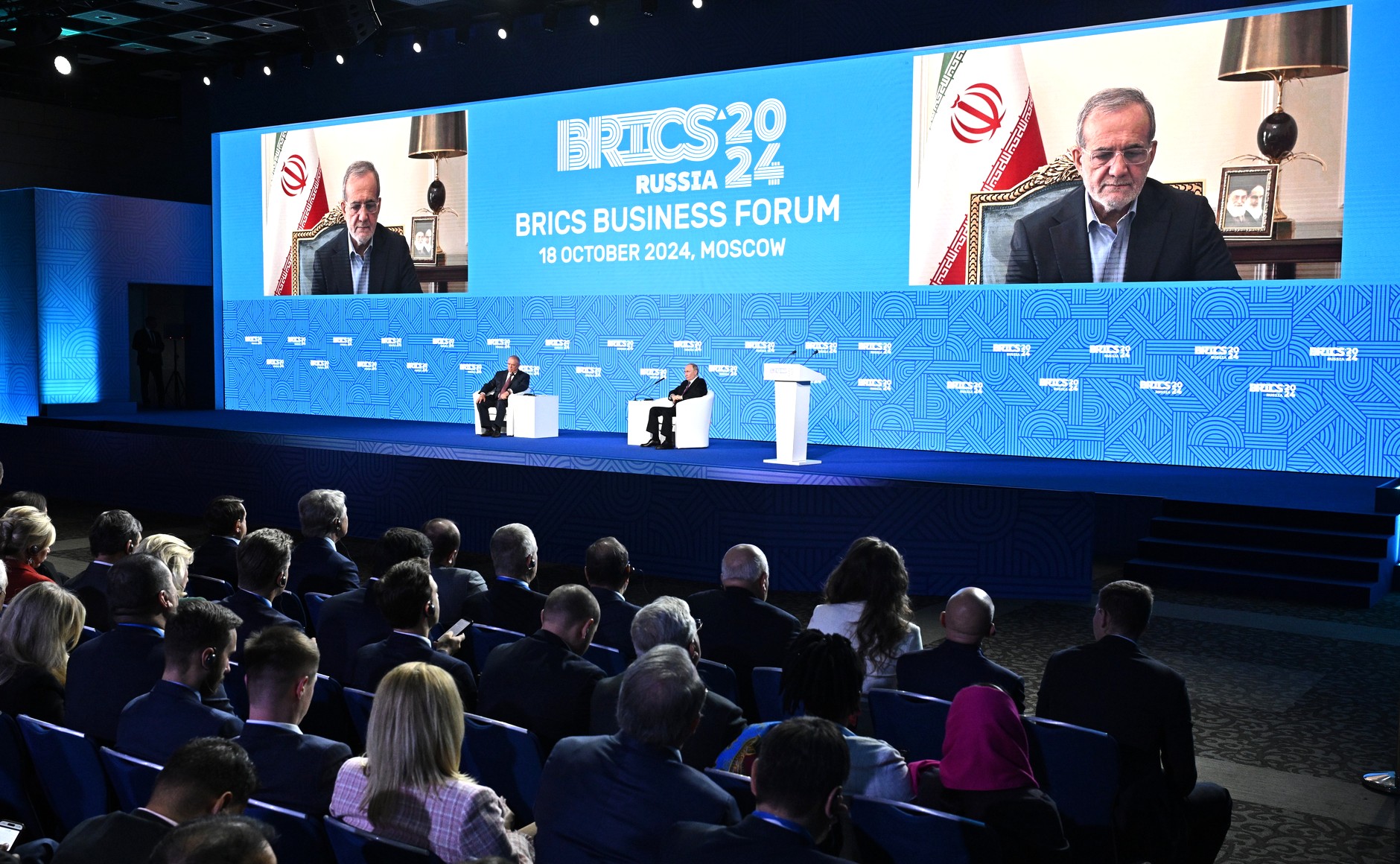
After the historic 16th BRICS summit held in October 2024, three African States Algeria, Nigeria and Uganda, among others in Europe (Belarus and Turkey), Asia and Latin America, recognizably became BRICS+ partner states. In total, thirteen countries received BRICS partner status, according to declaration reports by Russian Ministry of Foreign Affairs. This category of ‘partner states’ was primarily designated as part of the distinctive-focused leeway towards acquiring full membership status in determined future. The legitimate implications for being in this category are quite notable and provide colorful heterogeneity to the BRICS+ association. It also encompasses a growing influence, the bubbling upliftment of these countries on another level of global stage. And of course, these cannot be under-estimated in discussing BRICS+ especially in the era of shifting economic architecture and geopolitical situation. Together, the BRICS members encompass nearly a third of the world’s land surface and almost half of world population. Reminding that BRICS is an informal association of emerging economies, comprising Brazil, Russia, India, China, South Africa, with the latest addition Ethiopia, Egypt, Iran, Saudi Arabia and the United Arab Emirates. Argentina declined to join in the last moment.
Despite various criticisms raised against a number of countries that ascended into the category of ‘partner states’ for BRICS+, each has its own strategic dimension. In assessing particularly African countries – Algeria (North Africa), Nigeria (West Africa) and Uganda (East Africa) – BRICS+ now, has, in the first place, a wider geographical representation across Africa. It is important to reiterate here that Ethiopia, Egypt and South Africa are full-fledged BRICS members.
Ethiopia, by all standards, is a reputable country in East Africa. The continental organisation African Union (AU) is headquartered in its capital, Addis Ababa. Egypt, considered to be a regional power, also plays invaluable roles within the Arab world, specifically in North Africa and in the Middle-East region. Without much doubts, the new ‘partner states’ – Algeria, Nigeria and Uganda have indicated their collective commitment to the multifaceted ideals in the declaration adopted in Kazan, Tatarstan Republic.
BRICS’ numerical expansion and quality transformation in January 2024, and the creation of ‘partner states’ in October 2024, both under Russia’s BRICS+ chairmanship has undoutedly opened doors to new partnerships opportunities for Africa. The strongest question centered on how BRICS’ African partnering states, Algeria, Nigeria and Uganda can strategically position itself to benefit from the evolving dynamics within BRICS+ while, in this new geopolitical reality, simultaneously navigating for competing geopolitical interests in Africa. There are emerging challenges, but BRICS’s influence is growing provides an impetus for strengthen relations and work systemacally for economic growth especially in the processes of reshaping economic architecture in this fast-rising multipolar world.
Nigeria and Uganda, as potential partners in the BRICS, could engage in several collaborative initiatives to enhance their economic political and social developments, including trade and investment. For instance, Nigeria, with its natural resources and increasingly large market, and Uganda, with its agricultural potential, can collaborate to boost intra-BRICS trade and that of intra-Africa trade. In adition to this, exploring investment opportunities in sectors such as manufacturing, production innovation and technology have a clean basis to add value to the raw materials and transform them into exportable products.
Closing related to above, are pertinent questions of ensuring energy seurity and infrastructure (transport logistics). Nearly all African countries are griffing for support in technology transfer, fintech – these largely depend on sustainable energy supply. Consequently, joint initiatives could harness the capabilities of BRICS members, particularly China, India and Russia in these sectors. By leveraging their respective strengths and, with a focused approach, Nigeria and Uganda could address these shortfalls and deficits, and further down extend assistance across West Africa, and in East Africa. One key advantage, Uganda has Ethiopia and Egypt as BRICS members, ready-made basis for BRICS collaboration despite the differences and persistent conflicts in the region. The basic requirement here is to find common understanding and distinctive focused sectors for joint collaboration.
Comparatively, there are much proven evidences and features, including its size of economic power and wealth, leader in Africa as an energy power and an abundant supply of natural resources. This West African country runs the third position behind Egypt and South Africa, and that Nigeria is qualified for a full-fledged BRICS membership. Nigeria is often referred to as the Giant of Africa by its citizens due to its large population (estimated at 220m) with a large economy, and is considered to be an emerging market by the World Bank. It is, however, believed Nigeria’s foreign relations with the Western powers may be a major reason the country has not yet subscribed to BRICS membership. Despite this identified political complexity and authorities however maintain a concrete decision be made over the next two years, Nigeria’s expected role in BRICS+ could augment Africa’s capability to influence regional trade, economics and politics.
Reports monitored indicated that Nigeria runs a deliberative democratic system. As part of a new foreign policy push to have its voice heard in important global organisations, the Federal Executive Council, and even the National Assembly have to make deliberations and official majority decision towards joining the BRICS+ association. Meanwhile, Nigeria is currently in the well-meaning and clearly defined ‘partner states’ category which guarantees collaboration and partnership with BRICS+ members. In addition, it has the possibility of balancing its national interests with the collective goals of the BRICS.
South Africa which ascended BRICS more than a decade ago has noticeably benefited from its membership. Ethiopia, which was granted BRICS membership status in January 2024 along with Egypt, has significant working relations with China, Russia and India. Based on its strong partnership, China has financed the 20-story office complex, is one of the most prominent political buildings in Addis Ababa. It was fully funded, designed, built, and furnished by China as a $200m gift to Africa. While India’s case need not be over-emphasized and reiterated, Russia has also followed suit by exploring and making economic investments in Ethiopia.
In November 2022, Algeria officially applied for membership in BRICS. But its official application for BRICS+ membership, at first, attracted debates, experts raised controversial points in connection with its role with neighbouring Morocco and particularly the Sahel States, including Mali and Niger which are currently undergoing some tectonic political changes and reforms. Algeria, located in the Maghreb region of North Africa, has strategic importance for external powers such as United States, Europe, China and Russia as well as those in the Middle-East. Its capital and largest city Algiers, situated in the far north on the Mediterranean coast, is considered as a gateway into the North Africa, by foreign players. It has a budget of €15.4 billion and provides the bulk of funding through a number of programmes, as it is included into the the European Union’s European Neighbourhood Policy (ENP) which aims at bringing the EU and its neighbours closer.
After studying various reports, Algeria has passed through a chequered journey, in fact handling it as potential opportunity to balance its Maghreb regional position, at least, by obtaining BRICS ‘partner status’ in October 2024. There were serious reports that India vetoed Algeria BRICS+ entry at France’s request. Tension arose over Burkina Faso, Mali and Niger geopolitical crisis in the region, Algeria opposed an ECOWAS military operation in Niger, and emphasized the role of diplomacy in bringing about a peaceful solution to the crisis, and refused permission for French military aircraft to fly over Algerian airspace. It was further explained that Paris reportedly pushed New Delhi into using its veto as ‘revenge’ against Algiers for its growing influence in the Sahel and Maghreb region, and as a way to slow down burgeoning ties between Algeria and China.
Nonetheless, Brazilian President Luiz Inacio Lula da Silva also opposed Algeria’s entry, according to Anadolu Agency. But while Algeria surpasses Ethiopia in the size of the economy and oil production and, Ethiopia and Egypt in terms of the volume of gas exports, China backed by Russia pushed Algeria to be accepted for partnership status in BRICS+, with future possibility of attaining full membership. China sees great potential due to its strategic location between Europe and sub-Saharan Africa. China is funding the rehabilitation of the strategic Port of El Hamdania, as Algeria remains an essential part of the Belt and Road Initiative (BRI).
On the sidelines of the ninth annual meeting of the BRICS New Development Bank (NDB) held in Cape Town, Algeria was authorized to become a member of this financial entity. With its ‘partner status’, Algeria intended to buy shares in the BRICS New Development Bank (NDB) for $1.5 billion. In the opinion of Dilma Vana Rousseff, Chair of the New Development Bank, the move by the joining the bank would mark Algeria’s integration into the global financial system as the ninth member of the multilateral development institution.
On the other hand, Algeria plans to use its fast-tracked initiatives and its ‘partner status’ to ultimately attract BRICS+ members to invest in the free industrial zone with Mauritania and Niger, and then with Tunisia and Libya. Algerian President Abdelmadjid Tebboune underlined this to have massive geopolitical ramifications, and could be important to the emerging multipolar goals in the Global South. Furthermore, Tebboune outlined his government’s plans for economic development over the next 12 months, including the possibility to boost investments, improve human development, and shift towards a more advanced export structure relying less on hydrocarbons to qualify for membership into BRICS. With this high desire to be in BRICS+, Algeria still considers Western countries as important partners in trade, security, and in other economic areas.
Lately, the BRICS countries have been getting more involved in Africa. The New Development Bank (NDB) was set up to help fund infrastructure and sustainable development projects, not just in BRICS countries but now in other growing economies too. It’s seen as an alternative to big players like the IMF and the World Bank. The NDB, founded in 2015 by the BRICS countries—Brazil, Russia, India, China, and South Africa—aims to mobilize resources for infrastructure and sustainable development projects in emerging economies. It complements the work of existing multilateral and regional financial institutions in promoting global economic growth. In 2021, the bank expanded its membership to include Bangladesh, Egypt, the UAE, and Uruguay.
Despite multiple obstacles within the Arab Maghreb Union, specifically persistent conflict between Algeria and Morocco, in August 2021, Algeria ultimately announced the break of diplomatic relations with Morocco. Besides this, Algeria relations is not very cordial with with Ethiopia and Egypt which are BRICS membership. As a result, its request to join BRICS was slightly opposed by Ethiopia and Egypt. And of course, Ethiopia and Egypt have conflicts over the Grand Renaissance Dam (GERD) and the Nile river. While Algeria remains an inescapable candidate for BRICS+, both African and foregn experts have argued that with the completion of the Trans-Saharan Highway, it is well positioned to develop BRICS-Sub-Saharan trade. The possibilities are immense, and their sponsorship would make Algeria a truly indispensable member of the BRICS.
In June 2024, the World Bank’s 2024 report marks a turning point for Algeria, which joins the select club of upper-middle-income countries. This economic rise, the result of an ambitious development strategy, places the country in the same category as emerging powers such as China, Brazil and Turkey. In recent years, the Algerian government has halted the privatization of state-owned industries and imposed restrictions on imports and foreign involvement in its economy. This restrictions would make prevent it from benefiting largely from BRICS+ trade and investment platform created during the summit in Kazan.
That, however, China and Russia have comparatively less practical investment than the Gulf States. For instance, Turkish direct investments have accelerated in Algeria, with total value reaching $5 billion. As of 2022, the number of Turkish companies present in Algeria has reached 1,400, far lower than Russia and China, and any other BRICS+ in an anticipated positive direction. Algeria has the 10th largest reserves of natural gas in the world and is the 6th largest gas exporter. Despite its huge natural resources, majority of the country’s population (an estimated 45.6 million) is still noticeably impoverished, the overall rate of unemployment was 11.8% in 2023.
South Africa, Ethiopia and Egypt (full members of BRICS+), and Algeria, Nigeria and Uganda (as partner states) have the potential of bringing various multifaceted economic and social advantages to the African continent and to a new level at the side of BRICS+ association. In many areas, the partnership could be delivered that are beneficial to Africa, although African members of BRICS+ need to utilize the partnership to the fullest in terms of the potential of the available resources, the potential usefulness of African Continental Free Trade (AfCFTA) and the emerging business opportunities. Last but not the least, there is also the need to align these different kinds of partnership to the common strategic objectives of the African Union.
**
Professor Maurice Okoli is a fellow at the Institute for African Studies and the Institute of World Economy and International Relations, Russian Academy of Sciences. He is also a fellow and lecturer at the North-Eastern Federal University of Russia. He serves as an expert at the Roscongress Foundation and the Valdai Discussion Club.
As an academic researcher and economist with a keen interest in current geopolitical changes and the emerging world order, Maurice Okoli frequently contributes articles for publication in reputable media portals on different aspects of the interconnection between developing and developed countries, particularly in Asia, Africa, and Europe. With comments and suggestions, he can be reached via email: markolconsult (at) gmail (dot) com.
Professor Chinedu Ochinanwata is a Nigerian academic and serial entrepreneur. He is a professor of digital economy and innovation, and is currently serving as pioneer director at Nasarawa State University, Keffi Enterprise Centre.
Vice President of African Development Institute of Research Methodology (ADIRM). Email: chineduochi (at) yahoo (dot) com
—