Forgotten Dairies
After “Bala Blu”: What Will Tinubu Give Nigerians to Remember in 2027? -By Oluwafemi Popoola
The President and his opponents have already committed themselves to peaceful and issue-based campaigning through the National Peace Accord. So perhaps the new Tinubu strategy will be simple: fewer verbal fireworks, more policy arguments, stronger political machinery and a relentless attempt to convince Nigerians that the pain of the reforms will eventually produce the prosperity they were promised.

On August 19, 2026, Nigeria officially entered the campaign season for the 2027 presidential and National Assembly elections. Politicians now have the legal freedom to crisscross the country, mount stages, wave party colours, dance with supporters and, more importantly, tell Nigerians what they believe the country should look like after the next election. The presidential campaign is expected to run until January 2027, with the poll scheduled for January 16.
And this is where the politics of memory becomes important. Between now and January, there will be hundreds of speeches, thousands of promises and perhaps millions of words. But history suggests that Nigerians may not remember all of them. They may remember the one sentence that went wrong, the phrase that unexpectedly caught fire, or the moment that turned a campaign rally into social-media folklore. That, to me, is the stronger narrative architecture.
Politics is a strange business. A politician can spend months explaining an economic plan and minutes outlining a national vision, only for one careless sentence to become the thing everybody remembers. American presidential campaigns have produced enough such moments to fill an archive of political embarrassment. George W. Bush’s 2000 campaign was no exception. He made his share of memorable verbal missteps, but survived them and eventually won a razor-thin and controversial contest. The point is not that his gaffes won him the White House; they did not. The point is that elections have a way of reducing complicated political battles to simple, unforgettable moments. Voters do not always remember the policy paper; sometimes they remember the sentence that made them laugh, cringe or reach for their phones.
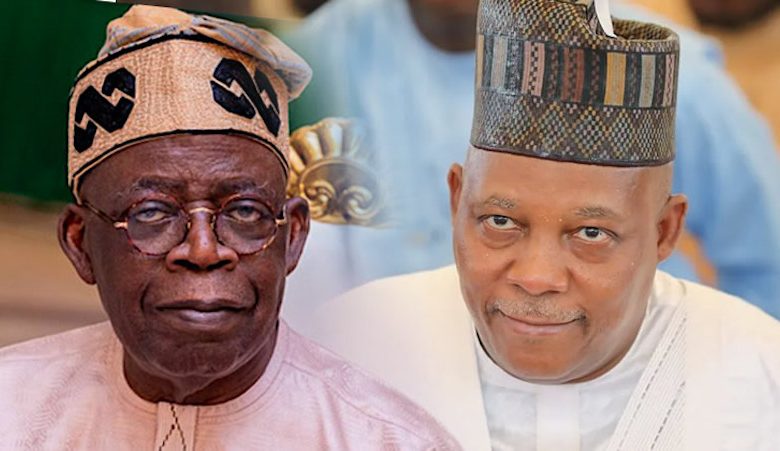
Nigeria understands this phenomenon particularly well. We have turned political campaigns into a strange mixture of manifesto, theatre, music, choreography, insults, promises and, occasionally, comedy. So when the 2027 campaign officially began on August 19, I could not help wondering whether President Bola Ahmed Tinubu’s campaign team had already prepared the next chapter of what Nigerians might call the “gaffe chronicles.” Because, if memory serves, the Tinubu of the 2023 campaign gave us enough material to fill an entire political anthology.
There was the declaration that voters’ Permanent Voter Cards had expired, which INEC subsequently corrected. There was the extraordinary suggestion that 50 million people should be recruited into the security forces, later clarified by his aide as 50,000. There was the famous question about Nigerians “tweeting on WhatsApp,” the argument about turning a rotten situation into a bad one, “God bless PD…APC,” “Solomon Dalong” instead of Solomon Lalong, “Bala Blu, Blu, Bulaba,” “Niger Delta” when Delta State was intended, and “APV” instead of PVC. And then there was the church rat and poisoned Holy Communion analogy.
By the time the 2023 campaign reached its climax, Tinubu’s verbal miscues had become almost a parallel campaign. Nigerians discussed them in buses, offices, homes, WhatsApp groups and on social media. Some laughed. Some were genuinely worried. I fall in the category of the latter. Others used the episodes to question whether the candidate was physically and mentally fit for the presidency. Some reports even speculated about possible medical conditions, including Parkinson’s disease, based on observations of his speech and movements. Those speculations were not medical diagnoses, but politically, they became part of the atmosphere surrounding the campaign.
Then something rather curious happened. Tinubu became President. And the Tinubu of the presidency has not produced anything remotely resembling the spectacular catalogue of campaign-era gaffes that Nigerians became accustomed to.
This is where I become suspicious. Where did “Bala Blu” go? Where are the “APV” and “tweeting on WhatsApp” moments? Where are those sentences that send Nigerian social media into emergency session, forcing aides to release statements explaining what the President actually meant?
For more than three years in office, Tinubu has certainly made statements that have attracted controversy and criticism, but the particular brand of verbal blunder that dominated his 2023 campaign has largely disappeared.
So I am tempted to ask a deliberately mischievous question: were those gaffes part of the strategy? Before Tinubu’s lawyers, aides, supporters and data boys begin preparing statements, I am honestly joking.
But Nigerians are allowed to wonder. After all, politics is sometimes theatre, and Nigerian politics has never been allergic to theatre. In 2023, every unusual phrase became content. Every stumble became analysis. Every pronunciation became a trending topic. The internet practically had a full-time Tinubu department.
Now, three years later, the same politician appears far more controlled in his public communication. If the 2023 version gave Nigerians “content” without charging them data, what does the 2026 version have prepared? Perhaps the answer is nothing. Perhaps Tinubu has simply become more disciplined, more experienced and better surrounded by communication professionals. That would be the sensible explanation. But where is the fun in that?
The 2027 campaign will be a different battlefield. Tinubu is no longer the candidate asking Nigerians to trust him with power. He is the incumbent asking them to renew his contract. His administration must defend its record on the economy, inflation, insecurity, taxation, infrastructure, jobs and the broader consequences of its reforms. Reuters reports that the campaign will place the APC’s record under intense scrutiny, particularly over economic hardship and insecurity.
The opposition, meanwhile, will have plenty to say, even if it remains fragmented. Tinubu’s political advantage is substantial: the APC has expanded its control across the states, while the opposition remains divided. The 2027 contest is therefore not merely about who can produce the loudest rally; it is also about whether Nigerians believe the incumbent deserves another four years.
And that is why I suspect Tinubu’s real strategy this time will not be gaffes. It will probably be achievements. Or promises of achievements. Or explanations of why the achievements Nigerians expected have taken longer than expected. That, too, can produce quite a fascinating campaign.
The President and his opponents have already committed themselves to peaceful and issue-based campaigning through the National Peace Accord. So perhaps the new Tinubu strategy will be simple: fewer verbal fireworks, more policy arguments, stronger political machinery and a relentless attempt to convince Nigerians that the pain of the reforms will eventually produce the prosperity they were promised.
But there is one thing I know about Nigerian campaigns: politicians can promise us everything from electricity to heaven, but Nigerians will still be watching the microphone.
So, as the 150-day political marathon begins, I have only one playful request for the President’s campaign team: please tell us what you have prepared.
Will it be “Renewed Hope”? Will it be economic statistics? Will it be another round of promises? Will it be dancing? Will it be dramatic campaign speeches? Or, dare I ask, what gaffes does Tinubu have for us this time?
Because if the 2023 Tinubu gave Nigerians “Bala Blu,” perhaps the 2027 Tinubu will give us “Bala… nothing.” And honestly, after three years of watching those famous campaign gaffes disappear, that might be the biggest surprise of all.
Oluwafemi Popoola is a Nigerian journalist, media strategist, and columnist. He can be reached via bromeo2013@gmail.com