Africa
APC And The Case Of The Vanishing Opposition -By Oluwafemi Popoola
As we inch toward the 2027 general elections, the signs are ominous. We cannot afford to walk this lonely road. Nigeria doesn’t need a choir of sycophants; it needs a clash of ideas, a contest of visions. We need choice. We need alternatives. We need a political environment where power changes hands peacefully, where criticism is not criminalized, and where every party has a fighting chance.


Nigeria’s democratic journey, though turbulent and often imperfect, has managed to retain a delicate balance of political pluralism since the advent of the Fourth Republic in 1999. But in recent months, I have watched with growing alarm as the administration of President Bola Ahmed Tinubu and the ruling All Progressives Congress (APC) appear to be charting a dangerous course — one that suggests a deliberate, systematic drift toward a one-party system.
Since Tinubu assumed office in 2023, there has been a discernible consolidation of political power within the APC. The ruling party seems to be tightening its grip on federal structures and at the same time also orchestrating the disintegration of opposition parties through covert interference, political horse-trading, and patronage-fueled poaching. This dangerous pattern is not accidental, it is calculated. It is aimed at eliminating opposition voices and laying the foundation for a de facto one-party state.
One cannot overstate the seriousness of this issue. The very essence of democracy lies in choice — in the ability of citizens to freely select leaders from competing parties with different visions, ideologies, and policy prescriptions. When political competition is eroded, democracy decays. What we are witnessing now is the slow, methodical burial of Nigeria’s multi-party system under the weight of APC’s hegemonic ambition
Nigeria’s opposition parties are now in a coma, hooked up to life support, with the APC controlling the oxygen tank. The PDP is fragmented, broken, and battered. What used to be a political institution is now a retirement club for political orphans and sycophants looking for a soft landing. The party’s base is hemorrhaging. Even their crisis has a crisis.
Meanwhile, smaller parties are either embroiled in internal battles or sniffing around the APC like hungry puppies hoping for scraps. The Labour Party, fresh from the euphoria of the 2023 elections, is already slipping into irrelevance due to internal wrangling and lack of direction. If the PDP is gasping, the others are already in the grave, waiting for a decent obituary.
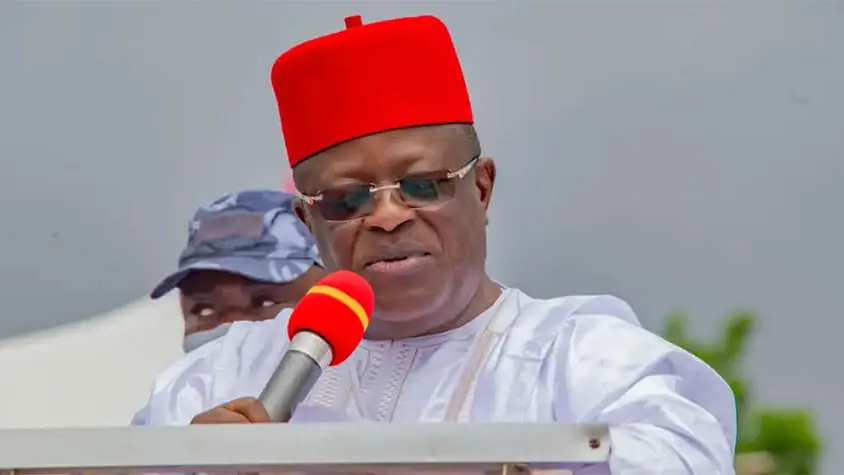
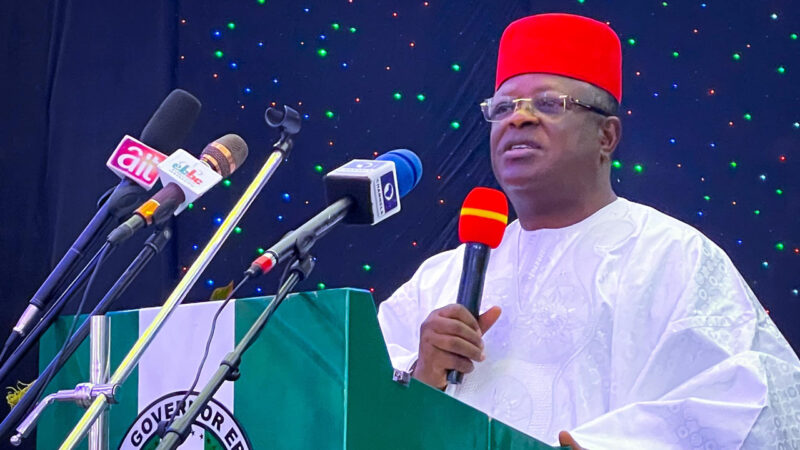
The defections are not just a trickle, it’s a full-blown stampede. Recently, Governor Umo Eno of Akwa Ibom reportedly gave his appointees a chilling choice: follow me to APC or find another job. In saner climes, this would spark an outcry. In Nigeria? It’s just another day. This is no longer politics, this is a political colonoscopy. The APC has inserted itself into every orifice of the democratic process
However, there are persistent allegations that some crises within opposition parties are being financed and fanned by agents of the APC to weaken any credible alternative to Tinubu ahead of the 2027 elections. This seems like a calculated strategy to ensure no viable candidate or movement emerges to challenge the APC’s hold on power.
This erosion of opposition space is not only undemocratic; it is dangerous. It renders the electorate voiceless. It entrenches impunity. And worst of all, it consolidates power in the hands of a few, making the institutions of state mere appendages of party machinery.
Adding fuel to this fire is Nigeria’s entrenched culture of prebendal politics — where public office is treated not as a platform for service, but as a means of dispensing patronage. In today’s Nigeria, politicians are not crossing over to the ruling party because of ideology or conviction, but because that is where the resources and rewards reside.
The promise of contracts, appointments, and immunity from scrutiny continues to lure opposition figures into the APC fold. The result is a hollowing out of opposition structures, leaving them as shadows of themselves — unable to mobilize, unable to campaign, unable to inspire. What we are left with is a feeding frenzy for political oxygen — a desperate scramble among political actors to align with the ruling party to avoid suffocation.
But this is a perilous path. Democracy is like a football match. You need two teams, a referee, and a crowd that can boo. What we have now is a match where one team owns the stadium, the referee, the VAR system, and is planning to sign the best player from the other side too. When the electorate is deprived of alternatives, elections become mere rituals. Governance becomes unaccountable. And power, left unchecked, becomes authoritarian.
Observers of Nigerian politics have often spoken about the “Tinubu Doctrine” — a playbook rooted in deep political calculation, strategic alliances, and the consolidation of control. In Lagos State, where Tinubu’s influence has remained unbroken for over two decades, a similar pattern of one-party dominance has emerged. The fear is that this model is now being replicated at the national level.
The problem is not with Tinubu’s political astuteness, the problems are many and a great number of them. It is with the use of state resources, institutions, and influence to achieve political monopoly. The civil service, security agencies, anti-corruption institutions, and even the judiciary now appear to operate under the shadow of executive influence. This undermines the independence of institutions, erodes public trust, and weakens the very fabric of democratic governance.
As we inch toward the 2027 general elections, the signs are ominous. We cannot afford to walk this lonely road. Nigeria doesn’t need a choir of sycophants; it needs a clash of ideas, a contest of visions. We need choice. We need alternatives. We need a political environment where power changes hands peacefully, where criticism is not criminalized, and where every party has a fighting chance.
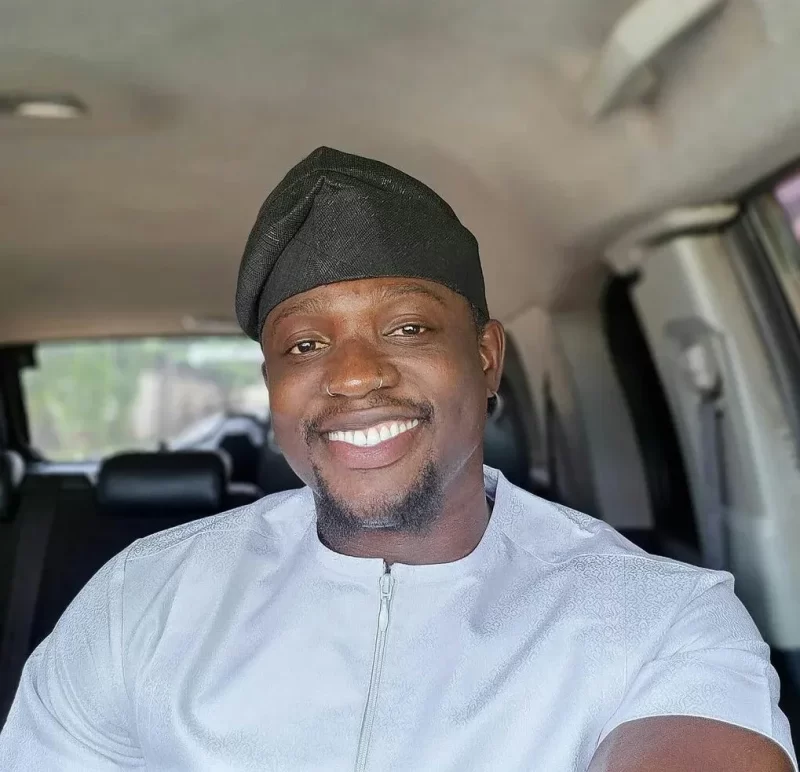
Oluwafemi Popoola is a journalist and political analyst. He writes on governance, civic engagement, and democracy in Africa.