Africa
As Adesina Speaks Truth To Power, Will The Presidency Listen Or React In Its Usual Manner? -By Isaac Asabor
Whether it is economists, former public office holders, civil society leaders, or international institutions, the default response seems to be “attack first, reflect later.” Constructive feedback is often interpreted as sabotage or unpatriotic behavior. This mindset is dangerously counterproductive, particularly in a country where open dialogue and accountability should be encouraged in a democracy.

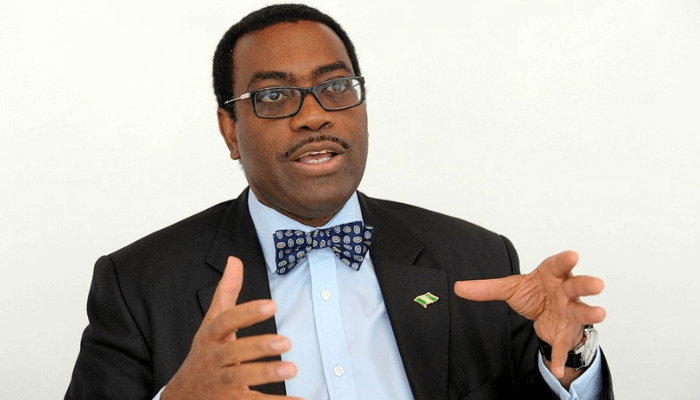
Once again, a voice of reason has emerged with hard truths about Nigeria’s economy, this time from no less a person than Dr. Akinwumi Adesina, President of the African Development Bank (AfDB). At the 20th anniversary dinner of Chapel Hill Denham in Lagos on Thursday, May 1, 2025, Adesina did not mince words. He told Nigeria what it needed to hear, not what it wanted to hear. He warned that the country must industrialize rapidly or continue to slide further into economic irrelevance, poverty, and underdevelopment.
But the burning question is: Will the presidency listen, or will it respond in its characteristic dismissive manner of attacking the messenger instead of addressing the message?
The reason why this writer is interested in his speech, and want the government to listen is that Dr. Adesina is no social media commentator or idle critic. His views carry the weight of experience, exposure, and empirical evidence. As a former Minister of Agriculture and now President of the AfDB, he has walked the corridors of power, interacted with global institutions, and steered major development initiatives across Africa. When someone with such a pedigree offers sober reflections on Nigeria’s dire economic reality, the least a serious government should do is listen.
He pointed out that Nigeria’s per capita income is now lower than it was at independence. This is an indictment on over six decades of mismanagement, inconsistency in policy, and misplaced priorities. Rather than seeing this as a personal attack or an attempt to discredit the current administration, the government should treat it as a mirror reflecting decades of collective failure and an opportunity to recalibrate.
It is germane at this juncture to recall that the government, specifically the presidency usually exhibit a pattern of Intolerance for constructive criticism, and in the same vein urge it not to exhibit such pattern of intolerance in this case of Adesina’s.
Without any iota of exaggeration, the Nigerian presidency, especially through its appointees and media aides, has unfortunately developed a pattern of antagonizing critics, regardless of the merit of their message. Every well-meaning observation is met with a barrage of clap backs, sarcastic statements, character attacks, or outright denial.
Whether it is economists, former public office holders, civil society leaders, or international institutions, the default response seems to be “attack first, reflect later.” Constructive feedback is often interpreted as sabotage or unpatriotic behavior. This mindset is dangerously counterproductive, particularly in a country where open dialogue and accountability should be encouraged in a democracy.
In fact, Dr. Adesina’s speech must not be subjected to this same knee-jerk reaction. He is not a political opponent. He is a development technocrat, an economist, and above all, a patriot who has repeatedly demonstrated his belief in Nigeria’s potential.
There is no denying the fact that Adesina’s words are inherent with truth. This is as he rightly diagnosed Nigeria’s economic malaise: a refusal to industrialize, an overdependence on raw exports, poor infrastructure, and lack of private-sector-driven growth. While countries like South Korea, Malaysia, and Vietnam have transitioned into industrial and manufacturing powerhouses, Nigeria remains stuck in the past, celebrating small wins in digital payments and oil exports while ignoring the pressing need to create jobs, increase productivity, and generate wealth through value addition.
He also referenced the AfDB-led Special Agro-Industrial Processing Zones (SAPZs), a multi-billion-dollar initiative aimed at transforming agriculture from subsistence to agribusiness. These zones are designed to attract investment, create jobs, reduce food imports, and enhance rural economies. What is striking here is not just the vision, but the fact that the bank and its partners have committed $3.4 billion, a rare opportunity that Nigeria must not squander with red tape, corruption, or policy inconsistency.
It is not enough to acknowledge Adesina’s remarks. The federal government must act. Nigeria needs massive investment in power, science, technology, and infrastructure. These are not buzzwords, they are the foundations of any competitive economy in the 21st century. Without them, we are doomed to remain an import-dependent, poverty-stricken nation that fails its citizens and its position as Africa’s supposed giant.
The Tinubu administration must break away from the inherited culture of combative governance and embrace a new style, one that welcomes ideas, encourages collaboration, and is open to criticism. If the presidency cannot take observations from a figure like Adesina, then who else can it listen to?
Governing a nation like Nigeria demands humility. It requires the wisdom to acknowledge shortcomings, even when pointed out publicly. Leaders must realize that critics, especially those who speak from a place of experience and love for country, are allies, not enemies.
Sadly, too many in this administration wear power like armor and see every suggestion as an attack. This attitude has prevented many sound policies from taking root and scared away potential investors, both local and international.
Adesina has laid out a clear, actionable path: industrialization, agro-processing, infrastructure development, and private capital mobilization. These are not new ideas, but they are timely reminders that the window of opportunity is closing fast.
Nigeria is racing towards a projected population of over 400 million people by 2050. If we fail to industrialize and create jobs now, we are simply preparing for mass unemployment, insecurity, and social instability on a frightening scale.
This time, the presidency has a choice: it can respond with its usual condescension and PR gymnastics, or it can engage with Adesina’s ideas and work to implement solutions. The time for defensiveness is over. Nigerians are tired of empty rhetoric, recycled excuses, and reactionary governance.
Dr. Adesina spoke truth to power. He deserves more than a polite nod or, worse, a dismissive retort. His advice is a national resource, and ignoring it would be an act of economic self-sabotage.
As the Yoruba say, “Ogbon ju agbara lo”, wisdom is greater than strength. Now is the time for Nigeria’s leaders to prove that they understand this.