
Politics
Benue Blockade: The Permission Structure Behind the Attack on Peter Obi -By Vitus Ozoke, PhD
Peter Obi left Benue without reaching Yelwata. In the narrowest sense, those who blocked him achieved their objective. But politics is not measured solely by whether a convoy reaches its destination. It is also measured by who emerges from an encounter diminished and who emerges enlarged.

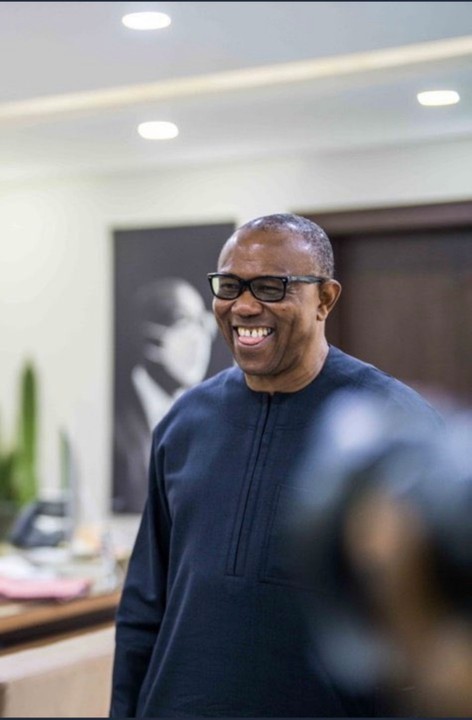
Peter Obi did not travel to Benue State on September 8, 2026, to hold a campaign rally. He did not go there to commission an NDC Party office, receive defectors, canvass for votes, or challenge Governor Hyacinth Alia’s control of the state. He said he was going to Yelwata to visit and sympathize with families still grieving the June 2025 massacre in their community. He said he would mourn with mourners.
But somewhere around Gyado Villa and Gboko Road, near the Nigerian Air Force Base and Makurdi Airport, a group of youths blocked his convoy. Videos circulating online show them obstructing the road and chanting against his entry. Obi was prevented from proceeding to Yelwata and eventually changed course, leaving Benue for Jos.
The Benue State Police Command acknowledged the incident and said the reason for the blockade was still under investigation. The Benue State Government denied any involvement, insisting it had not been informed of Obi’s visit and that the youths were not acting on its behalf. Obi’s team and other commentators, however, described the group as hired political thugs.
These distinctions matter. As of this writing, there is no publicly established evidence that Governor Hyacinth Alia personally organized the blockade. Social media allegations are not established fact. But whether the youths acted on the governor’s instructions, with encouragement from political interests around him, or entirely on their own, the incident did not arise in a political vacuum. It arose within a permission structure.
A permission structure is created when people in positions of power repeatedly signal – through their words, conduct, silences, and political alliances – that hostility toward a particular person is acceptable. The leader may not issue a written instruction. He may never appear at the scene. He may even issue a carefully worded denial afterward. But the political atmosphere he helps create signals to supporters what conduct will be tolerated, excused, or rewarded. That is the broader significance of what happened in Benue.
This is not the first time Governor Alia’s administration has been linked to resistance to a visit by Peter Obi. Against that history, the government’s claim that it knew nothing about this particular visit may answer the narrow question of official notification, but it does not resolve the larger question of the political climate. Who taught those youths that physically obstructing a former governor, presidential candidate, and Nigerian citizen on a humanitarian journey was acceptable? What convinced them that preventing a man from consoling bereaved families was worth chanting and mobilizing for?
But the permission structure did not originate in Benue. Long before youths blocked Peter Obi’s convoy on the road to Yelwata, political leaders from Obi’s own part of the country had been cultivating an atmosphere in which treating him as an enemy became permissible. Governor Chukwuma Soludo of Anambra State – Peter Obi’s own state – has repeatedly adopted an antagonistic posture toward him. Rather than regard Obi’s national prominence as an opportunity for Anambra and the Southeast, Soludo has too often appeared determined to diminish him. That hostility carries consequences beyond Anambra.
When the governor of Obi’s home state treats him as a political target, he gives others moral and political cover. He tells governors elsewhere that hostility toward Obi is safe. He tells party operatives that Obi can be insulted, obstructed, and excluded without meaningful consequence. He tells street-level enforcers that the political class has already declared open season.
Governor Peter Mbah of Enugu State, Governor Hope Uzodimma of Imo State, and Governor Francis Nwifuru of Ebonyi State have likewise aligned with Bola Tinubu’s 2027 project, publicly presenting their states as territory to be delivered to him. They speak as though the citizens of their states are electoral cargo – as though millions of adult voters can be packaged, labeled, and delivered to Abuja. States do not belong to governors. Votes do not belong to governors. Citizens are not livestock to be herded into Bola Tinubu’s electoral enclosure.
Peter Obi carried all five Southeastern states in 2023. Nothing about the suffering Nigerians have endured since then suggests his support in the region has collapsed. If anything, worsening cost of living, deepening poverty, unemployment, insecurity, and widespread disillusionment with the political establishment may intensify the appetite for an alternative – not only in the Southeast but across many parts of Nigeria.
Yet these four Igbo governors continue to promise to “deliver” their states to Tinubu. What, precisely, does “deliver” mean when the people’s evident political preference points elsewhere? Persuasion is legitimate. Campaigning is legitimate. Presenting a superior record and asking citizens for their votes is legitimate. But the ominous language of doing “everything possible” to deliver a state becomes troubling when it appears to mean suppressing opposition, intimidating political actors, obstructing movement, manufacturing defections, and deploying state influence against the electorate’s freely expressed will. That is the permission structure in which the Benue blockade must be understood.
Soludo and the other Southeastern governors may not have organized the youths who blocked Obi’s convoy. There is no basis for claiming they did. But by normalizing hostility toward the leading political figure from their own region – and by portraying loyalty to Tinubu as the supreme political duty of their states – they have helped create a national climate in which others feel licensed to mistreat Peter Obi. They may not have built the barricade in Benue. But they helped build the politics that made the barricade imaginable.
There is also a striking scriptural dimension to what happened. When Christ sent His disciples into the towns and villages, He instructed them to enter homes, offer peace, and remain wherever they were welcomed. He also told them what to do when a household or town refused to receive them: leave and shake the dust from their feet. Christ added that, on the day of judgment, it would be more tolerable for Sodom and Gomorrah than for the town that rejected them.
These passages appear in Matthew 10:14–15 and in their parallels in Mark 6 and Luke 9. Elsewhere, in Matthew 10:40, Christ declares that whoever receives those He sends receives Him and, through Him, the One who sent Him.
To be clear, Peter Obi is not Christ, nor is he one of the twelve apostles. His patron saint was. This is an analogy, not a canonization. Yet the moral symbolism is hard to miss. Obi came not with weapons but with condolences. He came not to exploit a celebration but to enter a place of sorrow. He sought to stand with families whose loved ones had been slaughtered. Those who blocked him did not merely reject a politician; they obstructed an act of compassion toward a mourning community.
And so, when Obi abandoned the journey to Yelwata and proceeded to Jos, the moment resembled shaking dust from one’s sandals: you have refused the visit; keep your road, your barricade, your chants, and the shame that accompanies them. The traveler will continue his journey, but the moral burden of rejection remains with those who rejected him.
If the allegation that Governor Alia organized or encouraged the blockade is ultimately established, responsibility will rest directly with him. If the youths acted independently, they must answer for their own conduct. Either way, it is profoundly disturbing to prevent a Nigerian citizen from reaching a community merely to mourn with the bereaved. Indeed, one might say that it would be more tolerable for Sodom and Gomorrah than for political actors who barricade the road against mercy.
But here is the irony: those who intended to diminish Peter Obi have instead enlarged him.
They wanted to keep him out of Yelwata. Instead, they brought him into millions of Nigerian homes. They wanted to embarrass him. Instead, they embarrassed themselves. They wanted to reduce his political visibility. Instead, they made him the story.
This is why Peter Obi increasingly seems like a child of destiny. Even when he loses, he wins. When they mock him, they amplify his voice. When they attack him, they validate his warnings about the character of Nigerian politics. When they block his convoy, they clear another road for his message.
His opponents still do not understand the man or the moment. They treat every barricade as a victory and every act of intimidation as strength. They do not realize that, in a country exhausted by arrogance, cruelty, and political excess, dignified endurance has become its own form of power.
Peter Obi left Benue without reaching Yelwata. In the narrowest sense, those who blocked him achieved their objective. But politics is not measured solely by whether a convoy reaches its destination. It is also measured by who emerges from an encounter diminished and who emerges enlarged.
On that measure, Governor Hyacinth Alia and the youths who blocked the road lost badly. The APC machinery lost. The politics of intimidation lost. Governors Chukwuma Soludo, Hope Uzodimma, Francis Nwifuru, and Peter Mbah, who helped normalize hostility toward Obi, were further diminished by the atmosphere they helped create.
And Peter Obi? Peter Obi shook the dust from his sandals, headed to Jos, and won again.
Yes, he won again!
Dr. Vitus Ozoke is a lawyer, human rights activist, and public affairs analyst based in the United States. He writes on politics, governance, and the moral costs of leadership failure in Africa.





















You must be logged in to post a comment Login