
Africa
Bill Seeking To Jail Non-Voters Is A Dangerous Assault On Democracy In Nigeria -By Isaac Asabor
Rather than criminalizing voter apathy, the Nigerian government should focus on fostering a political environment that makes citizens want to vote, not forcing them under threat of jail. If the government truly cares about democracy, it must address the root causes of voter disengagement rather than resorting to authoritarian tactics.

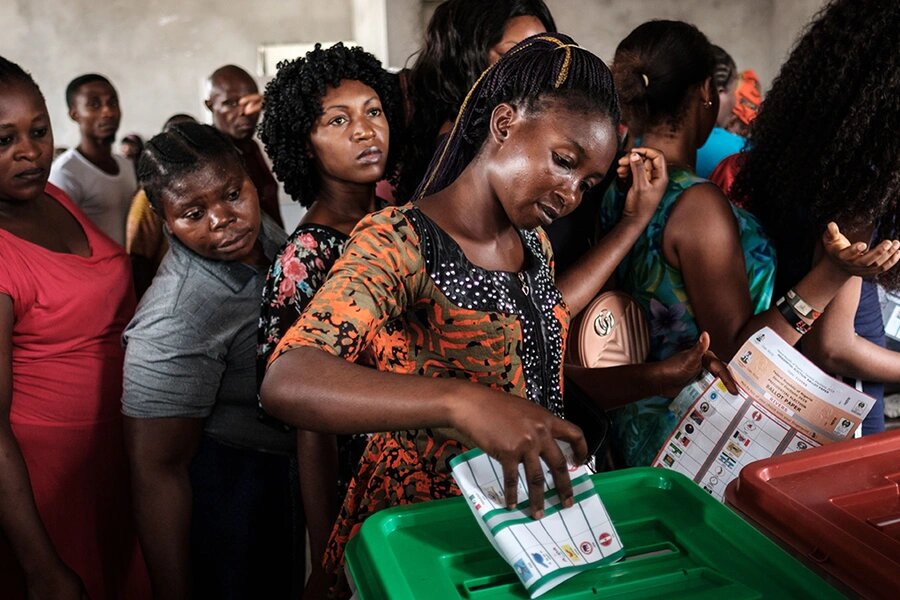
In a shocking and deeply troubling move, a proposal has emerged to jail Nigerians who fail to exercise their right to vote. This authoritarian idea, disguised as an attempt to encourage civic participation, is nothing short of a gross violation of democratic principles. Such a bill, if passed into law, would set a dangerous precedent, stripping citizens of their fundamental rights and transforming democracy into a forced obligation rather than a free and fair process.
Looking at the issue from the perspective of the fact that the right to vote is not a legal obligation, it is not out of place to opine that democracy thrives on the principle of free will, where citizens are given the choice to participate in the electoral process. Forcing people to vote under the threat of imprisonment contradicts the essence of democracy and shifts Nigeria toward an oppressive system where personal freedoms are trampled upon.
Across the world, democratic nations encourage voter participation through incentives and civic education, not coercion. In contrast, a law criminalizing non-voters would create an environment of fear and resentment, rather than genuine political engagement. A government that resorts to punishment to force civic participation is one that has lost touch with the true meaning of democracy.
At this juncture, is expedient to ask, “Where in the World is This Happening?” Historically, no democratic country has ever proposed jailing its citizens for not voting. Some countries, such as Australia, Belgium, and Brazil, have adopted compulsory voting laws, but the penalties are usually mild fines or administrative sanctions, not imprisonment. Even in these countries, there are valid exemptions for those who do not wish to vote, recognizing the right of individuals to abstain for personal, political, or religious reasons.
Australia, for example, imposes a small fine for failing to vote, which can be challenged with a reasonable excuse. Belgium’s law, though strict, does not jail non-voters; instead, it imposes restrictions on employment in public office. Brazil also applies small fines but provides justifications for non-participation. None of these countries, despite their enforcement of voting laws, have ever considered criminalizing abstention through imprisonment.
For Nigeria to pioneer such an extreme measure would be unprecedented and undemocratic. It would place the country among oppressive regimes that punish political apathy with force rather than addressing the underlying reasons for voter disengagement.
Before resorting to drastic and repressive measures, the government should first seek to understand why voter turnout in Nigeria is often low. Multiple factors contribute to voter apathy in the country, and they cut across electoral fraud and lack of transparency, security concerns, disillusionment with governance, poor voter education and accessibility, harassment and suppression
Electoral Fraud and Lack of Transparency: Many Nigerians have lost faith in the electoral process due to widespread vote rigging, manipulation, and lack of transparency in elections.
Explanatorily put, elections in Nigeria are often marred by violence, intimidation, and voter suppression, discouraging citizens from participating, even as years of failed leadership, corruption, and broken promises have made many Nigerians skeptical about the impact of their votes.
In a similar vein, many Nigerians, particularly in rural areas, face challenges in accessing polling stations or understanding the importance of their vote.
Also in a similar vein, political thuggery, police brutality, and systemic voter suppression have made many citizens hesitant to engage in the electoral process.
Instead of addressing these fundamental issues, the Nigerian government is now considering a heavy-handed approach that will only deepen public mistrust and resentment.
To aptly put it, the thought alone of seeking Jail term for non-voters on its own is a dangerous precedent for human rights.
Jailing non-voters is not just undemocratic; it is a severe violation of human rights. Freedom of choice is a cornerstone of any free society, and the ability to abstain from voting should be as protected as the right to vote itself.
In fact, implementing such a law could open the door to other forms of forced political participation. Will the government next criminalize political protests? Will abstaining from elections be equated with treason? A society that forces its people to the polls under duress is no different from a dictatorship disguised as democracy.
This proposal also raises critical questions about Nigeria’s prison system, which is already overburdened and poorly managed. Where will the government house the millions of Nigerians who choose not to vote? Will taxpayers be expected to foot the bill for imprisoning people who simply exercised their right to abstain?
At this juncture, it is expedient to opine that the way forward should be encouragement, and not coercion. In fact, instead of taking an undemocratic route, the Nigerian government should focus on creating an electoral environment that genuinely encourages voter participation.
Without a doubt, there is an urgent need for robust electoral reforms. This can be achieved by strengthening institutions like the Independent National Electoral Commission (INEC) to ensure free and fair elections will restore public confidence in the voting process.
In a similar is the need to put in security assurance. This also can be achieved by ensuring that elections are free from violence and intimidation, and this will encourage more Nigerians to come out and vote.
Also, there is the need for public awareness and education. This can be done by investing in civic education programs to inform citizens about the importance of voting can lead to increased participation.
Without a doubt, there also the need for Incentives aimed at motivating voters, not punishments. This is as the governments can explore positive reinforcement methods such as tax benefits or recognition for active voters rather than resorting to punitive measures.
In a similar vein, there is the need for transparency and accountability. This also can be achieved by ensuring that votes actually count and that elected officials are held accountable will make citizens feel that their participation truly matters.
At this juncture, it not out of context to opine that pushing the bill seeking to jail non-voters is a step in the wrong direction. The idea of jailing non-voters in Nigeria is not only unprecedented but also a direct attack on democracy and human rights. No successful democratic nation has ever imposed such draconian measures, and those with compulsory voting laws stop at minimal fines rather than imprisonment.
Rather than criminalizing voter apathy, the Nigerian government should focus on fostering a political environment that makes citizens want to vote, not forcing them under threat of jail. If the government truly cares about democracy, it must address the root causes of voter disengagement rather than resorting to authoritarian tactics.
A democracy thrives on freedom, choice, and engagement, not coercion and fear. Nigeria must reject this dangerous bill and uphold the true spirit of democracy, where every citizen has the right to vote or abstain without fear of imprisonment.

























You must be logged in to post a comment Login