Africa
Bridging The Trust Deficit In Nigerian Politics: A Call For Leaders To Keep Their Promises, by Isaac Asabor

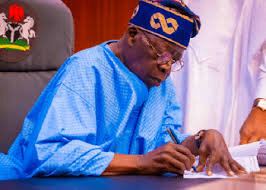
As Nigeria marked another independence anniversary, the familiar chorus of political promises filled the airwaves. Leaders spoke of their commitment to improving the lives of the people, promoting development, and tackling the myriad challenges facing the country. However, a growing number of citizens responded with skepticism. For many Nigerians, these promises are echoes of the past, repeated over and over but rarely fulfilled. This persistent pattern of unkept promises has deepened the trust deficit between the governed and those who govern, and has thus become a troubling trend that threatens the stability and progress of Nigeria’s political landscape.
Trust, the bedrock of any functioning democracy, is in short supply in Nigeria. It is not that politicians lack vision or eloquence; rather, it is the consistency with which their promises have gone unfulfilled that has eroded public confidence. In almost every election cycle, Nigerians are treated to grand manifestos and ambitious plans for transformation. Yet, after the election dust settles, these promises are too often forgotten, leaving citizens disillusioned.
This cycle of broken trust is not a recent phenomenon. Over successive political dispensations, leaders from different parties and regions have made lofty pledges during their campaigns, only to fall short when entrusted with power. The failure to meet these expectations is not just a matter of incompetence or corruption; it speaks to a deeper problem, an erosion of accountability.
During Nigeria’s just-celebrated Independence Day, speeches from political leaders were expectedly filled with rhetoric about hope and progress. However, these speeches were largely dismissed by many Nigerians. A palpable sense of fatigue hangs over the nation, as citizens no longer take political promises at face value. Many listened not out of expectation but out of routine, knowing that the same pledges have been made in the past with little to show for it.
This mistrust has reached a critical level. In a society where faith in the political class is so low, governance becomes an uphill task. Without trust, even the most well-intentioned policies are viewed with suspicion. This cynicism leads to apathy among the electorate, manifesting in low voter turnout, diminished civic engagement, and a general detachment from the political process. Worse still, it fosters an environment where populist rhetoric, rather than substantive leadership, thrives.
The absence of trust between Nigerian political leaders and the people is not just a moral issue; it is a practical one. When citizens no longer believe in the ability or willingness of their leaders to keep their promises, the entire democratic process is undermined. Governance becomes a one-sided affair where politicians operate without accountability, knowing that public trust is already broken.
Moreover, the trust deficit hampers long-term national development. Policy implementation requires public cooperation, and when leaders have lost credibility, mobilizing the public for national initiatives becomes exceedingly difficult. Consider the economic reforms proposed in recent years. While some of these policies may have had merit, the public’s response was tepid because they were seen as just another set of unkept promises.
For Nigeria’s political landscape to evolve and for governance to improve, it is imperative that political leaders start living by their promises. The credibility of a leader is built on consistency between words and actions. When promises are made during campaigns, they should not be empty rhetoric designed solely to win votes. Instead, they must be realistic goals that the politician intends to pursue diligently once in office.
One way to ensure that leaders are held accountable is to establish clear benchmarks for their promises. Citizens must demand specific timelines and measurable outcomes from their leaders. If a politician pledges to improve infrastructure, reduce poverty, or tackle corruption, there should be a structured plan in place, with regular updates to the public on progress.
Furthermore, political leaders must be transparent about the challenges they face in implementing their promises. Governance is complex, and unforeseen obstacles often arise. Rather than abandoning promises or making excuses, leaders should engage with the public, explaining the difficulties and offering revised plans. This transparency fosters trust, as it shows that the leader is still committed to the original goals, even if the path to achieving them has changed.
While much of the responsibility lies with political leaders, institutions and civil society also have a critical role to play in restoring trust in Nigerian politics. The media, for instance, should hold leaders accountable for their promises, conducting follow-up reports on pledges made during elections. Civil society organizations must continue to advocate for good governance and transparency, acting as watchdogs to ensure that political leaders do not veer off track once they assume office.
Additionally, institutions like the Independent National Electoral Commission (INEC) should implement reforms that allow for better tracking of campaign promises. One innovative approach could be the establishment of a public database that records all campaign promises made by elected officials. This database could then be used by voters, civil society, and the media to monitor progress and hold leaders accountable.
Nigeria’s development hinges on the restoration of trust between political leaders and the people. No nation can progress when the majority of its citizens feel disconnected from their leaders and skeptical of their intentions. Political trust fosters social cohesion, encourages investment in national initiatives, and ensures that the public actively participates in the democratic process.
If Nigerian political leaders wish to see their country thrive, they must prioritize rebuilding this trust. This means not only delivering on their promises but also communicating openly and honestly with the people they serve. It means showing empathy for the struggles of everyday Nigerians and demonstrating a genuine commitment to improving their lives.
The trust deficit in Nigerian politics is not insurmountable, but it requires intentional effort from both leaders and citizens to overcome. Political leaders must commit to a new era of transparency, accountability, and integrity. When promises are made, they must be backed by realistic plans and the political will to follow through.
Likewise, citizens must remain engaged, demanding more from their leaders and refusing to settle for empty promises. Nigeria’s political development depends on leaders who are not only good speakers but also good stewards of the public trust. As we look to the future, the challenge is clear: political leaders must live by their promises if they hope to regain the trust of the people and build a more prosperous, united Nigeria.
In fact, restoring trust in Nigerian politics is essential to our country’s growth and stability. Leaders must live by their promises to be trusted, and we, as the people, must hold them accountable. Only by bridging this trust gap can Nigeria move forward on a path of sustained development and good governance.