Africa
Can Technology Secure Nigeria’s Democracy -By Hauwa Mohammed Haruna
Conversely, a failure in implementation—whether due to technical flaws, political sabotage, or inadequate preparation—would likely deal a devastating, perhaps irreparable, blow to the integrity of Nigerian democracy. The task at hand is therefore not merely technical or legislative, but profoundly foundational: to construct an electoral system whose outcome is beyond question, ensuring that the sovereign will of the Nigerian people is not just expressed at the ballot box, but is faithfully preserved and honored in the final declaration.

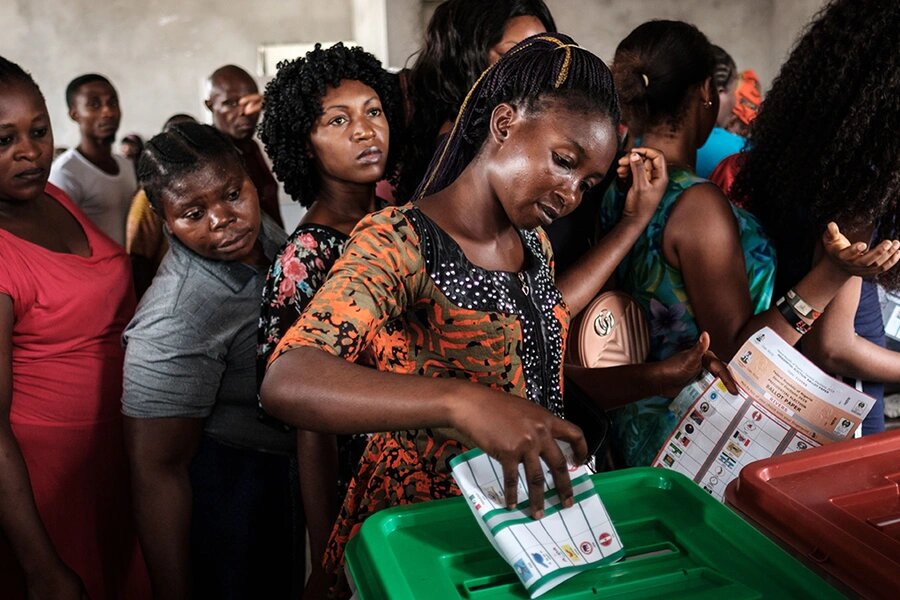
The digital ghost of the last general election haunts millions of Nigerian voters. It is the memory of a smartphone in hand, endlessly refreshing a portal that failed to deliver the promised transparency, while whispers of manipulated figures filled the air. That collective frustration is the backdrop for a new and critical political battle: the Nigerian Senate’s proposal to legally mandate the electronic transmission of election results. This move aims to replace the current, vulnerable system of manual collation with a digital pipeline, designed to ensure the vote cast at the polling unit is the vote that is finally declared, creating a verifiable audit trail from the unit to the nation.
This legislative push is a direct consequence of the profound credibility crisis that engulfed the 2023 elections. During that cycle, the nation witnessed a stark technological contradiction. The Bimodal Voter Accreditation System (BVAS) was widely praised for its efficiency in authenticating voters, a significant step forward in curbing impersonation and multiple voting. However, this success was critically undermined by the highly problematic and inconsistent implementation of the INEC Result Viewing (IReV) portal. The failure to electronically transmit Polling Unit result sheets in real-time created an information black hole. This void bred widespread suspicion and allegations that results were being altered during the manual, and often opaque, collation process at various levels. The new bill, therefore, seeks to learn from this failure by making electronic transmission a legal obligation, closing a loophole that has been a primary source of electoral disputes and public mistrust.
The journey of this proposal through the National Assembly is revealing the deep-seated political and geopolitical tensions that define the Nigerian federation. The debate unfolding among lawmakers is a complex tug-of-war between the imperative for absolute transparency and the pragmatic realities of the nation’s infrastructure. Proponents, channeling the demands of civil society and a weary electorate, argue that this technology is the most potent weapon available to eliminate the “arithmetic magic” and logistical “anomalies” that have historically corrupted the final tally. They envision a system where a result, once captured and transmitted from the polling unit, becomes an immutable public record, visible to all parties, observers, and citizens in near real-time, thereby depersonalizing the collation process.
Conversely, legislators from constituencies with difficult terrain and limited digital infrastructure voice substantial and legitimate concerns. They question the feasibility of a uniform digital mandate in regions with chronicly poor or non-existent network coverage, arguing that such a policy could inadvertently create a two-tiered electoral system. Their fear is that voters in remote areas could be effectively disenfranchised if their results cannot be transmitted, thus violating the constitutional principle of universal suffrage and potentially skewing national outcomes. This debate underscores that the issue is not merely about technology, but about equity, inclusion, and the very federal character of the nation.
Beyond the political rhetoric in Abuja, the true stakes of this proposal are measured in the rapidly eroding trust of the average Nigerian voter. For many, the electoral process has become synonymous with a cynical narrative where the will of the people, expressed at the ballot box, is subverted before it reaches the final declaration. The promise of electronic transmission offers a powerful psychological counter-narrative: a vision of an election where the voter’s intent is secured digitally, creating a transparent and verifiable chain of custody that is resistant to post-hoc manipulation. However, this hope is fiercely guarded by a skepticism forged in past disappointments. The citizenry’s willingness to believe in this new system is entirely conditional on its demonstrable, flawless, and transparent execution.
Transforming this legislative vision into a trustworthy reality presents a formidable set of technical hurdles that must be overcome with meticulous planning and significant investment. The dual challenges of comprehensive connectivity and robust cybersecurity stand as the primary obstacles. Telecommunications analysts consistently highlight the stark digital divide between urban centers and vast rural swathes of the country, such as in the Niger Delta, the North-East, and other remote localities. For the system to be credible and inclusive, INEC must pioneer a resilient, multi-layered transmission strategy. This could involve the procurement and deployment of thousands of satellite-enabled communication devices to the most remote polling units, or the development of secure, offline data synchronization protocols that activate once officials move within network range.
Simultaneously, the shift to a digital ecosystem invites a new genre of threats that require a sophisticated defense. Cybersecurity experts warn of potential attacks aimed at undermining the election’s integrity, including Distributed Denial-of-Service (DDoS) attacks to crash the transmission portal on result day, attempts to hijack and alter data packets in transit, or the implantation of malware to subtly corrupt figures. Building a “digital fortress” around this process—one capable of repelling both domestic hackers and foreign state actors—demands a level of investment, expertise, and proactive stress-testing that is unprecedented in Nigeria’s electoral history. The cost of failure is not just a technical glitch, but a national crisis.
International perspectives offer valuable, if cautionary, insights. The experiences of nations like Kenya and Brazil illustrate a universal truth: technology is an amplifier of institutional intent, not a substitute for it. Kenya’s integrated electronic system has undoubtedly increased transparency and public engagement, yet its implementation has also been the focal point of intense legal and political battles, proving that technology alone cannot resolve deep-seated political disputes if the will to subvert the process remains. For Nigeria, the salient lesson is that a successful model cannot be imported wholesale. It must be an indigenous creation, painstakingly engineered to navigate the nation’s unique infrastructural deficits, complex political landscape, and immense scale. It requires not just the right software and hardware, but also a complementary legal framework, fiercely independent oversight, and a profound commitment from all political actors to abide by the new rules of the game.
In the final analysis, the Senate’s deliberation on electronic transmission of results is arguably one of the most consequential governance decisions of this era. It is a referendum on the nation’s political will to confront the ghosts of its electoral past and to construct a more credible and legitimate future. A successfully implemented system would represent a monumental leap toward institutionalizing a transparent process, potentially restoring the legitimacy of elected governments and strengthening the social contract between the state and its citizens. Conversely, a failure in implementation—whether due to technical flaws, political sabotage, or inadequate preparation—would likely deal a devastating, perhaps irreparable, blow to the integrity of Nigerian democracy. The task at hand is therefore not merely technical or legislative, but profoundly foundational: to construct an electoral system whose outcome is beyond question, ensuring that the sovereign will of the Nigerian people is not just expressed at the ballot box, but is faithfully preserved and honored in the final declaration.
Hauwa Mohammed Haruna,
Department of Mass Communication, Kashim Ibrahim University, Maiduguri.