
Africa
CBN’s 303rd MPC Meeting: A Technocratic Victory, an Economic Setback, and a Missed Opportunity on Nigeria’s Real Crisis -By Blaise Udunze
The 303rd MPC meeting signaled caution, but what Nigeria needs is direction. It needs clarity, boldness, and policies rooted in the lived realities of millions. Monetary tightening has achieved what it can; the next phase requires confronting insecurity, energizing production, restoring data credibility, and building a growth-driven economy.

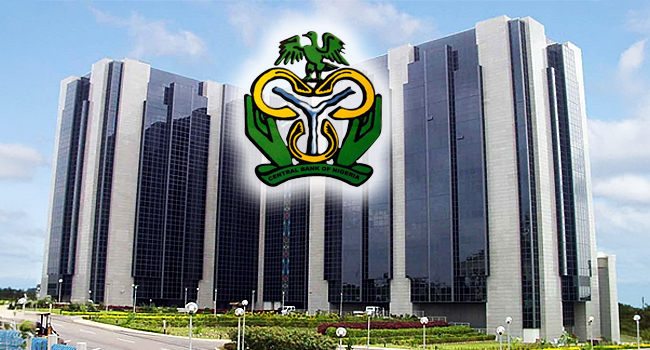
The Central Bank of Nigeria (CBN) 303rd Monetary Policy Committee (MPC) meeting arrived at a time of unprecedented tension within the Nigerian economy. The country has not faced a more difficult convergence of challenges for more than a decade in the area of crushing food inflation, unrelenting insecurity, slowing growth, weak purchasing power, a fragile exchange rate, and rapidly eroding business confidence, as these are the current realities.
Yet, against this troubling backdrop, the MPC chose to retain the Monetary Policy Rate (MPR) at 27 percent, kept the Cash Reserve Ratio (CRR) at a record-high 45 percent, held the Liquidity Ratio (LR) at 30 percent, and adjusted the asymmetric corridor, making it more reflective of technocratic cautions than economic realities
With the tense atmosphere, boldness, contextual sensitivity, and human-centric policymaking are required to douse the challenges. Instead, what Nigeria received was another round of technocratic orthodoxy, at a time when orthodoxy has clearly failed.
Why This MPC Meeting Matters More Than Any in Recent Memory
The importance of the 303rd MPC meeting cannot be overstated. It occurred at a time when:
– Nigeria’s food inflation remains structurally high, driven mainly by insecurity, not excess liquidity.
– Banditry, farmer-herder conflicts, kidnapping, and terrorism have made farming a high-risk activity across the North-East, North-West, North-Central, and increasingly the South, which has created an environment where fear, uncertainty, and instability have become the daily reality for millions of Nigerians.
– Growth has slowed, reflecting a tightening credit environment and collapsing consumer demand, while households spend 70-80 percent of income on food, according to industry surveys.
– Private-sector credit is shrinking, while government borrowing is expanding.
– The naira, though stabilising, remains vulnerable.
Given these realities, the MPC was expected to signal a shift, however modest, toward a more growth-supportive stance. Instead, it doubled down on tight policy.
Many analysts interpret this as a sign that the CBN is more committed to defending the naira and preserving the appearance of stability than responding to the lived experiences of citizens and businesses.
The CBN’s Insecurity Blind Spot: Food Prices Cannot Fall When Farmers Are Running for Their Lives
One of the biggest ironies in Nigeria today is the insistence by some policymakers that food prices are “declining” or that inflation is “moderating,” even as insecurity remains the biggest structural threat to price stability.
This contradiction reveals the central tension of Nigeria’s current economic moment; the macro indicators are improving, but the real economy, especially the food system, is collapsing under insecurity.
Recently, the United Nations World Food Programme (WFP) issued a stark warning that 35 million Nigerians are projected to face severe food insecurity by the 2026 lean season, which is the highest number ever recorded. Why? Because insurgent attacks are intensifying. Farmers are being killed or kidnapped. Entire communities are paying “harvest taxes” to armed groups.
Today, we witness farmers abandoning thousands of hectares of farmland. Irrigation systems, seeds, and inputs are inaccessible in conflict zones. This creates a vicious cycle as:
– insecurity reduces agricultural production,
– Reduced production pushes food prices up,
– Rising food prices fuel inflation,
– inflation erodes purchasing power,
– poverty deepens,
– insecurity worsens.
Yet the MPC communique did not mention this core driver of inflation in any meaningful way.
Instead, it continued to frame inflation as a monetary problem; something interest rates alone can fix. This is not only analytically flawed; it shows a more dangerous misdiagnosis that will prolong Nigeria’s food crisis.
The Hidden Question: Are Nigeria’s Inflation Numbers Truly Reliable?
A quiet but growing debate is emerging within the financial community about Nigeria’s inflation numbers and macroeconomic figures being massaged.
Dr. Tilewa Adebajo, CEO of CFG Advisory, put it bluntly, “Zero rate cut suggests the CBN MPC may not be totally confident in the NBS recent inflation numbers at 16 percent.”
This suspicion is not unfounded. Considering the recent realities facing the citizens, Nigerians are spending more on food than at any time in the last two generations. Staple prices such as rice, yams, garri, and beans are still high in almost every major market. Transport, rent, fuel, and electricity costs remain on the high side. Businesses report that operating expenses have not declined by any meaningful margin. Yet official inflation fell sharply to 16.05 percent.
It is mathematically difficult for headline inflation to fall significantly when food inflation, which is the most dominant component, continues to rise due to insecurity, logistics disruptions, and energy costs. This mismatch has forced many economists to ask: what exactly is being measured, and is the methodology still credible? For households already on the brink, numbers that suggest “improvement” feel not only inaccurate but insulting.
The Disconnect Between Governance and Lived Experience
This is where Nigeria’s economic narrative collapses, as the statistics may suggest progress, but households feel worse off than ever. This is why growing segments of society describe government optimism as tone-deaf.
A country cannot be “on the right path” when its citizens cannot afford rice, cannot fuel their generators, cannot pay transport fares, and cannot access credit to expand their businesses.
This disconnect exposes what many call the technocratic illusion, which is overly relying on models, spreadsheets, and monetary tenets in a country where insecurity, not excessive demand, is driving inflation. It reflects a divide between governance and reality, data and hunger, stability and survival.
Tight Monetary Policy: A Victory for Banks, a Defeat for the Real Economy
While the CBN insists that its tight stance is essential for price stability, analysts warn that the costs are becoming unbearable. Dr. Muda Yusuf argues that even a small rate cut of 25 to 50 basis points would have signaled a commitment to growth. Instead:
– Lending rates remain between 33 percent and 45 percent, suffocating SMEs.
– Credit to the private sector fell from N75.9 trillion to N72.5 trillion in just one month.
– Government borrowing is rising, crowding out real-sector lending.
– Manufacturers have cut production, citing financing conditions.
– Job creation is slowing, especially in youth-led sectors.
Banks, meanwhile, are reporting stronger margins and higher interest income. The question is no longer whether tight policy fights inflation. The question is whether Nigeria’s economy can survive its side effects.
The Naira: Stability Built on Fragile Foundations
The CBN’s main justification for maintaining the high MPR is to attract foreign portfolio investment (FPI), support the naira, and avoid destabilizing capital outflows. But this stability is fragile. FPIs are temporary “hot money.” They disappear at the slightest global shock.
Nigeria has suffered the consequences of relying on this route in 2014, 2018, 2020, and 2022. A sustainable naira requires:
– More domestic production
– Higher exports
– Better security
– Improved energy supply
– and a functional agricultural sector.
None of these received priority mention in the MPC deliberations.
The Real Test of Reform Is in People’s Lives, Not in Abuja’s Spreadsheets
Nigeria’s macroeconomic gains are being celebrated abroad. But hunger, joblessness, and despair are expanding at home. This is the irony of the current moment:
– Inflation is easing, yet hunger is rising.
– FX reserves are improving, yet insecurity is deepening.
– Subsidies are gone, yet the fiscal space they were meant to create is invisible.
– Reforms have stabilised numbers, but not people.
The World Bank’s October 2025 report warned that Nigeria’s progress means nothing if human welfare remains in decline. The success of reforms must now be measured not by GDP or FX reserves, but by how many Nigerians can afford to eat, work, and live with dignity.
A Missed Opportunity, Again
The 303rd MPC meeting should have been a turning point, a recognition that Nigeria’s inflation crisis is rooted in insecurity and supply shocks, not excess liquidity. Instead, the committee delivered technical caution, policy defensiveness, and an over-reliance on interest rate orthodoxy.
Nigeria needs a monetary policy that understands where the real crisis lies, in the abandoned farmlands, the unsafe highways, the displaced farming communities, and the markets where food prices rise weekly.
Without confronting this, Nigeria will continue to win macroeconomic battles while losing the war for human survival.
The Path Nigeria Must Chart to End Insecurity, Food Inflation, and Economic Stagnation
Nigeria’s 303rd MPC meeting made one thing clear that the country cannot escape its economic turmoil through monetary tightening alone. Interest rates cannot secure farms, rebuild supply chains, or put food on the table. What Nigeria needs now is a decisive, coordinated strategy that goes beyond the narrow lens of inflation targeting.
– First, security must become the cornerstone of price stability.
Food inflation will not recede until farmers can return to their lands without fear. A National Agro-Security Task Force merging military units, agro-rangers, police, intelligence agencies, and vetted community guards must secure farmlands and food corridors. Without safety in the agricultural belt, every other policy becomes cosmetic.
– Second, the CBN must adopt a dual mandate: price stability and growth.
Nigeria’s rigid monetary stance is suppressing credit, killing jobs, and suffocating production. Lowering the CRR to a realistic 25-30 percent and providing targeted single-digit loans to SMEs and manufacturers is essential for economic revival. Monetary policy must support growth, not stifle it.
– Third, Nigeria must rebuild trust in its economic data.
Doubts about inflation figures erode confidence. Modernizing NBS data-collection methods through digital analytics, satellite tools, and transparent audits is crucial. No country can chart a path out of crisis with unreliable statistics.
– Fourth, structural reforms must address cost-push inflation at its root.
Nigeria’s inflation is driven by high production costs despite poor roads, expensive power, weak logistics, and inefficient transport systems. Repairing agricultural roads, expanding rail freight, investing in cold-chain infrastructure, and boosting industrial power supply will reduce costs and unlock productivity.
– Fifth, the country must build an export-driven economy.
Stable exchange rates come from production, not high interest rates. Tax incentives for exporters, fully functional Special Economic Zones, and improvements in customs efficiency will help Nigeria attract stable capital and grow non-oil exports.
– Sixth, social protection must expand to shield vulnerable households.
Targeted food vouchers, transport subsidies, and school feeding programs are necessary to cushion families from economic shocks. Reform without social protection is a recipe for social unrest.
– Finally, Nigeria needs a whole-of-government Economic War Room.
Security agencies, economic ministries, the CBN, the NBS, and the private sector must collaborate in real time to track inflation drivers, coordinate responses, and prevent policy contradictions. Economic management must become proactive, not reactive.
Stability Must Translate to Human Welfare
The 303rd MPC meeting signaled caution, but what Nigeria needs is direction. It needs clarity, boldness, and policies rooted in the lived realities of millions. Monetary tightening has achieved what it can; the next phase requires confronting insecurity, energizing production, restoring data credibility, and building a growth-driven economy.
Nigeria cannot tighten its way out of this crisis. It must reform, secure, produce, and most importantly, protect its people. If not, the nation will continue to win statistical battles while losing the war for human survival.
Blaise, a journalist and PR professional, writes from Lagos, can be reached via: blaise.udunze@gmail.com
























You must be logged in to post a comment Login