Africa
Charly Boy Bus Stop: When A Name Change Becomes A Symbol Of Ethnic And Political Intolerance -By Isaac Asabor
To rename that bus stop after anyone else, no matter how popular or talented, is to deliberately erase a symbol of people-powered resistance. It sends a chilling message: those who dare speak truth to power can and will be deleted from public memory when it suits the agenda of those in power.

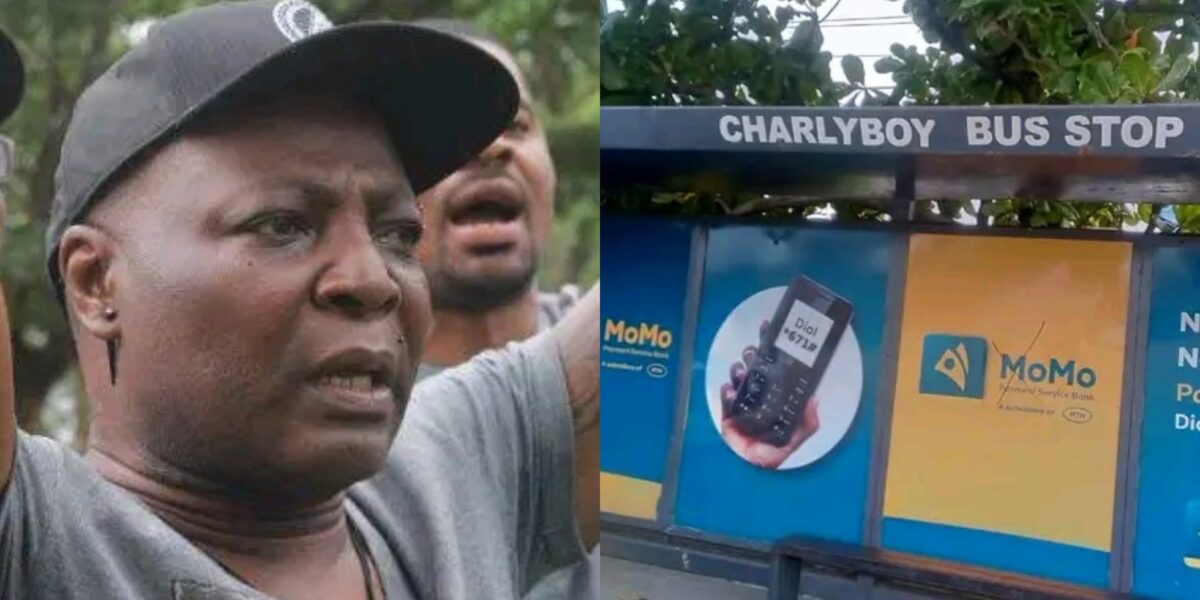
In a move that many Nigerians, especially Lagosians, have found both baffling and suspicious, the Bariga Local Council Development Area (LCDA) recently renamed the iconic “Charly Boy Bus Stop” after popular Nigerian music artist Olamide Adedeji, popularly known as Badoo. On the surface, the decision may appear harmless or even laudable. After all, Olamide is a native of Bariga and a widely celebrated artist who has placed Nigeria on the global map through his music.
But to dismiss this move as a mere act of honoring local heroes would be dangerously naïve. It is far more than symbolic as it reeks of ethnic favoritism, political pettiness, and a calculated effort to erase the memory of individuals who have stood on the side of the people, not power.
Let us not sugarcoat the truth: this renaming is suspiciously timed and smells of a deeper agenda. At a time when Nigeria is grappling with political polarization, increasing ethnic tensions, and the shrinking of democratic space, such a move is not just insensitive, it is outright provocative.
Charly Boy is more than a name. It is a cultural institution. The bus stop named after him evolved over time into a grassroots identity that resonated deeply with people, especially the ordinary citizens who navigate the daily struggles of Lagos life.
Charly Boy, born Charles Oputa, is an icon of resistance, a voice of the marginalized, and a thorn in the side of oppressive governments. His legacy is tied to decades of street-level activism, music, and performance art that directly challenge authoritarianism and injustice.
To rename that bus stop after anyone else, no matter how popular or talented, is to deliberately erase a symbol of people-powered resistance. It sends a chilling message: those who dare speak truth to power can and will be deleted from public memory when it suits the agenda of those in power.
The foregoing viewpoints is not to say that Olamide does not deserved to be honored. Never! Olamide deserves honor, but not this way
Let us be clear, this is not about attacking Olamide. He is an accomplished artist and a source of pride to Bariga. His music has entertained millions, and his journey from the streets of Lagos to global recognition is truly inspiring.
But the issue is “not whether Olamide deserves to be honored”, but “how” and “where” that honor is conferred. The “Charly Boy Bus Stop” is already imbued with decades of history and cultural identity. Replacing that name with Olamide’s, even if done with good intentions, unwittingly pits one legacy against another.
A more neutral street or landmark could easily have been renamed in Olamide’s honor without triggering ethnic and political suspicion. Instead, the decision to override an existing, symbolic name shows poor judgment and a lack of sensitivity to historical context.
Human rights activist, Journalist and former presidential candidate, Omoyele Sowore was one of the first to call out the ethnic and political undertones behind the renaming spree happening across Lagos. In a strongly-worded statement, he described the trend as “a spiteful rewriting of history meant to silence dissent and discredit voices that have long challenged authoritarianism.”
Sowore hit the nail on the head. This is not an isolated event. It is part of a larger pattern in which political authorities, emboldened by their grip on local councils and state institutions, are attempting to control not just policy but memory. And when you control memory, you control identity, and by extension, power.
Sowore’s warning is timely. Lagos does not belong to any single tribe, party, or godfather. It is a melting pot of identities, cultures, and histories. Attempts to ethnically or politically sanitize its public symbols are dangerous and must be firmly resisted.
It is impossible to ignore the pattern emerging from the recent renaming of streets and landmarks in Lagos. From Bariga to Ajeromi-Ifelodun, dozens of streets have been renamed after individuals closely associated with the ruling party or the dominant ethnic group in Lagos.
In the case of Bariga, the renaming spree included not just “Charly Boy Bus Stop” but also the rechristening of Ilaje Road to King Sunny Ade Road, Bariga Road to Bola Ahmed Tinubu Way, and Community Road, Akoka to Babajide Olusola Sanwo-Olu Road.
On the surface, these appear to be acts of recognition. But when they disproportionately favor certain political actors and appear to wipe out neutral or alternative legacies, the suspicion becomes hard to ignore. This looks less like civic appreciation and more like political and ethnic cleansing by semantics.
Nigerians are no strangers to political theatre. From overnight demolition of opposition strongholds to suspicious state honors granted to party loyalists, the ruling class often exploits public infrastructure as a means of consolidating power.
But renaming historical or symbolic landmarks, especially those tied to grassroots culture, must not be taken lightly. It affects how people relate to their environment, their history, and ultimately, their collective identity.
In a pluralistic city like Lagos, decisions about public naming must be guided by “cultural sensitivity”, “community engagement”, and “political neutrality”. Otherwise, they risk inflaming ethnic tensions and deepening distrust between the government and the governed.
One of the most glaring flaws in this entire episode is the absence of community consultation. Was there any town hall meeting? Was public opinion sought? Were residents asked whether they wanted the name changed in the first place? Of course not.
That is because this was never about honoring Olamide, it was about rewriting the story of Lagos, erasing certain voices, and replacing them with more politically convenient ones.
This kind of top-down governance, where the people are passive recipients of decisions made in smoke-filled council chambers, is exactly what fuels alienation and resentment in a democracy.
Without a doubt, Charly Boy’s name stands for something in the Nigerian imagination. To remove it from a public landmark without explanation or consent is not just disrespectful, it is “a political act”.
Honoring new icons like Olamide is welcome, but it must not come at the expense of erasing existing legacies that have meaning for many Nigerians. The government must find a better way to celebrate its heroes without resorting to cultural displacement or ethnic tokenism.
The name of a bus stop may seem small. But in a divided nation, even small symbols carry immense weight. If we allow partisan and tribal sentiments to dictate our public memory, then we are setting ourselves up for a dangerous future, one where history is not written by the people, but by those in power.
Let us not watch in silence as history is rewritten with erasers in the hands of politicians.