Africa
David Ụmahi: The Minister, The Mirror, And The Madness Of Power -By Vitus Ozoke, PhD
When a public servant cannot handle a simple question about cost, that’s not leadership. That’s cowardice dressed in agbada. Ụmahi’s outburst was more than rude behavior; it was evidence that our so-called leaders see themselves as kings, not caretakers. In a sane country, that interview would end careers. In Nigeria, it probably earns him a handshake at the next FEC meeting. And that, my friends, more than anything, shows why we are stuck.

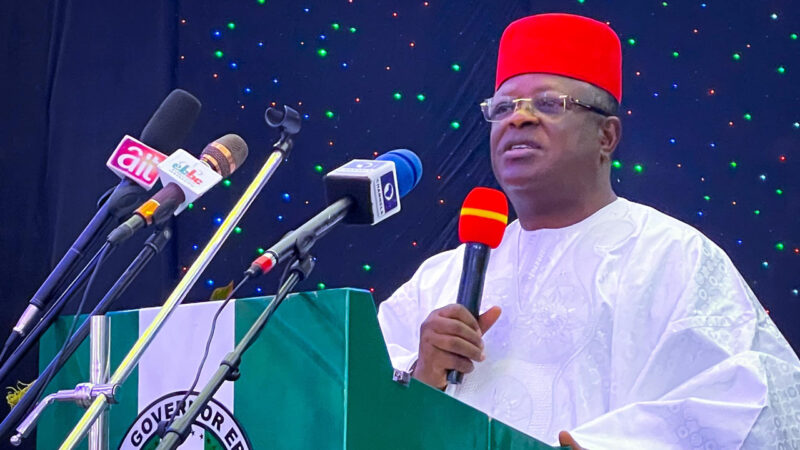
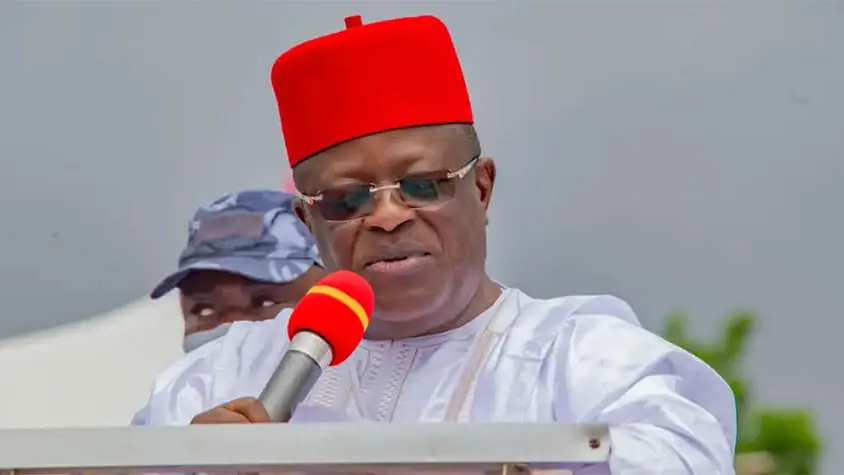
If you ever needed a masterclass in how to turn a national television interview into a full-blown meltdown of ministerial arrogance, look no further than David Ụmahi, Nigeria’s Minister of Works. The man didn’t just attend Rufai Oseni’s interview on Arise TV – he detonated on live TV.
Here was a journalist asking the most basic accountability question: “Sir, how much?” That question was both elementary and straightforward – a simple request for transparency regarding the cost of the controversial Coastal Highway project. In a country drowning in inflated contracts and vanishing trillions, all Rufai Oseni did was ask the obvious: “How much per kilometer?” Any official truly confident in their stewardship should welcome the chance to clarify.
However, this is Nigeria, and in true Nigerian political style, David Ụmahi heard an insult instead of an inquiry and responded with arrogance, condescension, defensiveness, and combativeness. So, what was meant to be an exercise in clarity – a chance to speak truth to the citizens he serves – became a mirror reflecting the vanity and volatility of Nigeria’s ruling class. The man bristled, barked, and bulldozed his way through a question that should have had a simple, data-backed answer. He puffed, he scolded, he wagged his ministerial finger – classic behavior from a political elite that believes questioning them is sacrilege. But this is Nigeria, where accountability is treated like a foreign virus and transparency is a taboo word uttered only in donor reports.
Ụmahi’s performance was a vivid portrait of the Nigerian political class in all its megalomaniacal glory – egotistical blowhards in fine agbadas who cannot bear the insolence of mere mortals asking where their tax naira went. To them, governance is not a duty; it’s a divine right. Question them, and you’ll be reminded, quickly, that you’re a “small boy” in the presence of emperors. This is the paradox of our politics: those who should answer questions see inquiry as insolence. They speak not as servants but as sovereigns, affronted by the audacity of citizens who dare to ask how their resources are spent.
So, Ụmahi’s encounter with Rufai Oseni was not just another heated exchange on national television – it was a window into the soul of Nigeria’s political class. What viewers saw was not an isolated incident of ministerial temper, but a symptom of a larger institutional malaise: an elite allergic to accountability. This hostility reflects the entrenched culture of impunity that controls Nigeria’s public sector. To many in power, being questioned by journalists or citizens is seen as a breach of hierarchy. They view governance as a privilege, not a duty.
But maybe, just maybe, there’s another angle – a tragicomic subplot in this Shakespearean farce. There’s an ethnic and psychological dimension worth considering. You see, Ụmahi didn’t just show up angry. He arrived burdened with the existential trauma of being an Igbo man in Nigeria’s political jungle. For many Igbo politicians working within Nigeria’s federal structure, there is a constant tension between ethnic identity and national loyalty. The ongoing detention of Nnamdi Kanu, leader of the Indigenous People of Biafra (IPOB), sharply contrasts with the fate of other regional agitators. It is a double standard that hasn’t gone unnoticed in the South-East.
Nnamdi Kanu is still held somewhere in Abuja, wasting away in a legal limbo that strangely doesn’t seem to affect other agitators. Sunday Igboho followed the same route, leaving Nigeria, returning, and now enjoying champagne under the Yoruba sun. Kanu, however, remains chained to the country’s double standards, much like a modern-day Prometheus.
And as if fate were mocking him further, another one of his Igbo brothers, Geoffrey Uche Nnaji, Minister of Innovation, Science, and Technology, just resigned over – wait for it – certificate forgery. The irony? He submitted his resignation to the Grand Oracle of forgeries himself. You can’t make this stuff up! You couldn’t script this in Nollywood – it would be rejected as too on-the-nose.
So yes, maybe Ụmahi’s tantrum on national TV wasn’t just arrogance – maybe it was the pressure cooker finally blowing its lid. Perhaps a deeper frustration with the contradictions of the system he serves and the emotional burden it imposes. Between watching his brothers suffer and seeing the grotesque hypocrisy of the system he chose to embrace, maybe something inside Umahi snapped. Maybe the man simply ran out of dignity to defend the bizarre and the absurd. But that’s a bit of a Hail Mary pass for Umahi, one that he could only score a touchdown with if he had an Igbo kindred spirit.
If Ụmahi were the kind of Igbo man whose blood still boiled with communal and kindred consciousness, he’d see Kanu’s and Nnaji’s ordeals as a wound on his own soul. But no, Ụmahi’s loyalty lies elsewhere. He long ago traded the crimson cloth of kinship for the green-white-green toga of convenient servitude and subservience. If David Ụmahi were a man aflame with ethnic empathy, his rage might have been a righteous one – a protest against the injustices inflicted on his people. And it would have been understandable.
But let’s be clear: understanding is not exoneration. Ụmahi’s outburst was a national embarrassment. He didn’t just disgrace himself; he reminded Nigerians that their so-called “leaders” often mistake public service for personal fiefdom. Frustration does not excuse incivility. A public official’s duty is to maintain composure and transparency, not to lecture citizens on their “smallness.” And despite all the talk of being an “Engineer,” Ụmahi has yet to master the basic mechanics of humility. The man would rather bulldoze his way through his interview than build trust with the public. Therefore, a man who went on TV to talk about public roads ended up paving his own road to public embarrassment.
So, no, David Ụmahi doesn’t get a pass. He gets a plaque in Nigeria’s Hall of Infamy, right next to every other official who treats accountability like an insult. He is the perfect poster child for a political elite that believes the people exist to applaud, not to ask questions.
Ultimately, Rufai Oseni didn’t just interview a minister; he exposed a mindset. And David Ụmahi, in all his bluster, gave us the perfect soundbite for our times: a chorus of entitlement echoing from the corridors of power, drowning out the faint whispers of responsibility. Nigeria needs leaders who understand that public service is not an arena for ego, but a platform for accountability. The Works Minister’s display, unfortunately, reminded us that the journey to that ideal remains a long one.
In the final analysis, Ụmahi’s outburst was not just an impulsive act but a revealing one: that behind every loud-mouthed minister stands a fragile ego, terrified of truth’s quiet persistence. That power in Nigeria is less a calling than a costume – one that too often hides insecurity behind bluster. When a public servant cannot handle a simple question about cost, that’s not leadership. That’s cowardice dressed in agbada. Ụmahi’s outburst was more than rude behavior; it was evidence that our so-called leaders see themselves as kings, not caretakers. In a sane country, that interview would end careers. In Nigeria, it probably earns him a handshake at the next FEC meeting. And that, my friends, more than anything, shows why we are stuck.
Dr. Vitus Ozoke is a lawyer, human rights activist, and public commentator based in the United States.