
Global Issues
Demography, Investment and Development: Critical Questions facing Russia’s Far East and Arctic Regions -By Kestér Kenn Klomegâh

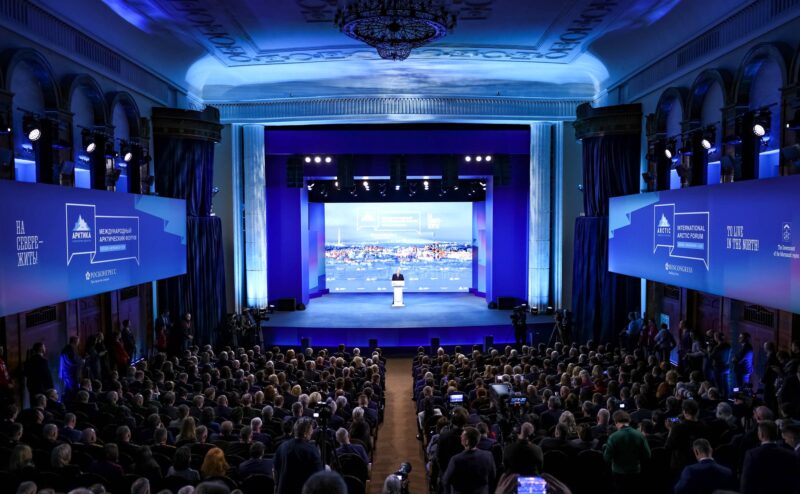
The Arctic is widely known as a strategic region. It is a unique geographical territory that connects Canada, the Kingdom of Denmark, Finland, Iceland, Norway, Russian Federation, Sweden and the United States. Russia, for instance, consistently expresses a cross-cutting priority to ensure responsible governance for the sustainable development of the Arctic region. These several years, Russia has proposed numerous projects and initiatives, primarily aim at raising the region’s environment for habitation, emphasizing its importance for international cooperation.
At the 6th Arctic Dialogue forum, held late March, 2025 in a comprehensive and substantive manner, sought to discuss and review a multitude of significant issues and development prospects with Russia’s foreign partners. The Arctic region, currently revealing fascinating landscapes due to the climate change, is increasingly becoming warring field for, with foreign countries contending and vying to take strategic control of natural resources. Arguably both the Arctic region and the vast Far East region share a lot in common: huge untapped resources and extremely low population. Russia has terribly been unsuccessful in re-populating these two vast regions. Russia’s migration policy relatively have not addressed anything in these two regions. On the other hand Russia has tightened its policy on labour migration and expelling consistently foreign workers. Many questions still persistent and have remained unanswered until today.
Reviewing critically Russian President Vladimir Putin’s previous speeches, over the Arctic and Far East regions, Russia has been struggling to find pathways to deal effectively with demography, investment and development questions. For a quick comparison, the Far East covers approximately 30% of Russia’s territory with estimated population of 6.3 million, and considered one of the most sparsely populated areas in the world. The Far East is almost the size of Canada with its current population (a mixture of natives plus legalized immigrants) more than 38 million. The Russian government continues discussing a wide range of re-population programmes, hoping to attract in particular Russians from urbanized cities, even offering incentives such as double income, mortgage system, early retirement and free plots of land, but little results have been recorded. Both the Arctic and Far East regions remains sparsely populated until today.
President Vladimir Putin, at the plenary session of the 6th Arctic Dialogue forum, the largest platform for discussing and reviewing multitude of significant issues and development prospects with Russia’s foreign partners, has (re)outlined many questions in the presence of the Northern municipal authorities, corporate business leaders, prominent academics and experts. For President Putin, the first and foremost relates to ensuring security and stability, comprehensive economic development and people’s sustenance in the Arctic region. In addition, it concerns the substantive opportunities for cooperating and supporting the provision of energy, infrastructure and environmental projects. In short, the central point is connected to establishing effective mechanisms for the joint use and exploration of the Arctic region’s abundant resources and to improve the welfare of population in the region.
According to President Vladimir Putin, Russia is the largest Arctic power. It has consistently advocated for equitable cooperation in the region. This cooperation encompasses scientific research, biodiversity protection, climate issues, economic and industrial development of the Arctic. Regrettably, cooperation in northern latitudes is currently facing significant challenges due to shifting geopolitical situation. The geopolitical competition and fighting for positions in this region continues escalating in the meanwhile.
The United States has serious plans regarding Greenland. It is obvious that the United States will continue to consistently advance its geo-strategic, military-political and economic interests in the Arctic. Russia’s fears are that North Atlantic Treaty Organization (NATO) countries are increasingly often designating the Far North as a springboard for possible conflicts and are practicing the use of troops in these conditions, including by their “new recruits” – Finland and Sweden. Here, Russia is more concerned about its national interest and sovereignty. By simple description, NATO is an international military alliance consisting of 32 member states from Europe and North America.
Nevertheless, Russia expresses willingness to involve friendly states, and perhaps even Western countries – provided, however, that they demonstrate a genuine interest in cooperative efforts in this Arctic zone, which accounts for over a quarter of the Russian Federation’s territory. Current estimates indicate that the Arctic generates 7 percent of Russia’s gross domestic product (GDP) and approximately 11 percent of its exports. There is an enormous potential for the region’s further comprehensive development. A critical priority is strengthening the Arctic’s transport and logistical framework, develop prospective trade route through the northern seas to the East, reaching China via the so-called Northeast Passage – the precursor to the Northern Sea Route.
The Northern Sea Route is poised to become a pivotal segment of the Trans-Arctic Transport Corridor, stretching from St Petersburg through Murmansk to Vladivostok. This corridor is designed to connect global industrial, agricultural, and energy hubs with consumer markets via a shorter, safer, and more economically viable route. This is widely acknowledged – experts across the East and West recognize its significance.
There are advantages: First, Russia already operates the world’s biggest icebreaker fleet, which has to consolidated. Second, Russia is a sovereign nation, and as such it needs a merchant fleet of its own in the Arctic, including cargo, search and rescue ships for operating shipments in northern seas, as well as within our internal waters in the Arctic. Third, Russian shipping companies that transport petroleum products and liquefied natural gas are already successfully operating in the northern seas. Now there is the need to create enabling conditions for effective domestic operators who will be shipping containers, coal, bulk and other goods across the Arctic. Fourth, plans are in place to increase the capacity and turnover of our northern ports through the introduction of innovative and environmentally friendly solutions, including unmanned and automated cargo handling equipment.
From the above analysis, the basic requirement is improving the logistical stability of the Trans-Arctic Corridor, and to create large multimodal hubs to operate as key logistics centres of the Trans-Arctic Transport Corridor. It is a very interesting undertaking from a business point of view, to attract potential foreign partners and investors in the development of the Arctic transport infrastructure in general. In this case, Kremlin has positioned itself to address the prospects of attracting and offering the necessary support for investment and business in the Arctic, as well as the improvement and modernization of Northern cities. The greatest related question here again is population in the region. Generally, Russia is facing declining population, while the Far East and the Arctic undoubtedly need an accelerated development for human habitation. This requires, among other things, the creation of a comfortable living environment. This is undeniable facts about today’s Russia.
Over the years, Russian President Vladimir Putin has declared that the Far East would be a priority region for Russia in the 21st century. But in order to actualize this, Kremlin has to change its migration policy. Even the tectonic rhetoric over ‘multipolar’ has little impact, to make Russia visibly multicultural and multipolar nation. Legalizing 1.5 million and transferring them to Arctic and Far East regions to boost employment and systematically engage this labour in production sphere, area of activity is extremely hard for Russian government. Canada, the size of Arctic region, has more than 38 million, Japan with small territory has a population of 128 million people. Apparently, it is important to resort to flexible approaches here, to attract both Russian and foreign investors. Kremlin has to encourage the resources of the state, regions, and businesses, including both state-owned and private banks, – a kind of combination to pursue these and other major initiatives. The capabilities of the domestic stock market must also be utilized to attract capital to the Arctic infrastructure.
Currently, deposits of oil and gas, metals and other minerals are being developed in the Russian Arctic. The task is to launch enterprises of deep processing of raw materials in the Arctic regions using the powerful resource base there; to create high value-added production facilities in petrochemistry, natural gas conversion, rare earth metals, and other industries related to machine building, production of sophisticated machinery and industrial equipment, while preserving the unique nature of the Arctic.
At several foums down the years, many development experts have expressed the slowness as regards to the pursuit of systematic transforming the Arctic and Far East regions, which needs good transportation network, good infrastructure and good social facilities, create employment opportunities and suitable conditions for human habitation. Some experts say it is necessary to expand support measures for business startups, consistently attempt to identify and remove development obstacles. Closely related to above is development of promising areas for tourism. The tourism industry will be killed and dead if Russia continues, at the strictest levels, its approach of discriminating against non-Russians. Canada, the size of Arctic region, has more than 38 million, Japan with small territory has a population of 128 million people. The Arctic and entire the North are unique concentrations of natural, historical, and spiritual landmarks. The region boasts an extraordinarily rich cultural mosaic. Over a million tourists visit the Arctic annually to explore its landscapes, witness the northern lights, engage in Arctic fishing, ride dog sleds, or journey to polar archipelagos.
It is extremely commendable that President Vladimir Putin, in his debuted speech, proposed the inclusion of White Sea tourism infrastructure development in the Five Seas and Lake Baikal federal project. To make the Arctic accessible for mass tourism, transport connectivity is crucial – from the repair and construction of roads to the development of air travel. Putin reiterated the creation of a system of subsidised airfare rates for flights to Arctic cities. Last year, approximately 800,000 passengers utilised this opportunity. In support for tourism, it requires at the same time, modernizing and upgrading 16 airfields in the Arctic Zone, including those in Salekhard, Arkhangelsk, Naryan-Mar, and Vorkuta.
Besides everything, the most essential factor here again is population, as the overarching goal of Russia’s efforts is to improve the quality of life for people living in the Arctic, to ensure modern conditions for study and work, leisure, and the upbringing of children in this harsh region, – the Northern and Arctic regions. The Kremlin in collaboration with Northern and Arctic municipalities have to set forth long-term socioeconomic and spatial development visions for cities, towns and villages. Creating people-friendly environment is the key, to engage in identifying more opportunities for accessibility of medical services, improving embankments, pedestrian areas and playgrounds, building parks, gardens, and so on. The Arctic must be a territory of great opportunities for specialists in various fields, for entrepreneurs, for young people, and for families. Russia’s Far East, North and the Arctic should not be segregated regions, but rather a multicultural population is the main factor in Russia’s development.
President Vladimir Putin has to acknowledge, and of course he knows the truthful and irreversible fact that the Russian Arctic offers a wealth of opportunities for working and creating; it is a place where the skills and talents of young people can be put to use along with the expertise offered by professionals across various specializations, and bold entrepreneurial, research, and creative initiatives can be brought to life. Russia has to get committed to cooperating with all interested partner countries, organizations and associations in this major endeavour. Today, the Arctic and the North have become central to Russia’s development efforts, make comprehensive development and create a solid foundation for future generations!
—























You must be logged in to post a comment Login