National Issues
“Demonstration of Serious Ignorance on Governance and Economy” Is Not Too Harsh for Atiku -By Abdullahi Abubakar
Nigeria deserves consistency. Nigeria deserves accountability. Above all, Nigeria deserves an economic policy built on facts, figures and sustainability not whatever promise happens to be most popular during an election season.

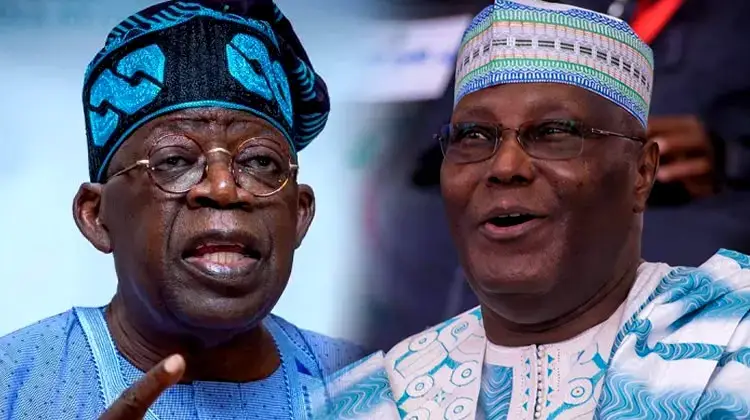
President Bola Ahmed Tinubu’s description of the proposal to return Nigeria to a petrol-subsidy regime as a “demonstration of serious ignorance on governance and economy” has generated political debate. But when the statement is examined against the public record, it is difficult to argue that the President’s criticism is without basis.
The real issue is not whether Atiku Abubakar is entitled to change his mind. In a democracy, politicians can review their positions when circumstances change. The more important question is this: what has fundamentally changed in Nigeria’s fiscal reality to justify bringing back a policy that Atiku himself once described as fraudulent and promised to abolish?
That question deserves an honest answer.
On November 15, 2022, while speaking at the Lagos Business School Alumni Conference, Atiku was unequivocal about his position on fuel subsidy. He recalled that he had chaired the committee on subsidy removal during the Obasanjo administration and said he would continue from where previous efforts stopped and remove the subsidy completely. He went further, describing the subsidy regime as “just a fraud.” (The Guardian Nigeria)
This was not an off-the-cuff statement. It was presented as part of his economic recovery programme.
Atiku had also spoken about subsidy removal before the 2023 election. In July 2022, he said the removal of fuel subsidy was inevitable and that, if elected, he would work with organised labour and other stakeholders to complete the process. (Nairametrics)
Then, in December 2022, just weeks before the presidential election, Atiku stated that he would remove fuel subsidy within his first 100 days in office. He also promised to provide a roadmap for investing the proceeds of subsidy removal. (BusinessDay)
The significance of these statements is difficult to ignore.
Atiku was not merely supporting subsidy removal because President Tinubu was doing it. He was advocating it himself as an economic necessity.
Indeed, the argument in his own policy document was even more revealing. In Let’s Get Nigeria Working Again, Atiku’s economic blueprint proposed establishing a special-purpose fund through which money saved from subsidy removal would be invested in infrastructure, education, healthcare and the empowerment of women and young people. (Okay News)
That is precisely why Nigerians should ask what has changed.
If subsidy was a “fraud” in 2022, why should it become an economic solution in 2026?
If subsidy removal was important enough to be implemented within the first 100 days of an Atiku presidency, why is restoring it now being presented as the answer to Nigeria’s economic problems?
And if the argument is that the Tinubu administration has failed to properly account for the resources freed by subsidy removal, then surely the logical policy response should be greater transparency, accountability and better deployment of public resources not a return to a system previously described by Atiku himself as fraudulent.
There is a legitimate debate to be had about the manner in which subsidy removal was implemented. Nigerians have every right to demand accountability for public revenue. They have every right to ask how savings have been deployed, whether social protection has been adequate and whether the burden of reform has been fairly distributed.
Those are serious questions.
But accountability for the implementation of subsidy removal is different from arguing that the subsidy regime itself should return.
Nigeria’s economic challenge is not solved simply by making petrol artificially cheaper. Someone ultimately pays for the difference between the market cost and the subsidised price. When government bears that cost, the money has to come from somewhere taxes, borrowing, oil revenue, reduced public spending or other government resources.
That is the fundamental economic question politicians must answer.
A subsidy can provide short-term relief to consumers, but if it creates a large and recurring fiscal burden, it can also reduce the resources available for infrastructure, education, healthcare, security and other public services. That was precisely the logic behind Atiku’s own 2022 argument: remove the subsidy and redirect the resources into productive areas of the economy.
Therefore, the debate should not be reduced to “cheap petrol versus expensive petrol.” The real question is whether Nigeria can sustainably afford to spend scarce public resources keeping fuel prices below their economic cost, and what Nigerians receive in return for that expenditure.
This is where political consistency becomes important.
A presidential candidate asking Nigerians for their votes must be able to explain not only what he proposes today, but also why he proposed something different yesterday.
Atiku can legitimately say that he has changed his mind. He can argue that the Tinubu administration has mishandled the proceeds of subsidy removal. He can propose a targeted subsidy for vulnerable Nigerians rather than a blanket subsidy. He can even present a completely different economic philosophy.
But Nigerians deserve a serious explanation for the reversal.
The political temptation is obvious. Fuel prices affect virtually every Nigerian. When people are struggling with transportation costs, food prices and household expenses, a promise to reduce the price of petrol can sound attractive.
But presidential elections should not be won by offering Nigerians the most attractive promise. They should be won by presenting the most sustainable economic programme.
This is why Tinubu’s criticism deserves to be understood within the broader economic debate rather than dismissed as political name-calling.
President Tinubu recently said that a proposal to return to fuel subsidy demonstrated “serious ignorance on governance and economy.” His remarks came after Atiku’s new pledge to restore the subsidy if elected in 2027. (Leadership)
Atiku has since argued that his position changed because he wants to know where the savings from subsidy removal have gone. Reports of his recent position quote him as saying that he initially did not oppose subsidy removal but would restore the subsidy if elected, while demanding an account of the funds involved. (Leadership)
That demand for accountability is legitimate.
But there is a contradiction that cannot simply be wished away.
You cannot tell Nigerians that subsidy is a fraud, promise to abolish it within your first 100 days, propose using the savings for education, healthcare and infrastructure, and then years later campaign on restoring the same policy without convincingly explaining why your economic diagnosis has changed.
Politics is about persuasion, but governance is about consequences.
A serious economic programme must therefore answer five basic questions: How much will the policy cost? Where will the money come from? Who will benefit? How long can it be sustained? And what will Nigeria have to sacrifice to finance it?
If Atiku wants to return to subsidy, Nigerians deserve clear answers to these questions.
How much will the federal government spend annually?
What percentage of federal revenue will go into subsidising petrol?
Will the government borrow to finance it?
Will allocations to states and local governments be reduced?
Will spending on roads, schools, hospitals and security be sacrificed?
And most importantly, what happens when oil prices fall or production declines?
These are not partisan questions. They are questions of governance.
The history of Nigeria’s subsidy debate also demonstrates why politicians must be careful about making promises designed primarily to appeal to immediate emotions. Nigerians have seen governments struggle with the fiscal consequences of maintaining expensive petroleum subsidies, while resources that could have been directed towards productive investment are consumed by the scheme.
Atiku’s own 2022 statements recognised this problem.
That is why his current position deserves scrutiny not because he is forbidden from changing his mind, but because the country deserves to know whether the change is based on a new economic assessment or a new political calculation.
There is also a larger lesson here for Nigerian voters.
We must stop evaluating economic policies solely by how they sound at the filling station.
A cheaper litre of petrol does not automatically mean a stronger economy. Likewise, removing subsidy does not automatically mean a stronger economy. What matters is what government does with the resources available, how efficiently it spends them, how it protects vulnerable citizens and whether the policy creates conditions for sustainable growth.
The Tinubu administration should therefore not escape scrutiny simply because Atiku has changed his position. The government must continue to explain how additional revenues are being deployed and demonstrate measurable improvements in the lives of Nigerians.
But opposition politicians must also be held to the same standard.
If Atiku believes subsidy should return, he must make the economic case not merely the political case.
He must explain why the policy he once described as fraudulent has suddenly become desirable.
He must explain what has changed.
And he must show Nigerians the numbers.
Because ultimately, Nigeria does not need politicians who tell citizens what they want to hear. Nigeria needs leaders who are prepared to tell Nigerians what the country can afford, what it cannot afford, and why.
The 2027 election should therefore become a contest of economic ideas, not a competition in promises.
Atiku has every right to seek the presidency again. Nigerians have every right to question his policies. And his previous statements on fuel subsidy are part of the public record.
The question before voters is simple:
If Atiku was right in 2022 that fuel subsidy was a fraud and should be removed, what has changed in 2026 to make him believe that bringing it back is now the solution?
Until that question is convincingly answered, President Tinubu’s description of the proposal as a “demonstration of serious ignorance on governance and economy” will remain a politically harsh statement but one with a substantial economic argument behind it.
Nigeria deserves consistency. Nigeria deserves accountability. Above all, Nigeria deserves an economic policy built on facts, figures and sustainability not whatever promise happens to be most popular during an election season.
Abdullahi Abubakar
He writes From Zaria, Kaduna state and can be reached via medicalscientist2016@gmail.com