Forgotten Dairies
Digital Protection Is a Lie: Surveillance, Control, and the Collapse of Human Rights Safeguards -By Fransiscus Nanga Roka
The space that digital technology, originally believed as a means of empowerment would bring more democratic processes is repressed in quiet desperation all the evidence from China proves that thus the tendency will be extended to other countries which were formerly democratic.

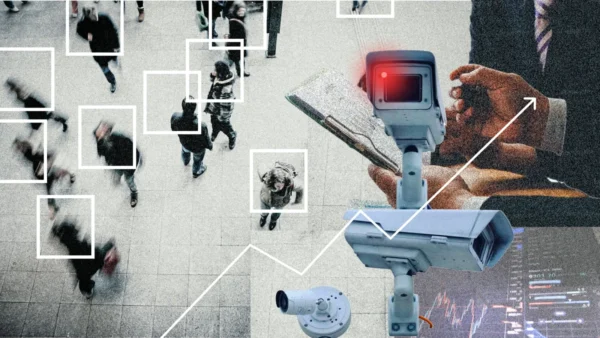
“Digital protection” is this era’s biggest swindle, possibly as attractive as it is mendacious. Even as the phrase promises safety, security and resilience in an increasingly networked environment where we live digitally more than offline, it carries beneath this soft language a rather unfociable truth. What is being sold as “protection” actually involves both full scale surveillance and complete control.
Governments across the world have become skilled at weaponizing fear. Under such guises as cyber security, combating terrorism, and protecting children online, they have established broad legal frameworks for accessing unprecedented levels of personal information. These laws are not neutral. They are cast widely, applied selectively, and defended in terms of policy imperatives. Those who uphold human rights those who seek to expose abuse of power, question bureaucracies and insist on accountability from the government are often the first ones picked off.
This is not an unintended consequence. It is the way the system operates.
Governance has already become surveillance as the default mode of infrastructure. States no longer wait around for crimes to occur; they monitor, predict and prevent them in advance. Digital communications are intercepted. Metadata is collated. Biometric systems physically track human movement, the bodies themselves in real time. In this environment, only the act of dissent seems unnatural. Advocacy gets transmuted into something dangerous. Criticism appears threatening.
By the same token, corporations have constructed an economy based on the extraction and monetization of human behavior. Every mouse click, sent message and motion translated into the memory of a computer is turned into data refined, sold yet used again. This, however, is not just an economic model; it is a kind of power as well. And, when governments demand this information be handed over to them, companies almost never resist. The collusion between state surveillance and commercial data harvesting has led to a system that is both ubiquitous yet opaque.
Artificial intelligence has served to deepen this crisis again.in this light, Algorithms sort, classify and judge individuals. Large scale too! What would the world look like without them? Which content is visible and which voices are not? Which accounts are flagged for attention are decidedweetness Yet yourIts own systems operate without transparency, accountability and indeed creative thinking about accuracy; yet at every level there are leaks and sources of information that undermine it. Bias is built into their very framework. Error is hidden in the complexity of these systems. For human rights activists, this means that their work may be invisibly suppressed or algorithmically criminalized but without any explanation or appeal. None the result is a new form of repression. Not so much reliant on use of force nowdays. Surveillance need not actually silence people; it simply has to frighten them so much that they will not speak, and this is nearly worse. It makes people withdraw, it creates a chilling effect. Individuals impose censorship on themselves and go into hiding, for all intents and purposes. This is how freedom dies, not by sudden collapse but by a steady suffocation which makes this system so potentially dangerous is its legitimacy. It is not repression openly imposed on people. It is veiled as ‘protection’. Governments say they are keeping their citizens safe. Corporations argue that they are improving the user experience. In the name of security, laws are passed. But a system which watches everyone to protect a few does not protect those, It dominates them. Human rights law was never intended to accept this. It was formulated to set limits on powers that were never meant in any way rightfully to exist. Yet today, legal frameworks are being stretched, reinterpret learn one must learn that technically accountability is being diluted. Remedies are inaccessible. The law is no longer a shield,I t is now becoming weapon, termegrator. Oversight mechanisms fall behind the advance of technology. Remeditative means are no longer possible. The law is no longer a shield: It is beginning to move into being used as an instrument.
This is not a policy failure, but a structural betrayal. A system that claims to protect human rights defenders while enabling their surveillance does not merely fail. Instead it perpetuates a deception about the nature of protection, replacing it with monitoring; security with risk management; and control in place of justice. Carefully woven nets of social illusion then help to satisfy surveillance’s appetite for raw materials.
If such a direction remains unchanged, the consequences will be dire. Human rights defenders will not disappear altogether, but their ability to work will diminish; their voices will fade; and the sphere of danger in which they operate and live will expand itself through cyber technology.
The space that digital technology, originally believed as a means of empowerment would bring more democratic processes is repressed in quiet desperation all the evidence from China proves that thus the tendency will be extended to other countries which were formerly democratic.
For the world to change course demands more than piecemeal reform: it needs a showdown. States not only basic self-surveillance practices must be brought into line with rigorous human rights standards, they have to be pushed back to accountability. Companies which manufacture the infrastructure behind our contemporary monitored society should also be responsible for their creation and exploitation. Openness will supersede concealment, rights must come before convenience and control.
Because the real issue is no longer whether or not digital systems can protect us. It is: are we prepared to answer the challenge of systems which claim to be our protectors?
When protection becomes surveillance, and governance control, the promise of digital safety turns into a means of power control. And in that change, human rights are not safeguarded, they are systematically dismantled.
Fransiscus Nanga Roka
Faculty of Law University 17 August 1945 Surabaya Indonesia