Health and Lifestyle
Ebola’s Return and Africa’s Familiar Warning -By Patrick Iwelunmor
No continent can sustainably outsource its public health security. Africa must begin to treat healthcare investment as seriously as national security because epidemics can destabilise economies and societies just as rapidly as armed conflict. For now, the seriousness being shown by some African governments and global health agencies offers cautious hope. But hope alone has never stopped a virus. What Africa needs now is vigilance without panic, preparedness without complacency and cooperation without politics. Ebola’s return is more than a medical warning. It is a reminder that the continent still has lessons from its past that it cannot afford to ignore again.

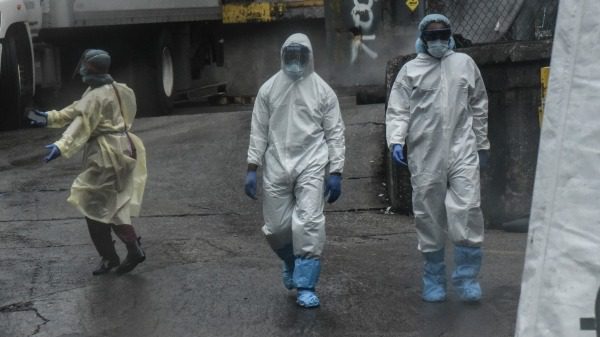
There are certain tragedies Africa should never have to revisit. Ebola is one of them.
The renewed outbreak of the Ebola virus in parts of Central and East Africa has once again stirred painful memories many Africans hoped had been laid to rest years ago. From communities in the Democratic Republic of the Congo to affected areas in Uganda, an old fear is quietly returning — not simply because Ebola is deadly, but because Africa remembers what happens when fragile healthcare systems are forced to confront fast-moving epidemics with limited resources.
For many outside the continent, Ebola may sound like another troubling headline in the international news cycle. But for Africans, especially those who lived through the devastating 2014–2016 outbreak, the word carries the weight of grief, panic and collective trauma. It recalls images of overcrowded hospitals, frightened communities, exhausted health workers and families unable to mourn their loved ones properly because fear had overtaken normal life.
That outbreak remains one of the darkest public health crises in Africa’s modern history. What began quietly in Guinea spread rapidly through Sierra Leone and Liberia, infecting more than 28,000 people and claiming over 11,000 lives. Economies slowed. Schools closed. Hospitals became overwhelmed. Entire communities lived in fear of physical contact. In Nigeria, the arrival of Patrick Sawyer in Lagos could easily have triggered a national catastrophe. Yet the country’s swift response remains one of Africa’s finest examples of public health coordination. Behind that success, however, were ordinary Nigerian health workers who risked everything to contain the virus. One physician paid with his life while treating an infected patient. Others continued working despite fear, uncertainty and personal danger. Their sacrifice should never be forgotten.
One would have expected that experience to permanently reshape Africa’s public health priorities. Sadly, many of the same vulnerabilities remain painfully visible today. The Democratic Republic of the Congo has reportedly recorded hundreds of suspected cases and more than a hundred deaths, while Uganda has also confirmed infections. More worrying is the fact that the outbreak involves the rare Bundibugyo strain of the virus, for which there is currently no approved vaccine or specific treatment. This explains why the World Health Organisation has responded with such urgency.
Speaking at the close of the 79th World Health Assembly in Geneva, WHO Director-General Tedros Ghebreyesus warned that the recent Ebola and hantavirus outbreaks were reminders that the world remained vulnerable to rapidly spreading infectious diseases. Africa, in particular, cannot afford to ignore that warning. Diseases do not recognise national borders, immigration checkpoints or political speeches. Once containment weakens, outbreaks move far quicker than bureaucracy.
This is why African countries must stop treating health emergencies as isolated national problems. An outbreak in eastern Congo is not Congo’s problem alone. Uganda’s vulnerability is not Uganda’s burden alone. In a continent where borders remain porous and healthcare infrastructure is uneven, any serious outbreak can quickly become a regional crisis. Public health emergencies require continental thinking, regional cooperation and collective responsibility.
One of Africa’s recurring weaknesses has been reactive governance. Too often, governments move decisively only after outbreaks begin to spiral. Preparedness rarely attracts the same urgency as emergency response. Hospitals remain neglected until crisis arrives. Laboratories are underfunded until diagnosis becomes urgent. Border surveillance becomes active only after infections are confirmed elsewhere. Yet viruses do not wait for budget approvals, political debates or administrative convenience.
To its credit, the United Nations has already deployed emergency personnel, funding and medical supplies to affected areas. The release of 60 million dollars from the Central Emergency Response Fund demonstrates that the international community understands the seriousness of the situation. However, funding alone will not stop the outbreak if local systems remain weak. The governments of the Democratic Republic of the Congo and Uganda must continue working closely with the Africa Centres for Disease Control and Prevention and the World Health Organization to strengthen surveillance, contact tracing and emergency coordination. This is not the moment for political rivalry or institutional ego. Disease outbreaks demand transparency, speed and cooperation.
Communities also have an important role to play. During previous Ebola outbreaks, misinformation and fear often complicated response efforts. Some communities distrusted health workers. Others believed false rumours about the virus. In certain places, deeply rooted burial traditions unintentionally increased transmission. These realities remind us that public enlightenment is just as important as medical intervention. Governments must communicate honestly and consistently, while citizens must take preventive measures seriously without giving way to panic.
Nigeria’s current posture offers some reassurance. Perhaps because of its previous encounter with Ebola, the country appears to have activated precautionary measures early. The Nigeria Centre for Disease Control and Prevention has already raised the national alert level despite the absence of confirmed cases. That is the kind of vigilance outbreaks require. Still, preparedness must go beyond press briefings and official statements. Surveillance at airports, seaports and land borders must remain active. Laboratories must be equipped for rapid diagnosis. Healthcare workers require continuous training and adequate protection.
Another encouraging development has been the proactive response of the Pharmaceutical Society of Nigeria, which placed pharmacists and community pharmacies on high alert following the resurgence of Ebola in affected African countries. That decision reflected a clear understanding of how outbreaks are often first detected within communities before they escalate nationally. In many African societies, pharmacists remain among the most accessible healthcare professionals. Community pharmacies are often the first place ordinary people turn to when symptoms appear. This places pharmacists in a crucial position for early detection, public education and emergency referral.
In an advisory signed by the President of the PSN, Ayuba Tanko, pharmacies have been urged to strengthen biosecurity measures against any possible outbreak. That level of preparedness deserves recognition because epidemics are not contained only inside government offices or international conferences; they are contained within communities through awareness, vigilance and coordinated local action.
Yet beneath all these discussions lies a deeper issue Africa must confront honestly: the longstanding neglect of healthcare infrastructure across much of the continent. The Ebola outbreak is not only exposing viral vulnerability; it is exposing systemic weakness. Too many African countries still devote more attention to politics than to healthcare investment. Hospitals remain poorly equipped. Medical professionals continue leaving for better opportunities abroad. Rural communities remain cut off from quality healthcare services. Emergency preparedness still depends too heavily on foreign intervention.
No continent can sustainably outsource its public health security. Africa must begin to treat healthcare investment as seriously as national security because epidemics can destabilise economies and societies just as rapidly as armed conflict. For now, the seriousness being shown by some African governments and global health agencies offers cautious hope. But hope alone has never stopped a virus. What Africa needs now is vigilance without panic, preparedness without complacency and cooperation without politics. Ebola’s return is more than a medical warning. It is a reminder that the continent still has lessons from its past that it cannot afford to ignore again.