
Economy
Economylaria: Nigeria’s Sickness Is Curable, but Our Politicians Are Quack Doctors, by Isaac Asabor


Nigeria, a once vibrant and hopeful entity, now lies bedridden, groaning under the weight of a sickness that has been festering for years. This affliction, which we shall call “Economylaria,” is not an incurable ailment. In fact, the cure is well within reach. Yet, despite all the resources at her disposal, the doctors in charge, the politicians, seem either woefully incompetent or tragically indifferent.
Nigeria, once hailed as the “Giant of Africa,” was a nation brimming with potential and prosperity. In her early years, she was rich in natural resources, particularly oil, which fueled her economy and positioned her as one of the wealthiest nations on the continent. The 1970s oil boom brought unprecedented revenue, enabling significant infrastructural development, social programs, and a burgeoning middle class. Nigeria was a beacon of hope for many African nations, showcasing what could be achieved with abundant resources and a thriving economy.
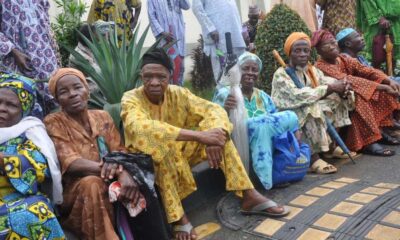
However, the story of Nigeria’s wealth has taken a tragic turn in recent decades. Despite the continued flow of oil revenue, mismanagement, corruption, and poor governance have eroded the nation’s wealth. The once-prosperous economy is now marred by poverty, unemployment, and an ever-widening gap between the rich and the poor. Public services are underfunded, and infrastructure has deteriorated, reflecting the broader economic decline. The promise of prosperity has been replaced by the reality of hardship for many Nigerians, who struggle daily to make ends meet.
Today, Nigeria’s wealth is a shadow of her former self. Her vast resources remain largely untapped or misused, and the economic challenges she is faced with, particularly under the politicians who claimed to be “Doctor-know-all” have deepened. The streets that once symbolized hope and opportunity now tell a different story; one of a country grappling with the consequences of her lost wealth. The contrast between what Nigeria was and what she has become is stark, serving as a poignant reminder of the nation’s potential and the urgent need for reforms to restore her former glory.
Economylaria, like its biological namesake, manifests in waves of feverish instability, chills of poverty, and the persistent ache of unemployment and inflation. The symptoms are all too familiar to Nigerians: a currency that struggles to hold its value, rising prices that make daily living an ordeal, and a sense of hopelessness that hangs like a dark cloud over the nation’s future.
In any other scenario, this illness would have been tackled head-on. A competent team of experts would have diagnosed the problem, prescribed the necessary treatment, and carefully monitored the patient’s recovery. But Nigeria’s doctors, our politicians, seem to have misplaced their medical degrees.
Rather than administering the correct dose of economic reforms, these so-called healers have been dabbling in quackery. They prescribe austerity measures without first addressing corruption, a treatment that only worsens the patient’s condition. They siphon off the very medicine meant for the sick, lining their pockets with funds intended for public welfare. And instead of working together to craft a cure, they bicker and squabble, using the nation’s suffering as a pawn on their political chessboard.
The truth is,Economylaria is not incurable. Countries that were once in far worse conditions have managed to bounce back, thanks to decisive and competent leadership. Take South Korea, for example. In the 1950s, it was one of the poorest countries in the world, ravaged by war and economic instability. But through focused leadership, investment in education, and industrialization, South Korea transformed itself into a global economic powerhouse.
Closer to home, Rwanda was on the brink of collapse in the 1990s, ravaged by genocide and economic ruin. Today, it stands as one of Africa’s fastest-growing economies, a testament to what determined leadership and anti-corruption measures can achieve.
Brazil, too, faced its own bout with Economylaria during the 1980s and 1990s, when hyperinflation and debt crippled its economy. Yet, through reforms, prudent fiscal policies, and social programs aimed at reducing poverty, Brazil emerged stronger and healthier, lifting millions out of poverty and stabilizing its economy.
These countries, once plagued by economic maladies far worse than Nigeria’s current condition, managed to cure themselves. They found the right doctors, leaders who understood the need for genuine reform and who prioritized their nations’ health over personal gain. Nigeria has the resources, the talent, and the willpower among its citizens to overcome this malaise. What it lacks is the leadership that can guide it to recovery.
The solution to Economylaria is not a mystery. It involves structural reforms, investment in key sectors, and a relentless crackdown on corruption. It requires leaders who are willing to make tough decisions, who put the country’s well-being above their personal gain. It calls for doctors who understand that their role is not just to treat the symptoms but to eradicate the disease at its root.
But as long as our politicians continue to play the role of quack doctors, administering half-baked solutions while ignoring the underlying causes, Nigeria will remain in this sickbed, yearning for the day when a true healer will emerge. Until then, the nation waits, her strength sapped by a sickness that is curable, but tragically prolonged by those who are supposed to cure her.
The prognosis for Nigeria is not hopeless. Economylaria can be cured, but only if we stop entrusting Nigeria’s socio-economic health to quacks in consequent general elections. Nigeria deserves better, and it is high time we stopped looking at the parties, tribes or religions the doctors belong before placing her in their hands, during elections.





















You must be logged in to post a comment Login