Africa
Elba, Makolo, and the Nigerian Casting Dilemma, by Zayd Ibn Isah

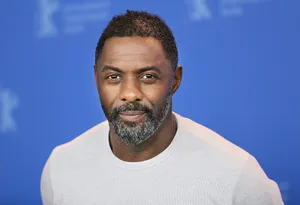
Two recent events have brought the film industry into the spotlight, especially the Nigerian film industry—Nollywood. First, the announcement of Idris Elba’s involvement in a film adaptation of Chinua Achebeʼs Things Fall Apart sparked intense debate, particularly among Igbos and other Nigerians, who expressed their displeasure with the casting of a non-Nigerian to portray the iconic character of Okonkwo. Things Fall Apart, a novel by Chinua Achebe, holds a unique place in Nigerian literature, with Okonkwo representing not just a character but a deeply significant cultural symbol. The idea of an outsider—no matter how skilled—taking on such a role was seen by some as an affront to Nigerian identity and history.
The second controversy arose in a similar context, this time concerning a film about Igala culture, directed by Igala-born Nollywood actor Makolo Thompson Jr. The role of Attah Igala, a revered figure in Igala history, was given to Kanayo O. Kanayo, a respected Igbo Nigerian actor. While Kanayo’s acting prowess is undisputed, many Igalas felt the part should have been played by someone from their own ethnic group, someone who would truly embody and represent their culture. This sparked a discussion about the importance of accurate representation and cultural respect in filmmaking.

Both incidents raise deeper questions about the issue of cultural authenticity in the film industry. The key tension revolves around a critical question: Who has the right to tell a people’s story, and how much does ethnic or cultural background matter in that portrayal?
Cultural representation in film goes beyond mere storytelling. It touches on identity, history, and pride, especially in countries like Nigeria, where ethnic and cultural diversity is a defining characteristic. For many Nigerians, seeing their culture portrayed on screen by someone from a different background can feel like a form of cultural erasure or misrepresentation, even if the actor is accomplished and well-known. This is particularly true in the case of Things Fall Apart, where Okonkwo’s story is intricately tied to the worldview, customs, and values of the Igbos. For them, Okonkwo is not just a fictional character—he embodies the struggle against colonialism and the complexities of pre-colonial Igbo life.
Similarly, the role of Attah Igala in Makolo Thompson’s film is not just a historical figure but a central part of Igala identity. For many Igalas, seeing an Igbo actor in the role feels like a disconnection from their own cultural legacy. The casting of Kanayo O. Kanayo, regardless of his acting skill, raises concerns about whether the film will truly capture the nuances and depth of Igala history and traditions. This dissatisfaction highlights a growing demand for indigenous actors to represent their own cultures, ensuring that films capture the authentic essence of the people they aim to depict.
At the heart of these debates lies the tension between globalization and cultural specificity. In today’s globalized world, actors often transcend national and cultural boundaries, and casting choices are sometimes made with an international audience in mind. Idris Elba, for example, is a globally recognized actor whose name carries significant weight in the film industry. His involvement in a project like the adaptation of Things Fall Apart is guaranteed to bring the story to a wider global audience. Considering that the novel has been translated into more than fifty languages, this level of reach might not have been possible with a lesser-known Nigerian actor. However, this raises a dilemma: Is the pursuit of global reach worth the potential sacrifice of cultural authenticity?

Filmmaking, especially for stories deeply rooted in specific cultural contexts, must strike a balance between reaching wider audiences and remaining faithful to the origins of the narrative. While Elba’s casting could boost international attention for Things Fall Apart, the frustration voiced by many Nigerians shows a broader concern that global appeal should not come at the expense of accurately representing local cultures.
The same can be said for the Igala film, where local audiences feel that their stories are better told by those who truly understand the culture from within. It is this inside knowledge—shaped by experience, language, and shared history—that many believe is essential to delivering a faithful portrayal.
As an Igala person, however, I was overwhelmed with joy seeing Kanayo in the traditional regalia of my paramount ruler, Attah Igala. This moment not only represented a personal connection but also further put the Igala race on the global map. Growing up, I never imagined that one day a respected Nollywood actor like Kanayo O. Kanayo would adorn the Igala apparel and wear it with such pride. The Igala race has no doubt suffered many stereotypes. Sometimes I feel sad whenever people make a mockery of our mother tongue, how we pronounce words like “s” as “esh.” The funniest and most annoying thing is when people mock the Igala pronunciation of “Zuba” and “Juba.”
Every race has its own unique way of pronouncing some words, but people tend to find ours funnier than others. In this regard, every Igala son and daughter must commend Makolo Thompson for putting us in the news for the right reasons, for telling our stories not as they are, but as they ought to be. We are not dull and inept, as others wrongly think, and we should never allow our collective identity to be shaped by dismissive or degrading stereotypes.
Another reason not to criticize Thompson for his choice of Kanayo, as Paul Ugbede put it, is that moviemaking is a business venture. Makolo no doubt invested heavily in this movie, and he would be well within his rights to naturally want maximum profit from his investment. What better way to achieve that than by casting Nollywood legends like Kanayo to give the movie more credibility and popularity? From a business perspective, the choice makes sense, and it also helps elevate the status of Igala culture by associating it with a well-known face in Nigerian cinema.
That being said, the casting controversies surrounding both the Idris Elba-led adaptation of Things Fall Apart and Makolo Thompson’s film about Igala culture have opened up necessary conversations about the role of cultural heritage in filmmaking. While the talent of an actor is crucial, these incidents show that audiences care deeply about seeing their stories told by people who understand them on a fundamental level. This is especially true in societies like Nigeria, where cultural representation is not just an artistic choice but a form of validation and preservation.
As the Nigerian film industry continues to grow and attract international attention, it will become increasingly important for filmmakers to navigate these tensions between global appeal and cultural authenticity. While there is value in introducing Nigerian stories to the world, the key to long-term success lies in finding ways to do so without alienating the very people whose stories are being told.
Producers, directors, and actors must work together to ensure that casting choices reflect both the artistic demands of the role and the cultural significance it holds. By doing so, Nigerian filmmakers can strike a balance between honoring their cultural roots and achieving the international acclaim they deserve.
Though the controversy is a good marketing strategy, as people would be more interested in the movie, they may want to know whether Idris Elba acted the role of Okonkwo well and whether Kanayo O. Kanayo represented the towering personality of Attah of Igala. I only hope that the backlash these filmmakers received will not make them hesitate before embarking on another project, especially Idris Elba, because there are so many fantastic novels by Nigerian writers begging to be adapted into films for a global audience.
Our stories in general deserve to be told with utmost authenticity, both the fictional ones and those steeped in factual history. Recently, there has been a resurgence in movies centered around pre-colonial kingdoms like the Oyo Empire. Historical records place the Oyo Empire as one of the most powerful and influential Yoruba states in Nigeria, and films like Anikulapo, The Woman King, House of Ga’a and Lisabi: The Uprising, blend peak storytelling and cinematic production to render the sophisticated political system, economic might, and military power of this great empire.
I particularly love movies that bring historical figures to life, shedding light on forgotten chapters, and inciting rounds of discourse about Nigeria’s past, present, and future. A few of them I believe many people should watch are Invasion 1897, Funmilayo Ransome Kuti, Half of a Yellow Sun, The Legend of Inikpi, ’76, Oloibiri, Amina and October 1.
All in all, I hope that more of our indigenous filmmakers will stop churning out unrelatable movies, especially when they try too much to gain global appeal by covering up indigenous stories in western sensibilities. Imitation is not what will sustain our storytelling systems: originality will. There are thousands of our stories in local folklore and mythology, best-selling and critically acclaimed novels, historical archives and elsewhere, for serious-minded people to explore and represent. I firmly believe that when we are strategic about ensuring that our stories are reenacted properly, we not only preserve our cultural identities and historical heritage for future generations, but also ensure that as a people, our lives and hopes and struggles and dreams can never be forgotten.
Zayd Ibn Isah can be reached at lawcadet1@gmail.com