
Africa
Why Should Only A Few Be Eating The Cake God Baked For All Nigerians?, by Isaac Asabor

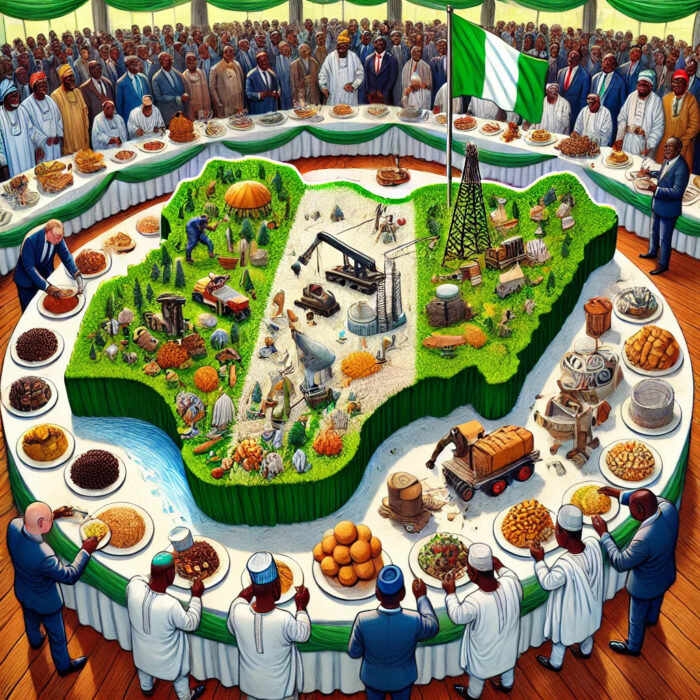
Nigeria is a country blessed with an abundance of natural resources, geographical diversity, and a youthful population. From the moment of its creation, the signs of divine favor were evident in the land. The nation was endowed with fertile soil that could yield crops all year round, a coastline teeming with marine resources, and a rich reserve of oil and gas that would shape its destiny as a global economic player. In His boundless mercy, God baked a “National Cake”, a figurative blessing, a wealth of resources meant for all Nigerians to partake in. However, despite the prosperity this metaphorical cake symbolizes, today it seems that only a few are eating it, leaving the rest of the population to suffer in want. The critical question is: why should only a few be eating the cake God baked for all Nigerians?
From the Niger Delta’s oil reserves to the vast agricultural plains that spread across the north and the entire south, God’s generosity to Nigeria is unmatched. By some estimates, Nigeria holds Africa’s largest oil and gas reserves, while the country also ranks among the top producers of cocoa, cassava, and groundnuts globally. Nigeria’s diversity does not stop with its natural resources; the nation is also blessed with a vibrant, resilient population, over 200 million people, the majority of whom are young, ambitious, and ready to build a prosperous future.
In addition, Nigeria’s geographical position is strategic for international trade. Its coastline connects West Africa to global shipping routes, enabling the export of goods and resources to other parts of the world. The blessings extend beyond oil and agriculture. Nigeria is home to a rich cultural heritage, a vast expanse of arable land, and, perhaps most importantly, an enterprising people. From these riches, God baked a metaphorical cake, large enough to feed every Nigerian.
However, what should have been shared equitably among the population has become the exclusive preserve of a few, mostly political elites, their families, and close associates. The “National Cake,” baked by God for every citizen of this nation, has been monopolized by a fraction of the population, while the vast majority are left to survive on crumbs, if even that.
The post-independence optimism that filled Nigeria in 1960 was based on the hope that the nation’s vast resources would be harnessed for the benefit of all Nigerians. There was a dream that, through hard work, everyone would have a fair shot at prosperity. Public institutions were designed to promote equality, and state-owned enterprises were meant to provide job opportunities for millions. The cake that God baked for Nigeria was supposed to be sliced and shared, ensuring that each citizen got their piece.
Yet, as the decades rolled on, it became evident that something had gone terribly wrong. The political class; those entrusted with distributing this cake, began to claim disproportionately large portions for themselves. They appointed their families, friends, and loyalists to key positions, making sure that the lion’s share of Nigeria’s resources ended up in their bank accounts, while ordinary citizens were left to fight over the meager leftovers.
Corruption soon became the hallmark of governance in Nigeria. Oil revenues that could have funded national development projects were siphoned off by politicians and their cronies. Contracts meant to build infrastructure were inflated, and money that should have been used to improve public services was embezzled. As the ruling class grew wealthier, the masses were driven into deeper poverty. This betrayal of the public trust is akin to a few individuals hoarding a cake that was meant to be shared by all.
As Nigeria’s wealth concentrated in the hands of the political elite, the gap between the rich and the poor widened dramatically. Today, Nigeria has one of the highest levels of inequality in the world. The few who have access to the “National Cake” live in opulence, enjoying luxurious lifestyles and stashing billions in foreign accounts, while the majority struggle to afford basic necessities like food, shelter, and healthcare. The cake that God baked for all is now feeding only a small fraction of the population, and millions of Nigerians are paying the price.
The most glaring consequence of this unequal distribution of wealth is the rising poverty level in Nigeria. According to the National Bureau of Statistics, over 130 million Nigerians live in multidimensional poverty. This means that more than half of the population lacks access to basic needs such as food, education, healthcare, and sanitation. These are not just numbers; they represent real human suffering. Nigerians, from Lagos to Kano, are feeling the pain of a broken system where only a few enjoy the blessings that were meant for all.
In rural areas, farmers can no longer afford to plant and harvest their crops because of skyrocketing costs of inputs and insecurity across farmlands. In urban centers, young graduates roam the streets without job opportunities, even as their dreams of contributing to the nation’s prosperity dashed. Everywhere you look, there is a sense of despair. Nigerians are watching the cake that God baked for them being devoured by a small group of elites, while they struggle to survive.
The situation has reached a critical point, with hunger spreading across the land. In recent times, there have been reports of parents skipping meals so their children can eat. Stories of desperation, like mothers begging for food at markets or children dropping out of school because their families cannot afford the fees, are becoming alarmingly common. It is a cruel irony that in a nation so richly blessed, people are dying of hunger.
A critical factor behind this inequality is poor leadership. For decades, Nigeria has been governed by leaders who prioritize their personal interests over the welfare of the people. Many politicians enter public office with the singular goal of enriching themselves, not serving the public. They see the “National Cake” as a prize to be claimed, not as a resource to be distributed.
Instead of using the nation’s oil wealth to build schools, hospitals, and roads, the political class funnels money into projects that benefit only a select few. Billions of dollars have been spent on so-called “development” projects that never materialize, while millions of Nigerians lack access to clean water and electricity. Public services are in a state of decay because those who are supposed to maintain them are more interested in eating their share of the cake than in serving the people.
The family and friends of politicians also get their share of the cake. Nepotism is rampant in Nigeria, with political leaders appointing their relatives to key positions in government and business. These individuals, often unqualified for the roles they hold, further perpetuate the unequal distribution of resources. The circle of those who have access to the cake grows smaller and smaller, while the masses continue to suffer.
It is time for Nigerians to demand a change. The “National Cake” belongs to every citizen of this country, not just a privileged few. God did not bless Nigeria with such abundance so that a small group of people could monopolize it. He blessed this nation so that all its people could flourish and prosper together.
To reclaim the cake for all Nigerians, there must be a collective effort to hold leaders accountable. Citizens must demand transparency in the management of the nation’s resources, insisting that public officials are held to the highest standards of integrity. Anti-corruption agencies must be empowered to investigate and prosecute those who steal from the nation’s wealth. Equally, Nigerians must insist on leadership that prioritizes the welfare of the people over personal gain.
It is also essential to build systems that promote equal access to resources. Public institutions must be reformed to ensure that every Nigerian, regardless of his or her background, has a fair chance to benefit from the nation’s wealth. Social programs that provide education, healthcare, and job opportunities should be strengthened and expanded, ensuring that no one is left behind.
Without a doubt, Nigeria is at a crossroads. The blessings that God baked into this nation are still abundant, but they must be shared. It is time to end the era of a few gorging themselves on the “National Cake” while the rest starve. Only by doing so can Nigeria live up to its potential as a land of prosperity, where every citizen enjoys the benefits of the divine blessings bestowed upon this nation. In fact, let us remember: the cake was baked for all, not just for a few.




















You must be logged in to post a comment Login