Africa
Exploring The Crucial Role Of Critical Journalism In Nigeria’s Development, by Isaac Asabor


There is no denying the fact that development journalism plays a pivotal role in shaping societies, especially in developing countries. While some argue that journalists should avoid criticizing political leaders, permit this writer to contend in this context that there is no way development journalism can be effective without holding leaders accountable. The reason for the foregoing cannot be farfetched as exploring the importance of critical journalism on its impact on governance, and why it is essential for the well-being of the masses shows that it is inseparable from development journalism.
For the sake of clarity, development journalism is not merely about reporting facts; it is a powerful force for change. Its primary goal is to foster progress, alleviate poverty, and promote sustainable development. However, achieving these objectives requires more than just highlighting success stories and government initiatives. It necessitates a critical examination of leadership, policies, and governance.
To throw insight to what development journalism is all about, it is expedient to recall that few months ago that Prof. Phillip Afaha, the Deputy Vice-Chancellor, Administration, University of Abuja (UniAbuja) urged journalists to go a step further in reporting solutions rather than focusing only on the problems of the society.
Afaha made the call in Abuja at the unveiling and presentation of Nigeria Today Magazine, published by Mr. Eze Chikamnayo, a former Commissioner for Information in Abia State.
He said that the situation in the country did not need to be escalated by negative reportage but rather attention should be geared towards reports that would proffer solutions to the problems and challenges of the nation.
He added, “Journalism is not about tearing people down; journalism is not about criticizing the government; we already know the problems.
“Everybody in Nigeria, from two year old, knows the problem of Nigeria.
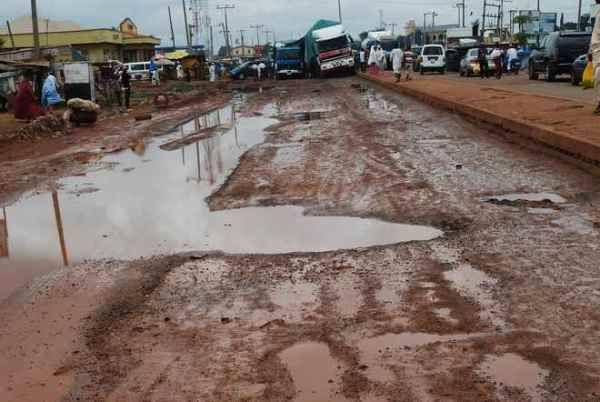
“We know there is no light; we know the roads are bad; we know that the dollar has gone up and the naira has fallen and we do not need to amplify these things to the point of bringing down this country.
“We know that Nigeria doesn’t have an airline; what we need is solutions journalism; what are we to do at this point having found ourselves in a precarious situation; we are on a precipice, what do we do?
“If the Judiciary cannot bring solutions to us and politicians cannot also bring solutions, then the media should step in and report solutions.
“The politicians are waiting to learn from development journalism and those solutions to the problems; even in the university, we are waiting for the media to bring the conversation on solutions journalism,” he said.
However, as the Don has rightly spoken, there is no denying the fact that development journalism plays a pivotal role in shaping societies, especially in developing countries. While some argue that journalists should avoid criticizing political leaders, permit this writer in this context to contend that there is no way development journalism can be effective without holding leaders accountable. Therefore, it is expedient to explore the importance of critical journalism, its impact on governance, and why it is essential for the well-being of the masses in this context.
In fact, development journalism is not merely about reporting facts; it is a powerful force for change. Its primary goal is to foster progress, alleviate poverty, and promote sustainable development. However, achieving these objectives requires more than just highlighting success stories and government initiatives. It necessitates a critical examination of leadership, policies, and governance.
The reason for the foregoing cannot be farfetched as the role of Critical Journalism is a balancing act.
For instance, from the perspective of accountability, political leaders are entrusted with the responsibility of steering the nation towards progress. When they fail to deliver, journalists must step in as watchdogs. This is as holding leaders accountable ensures transparency, encourages ethical behavior, and prevents corruption.
In fact, without critical journalism, leaders might operate with impunity, making decisions that harm the very people they are meant to serve.
Again, given the fact that corruption is a cancer that erodes development efforts, there is no denying the fact that Journalists play a crucial role in exposing corrupt practices, whether they occur at the highest levels of government or within local communities. Also, by investigating and reporting on corruption cases, journalists contribute to a healthier political environment and create pressure for reform.
In a similar vein, transparency is the bedrock of good governance. So, when journalists scrutinize government actions, budgets, and projects, they ensure that citizens have access to accurate information.
Against the backdrop of the foregoing critical roles been played by Nigerian Journalists, there is no denying the fact that they are in the same vein practicing development journalism, even as it can clearly be understood that transparency fosters public trust, encourages citizen participation, and enables informed decision-making.
Be that as it may, there is no doubt that sometimes, that there are challenges and controversies in the course of practicing development journalism as injecting the elements of balancing and objectivity into a story is difficult to attain, particularly when the issue of reportage is of societal or national importance. Imagine a reportage on the ongoing #EndBadGovernance protest, “Can a policeman fire live bullets at protesters, and Isaac will water down the report in favor of the government or Police because he wants to practice development journalism?”
Given the foregoing, it beats this writer hollow when some leaders resort to urging Journalists to practice development journalism as they argue that journalists should remain neutral and objective. No sir, remaining neutral for the sake of development report can sometimes perpetuate injustice on the people. After all, Henry Grunwald said, “Journalism can never be silent: that is its greatest virtue and its greatest fault. It must speak, and speak immediately, while the echoes of wonder, the claims of triumph and the signs of horror are still in the air”. Against the foregoing backdrop, it is germane to opine that critical journalism, which allows journalists to actively participate in championing positive change, can be a powerful tool, and it does not give room to abandoning objectivity but rather Journalist use it as a platform to advocate for the greater good.
However, resisting pressures that are inherent can be challenging as writing or reporting against leaders can be risky, particularly as Journalists face threats, intimidation, and even violence.
Yet, the pursuit of development demands courage. Journalists must resist undue influence and prioritize the welfare of their communities over personal safety.
At this juncture, it is germane to opine that the Imperative of critical Journalism is enormous, and that development journalism cannot thrive without critical scrutiny of political leaders. This can be buttressed as by exposing corruption, promoting transparency, and advocating for positive change, that critical journalists contribute significantly to the development agenda. So, let us celebrate those who fearlessly wield their pens in service of progress, reminding us that a brighter future depends on both good governance and an informed citizenry.