
Business
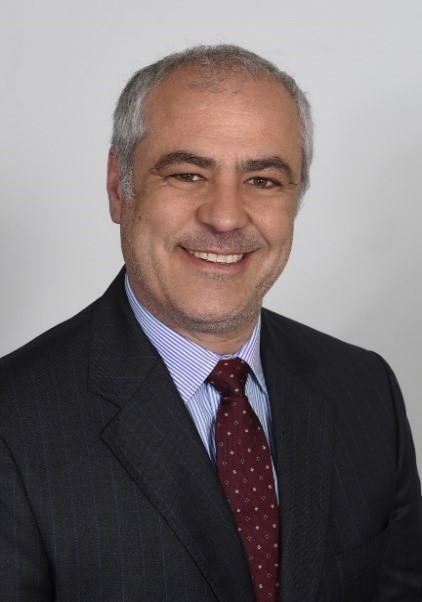
Flexibility choices could be a fatal blind spot in Africa’s renewable energy transition, by Marc Thiriet
They also readily acknowledge the intermittent nature of renewables, and the associated need for flexible power capacity within the electricity networks to ensure safe and steady supply. It’s a good start. But the real challenge revolves around determining which technologies are best suited to provide it and the actual extent of flexible capacity needed in the system.

It is no longer disputed that solar and wind power will be the foundation of Africa’s future energy systems. They are perfectly suited to the continent’s unique conditions and are already the most cost-competitive power option in almost all cases. This consensus spans academia, businesses, and policymakers who all recognize the potential of renewable energy to meet Africa’s growing needs sustainably.
They also readily acknowledge the intermittent nature of renewables, and the associated need for flexible power capacity within the electricity networks to ensure safe and steady supply. It’s a good start. But the real challenge revolves around determining which technologies are best suited to provide it and the actual extent of flexible capacity needed in the system.
This is where the consensus ends.
Approaching Africa’s flexibility needs with pragmatism.
Smart flexibility strategies should meet three criteria. Firstly, flexibility must be achieved at the lowest possible cost. Secondly, the flexible technologies chosen to balance the grid must be proven and reliable. Lastly, they should provide a solid foundation to enable the transition to 100% clean energy. For flexible gas-to-power technologies, this last criterion implies the capability to eventually run on sustainable fuels when available, thus preventing long-term carbon lock-in.
There is a large array of “dispatchable” power technologies that could theoretically be used to balance a high renewable energy grid. They all fare differently when evaluated on these three eligibility criteria.
This is where the body of scientific research into Africa’s energy transition has a huge blind spot.
A recent paper[1] , which has set out to examine all of Africa’s 54 scientific studies into the transition to 100% renewable energy published since 2000, shows that researchers only consider zero-carbon dispatchable technologies such as concentrated solar power or geothermal in their flexibility analysis, regardless of their insufficient efficiency, lack of reliability, or excessive cost.
On the other hand, balancing engine power plants, a technology deployed around the globe, are not mentioned once although in-depth analysis have demonstrated that they are stronger candidates on all three counts to help reach Africa’s green energy goals in the long run. They are reliable, extremely flexible and more cost-competitive than other dispatchable technologies. They also have multi-fuel capabilities, meaning they can abandon natural gas as their primary fuel and run on clean fuels such as green hydrogen as soon as these become more available.
In this light, the big question becomes: Can Africa really be deprived of technologies that can support a realistic, cost-effective, and altogether safer transition to clean energy?
Big picture thinking
Let’s take a step back to look at the big picture.
At present, nearly half of Africa’s population still lack access to electricity, whilst the continent only accounts for 3.8% percent of global emissions. The carbon footprint of an average Nigerian is estimated at 0,44 Tons, which is about 35 times less than an average American. At the same time, we also know that many countries on the continent possess vast and largely unexploited gas reserves that represent a huge development opportunity if properly mobilised.
Although climate action is of course an important objective for many governments in Africa, the continent’s number one priority is to combat energy poverty. The safe and consistent supply of electricity is essential for socio-economic development and power grids are expected, first and foremost, to deliver sufficient volumes of electricity reliably and affordably to people and businesses.
Understanding the potential of balancing engine technologies
The smart path to 100% clean energy in Africa is a multi-decade and carefully crafted process designed to resolve the grid flexibility equation. Identifying the optimal path is no small task. It requires sophisticated modelling techniques that can determine the right power mix each country needs to establish to ensure they grids always remain stable as they ramp up renewable energy. Yet, the models used in most academic studies related to flexibility use an overnight approach that cannot properly capture the wild and sudden variations of wind and solar power, and its real impact on day-to-day grid management.
That’s why Wärtsilä relies on PLEXOS, a highly advanced power system simulation software, which has supported countries all around the world to shape multi-decade plans to build their optimal power systems for the future.
Our modelling experts conducted in-depth studies on various African countries, and they have revealed that the most cost-effective and reliable power mix that most African nations can build is based on renewable energy as the new “baseload”, with balancing engine technologies and demand-side assets such as energy storage providing the required flexibility.
Balancing engine power plants are a crucial transition technology that can facilitate a more resilient and faster electrification, and significantly impact the trajectory and overall effectiveness of any renewable energy expansion plans.
Aligning Africa’s development and climate goals means transitioning to clean energy sources in the long term while leveraging the continent’s resources and competitive advantages. This strategy ensures a balanced approach to development and sustainability. At the end of the day one thing is sure: Without a sound flexibility plan, renewable energy will not deliver on its promises.
[1] Highly renewable energy systems in Africa: Rationale, research, and recommendations. By Ayobami S. Oyewo, Sebastian Sterl, Siavash Khalili, Christian Breyer. https://www.sciencedirect.com/science/article/pii/S2542435123002271
About the Author
Marc Thiriet, born in 1967, graduated from ESTA Belfort and IFCI-ESC Clermont (Graduate School of Management), has more than 25 years’ experience in business development and management positions in the energy sector, in Africa, Middle East, Asia, South America and Europe. Marc Thiriet has held various leading positions in Sales and contract negotiations (EPC, O&M) and has managed various P&L overseas with multicultural teams, developing and delivering Services. At Wärtsilä, Marc Thiriet has been Managing Director in Senegal, Service Unit Director for West Africa, Business Support Director for Middle East & Asia, and currently holds the position of Director, Africa at Wärtsilä Energy.
Wärtsilä Energy in brief
Wärtsilä Energy leads the transition towards a 100% renewable energy future. We help our partners to accelerate their decarbonisation journeys through our market-leading technologies and power system modelling expertise. These cover decarbonisation services, future-fuel enabled balancing power plants, hybrid solutions, energy storage and optimisation technology, including the GEMS Digital Energy Management Platform. Wärtsilä Energy’s lifecycle services are designed to increase efficiency, promote reliability and guarantee operational performance. Our track record comprises 76 GW of power plant capacity and 110 energy storage systems delivered to 180 countries around the world.
https://www.wartsila.com/energy























You must be logged in to post a comment Login