Politics
From Multiparty to One-Party System: A Threat to Nigeria’s Democratic Policy -By Sadeeq Shuaibu Dajin
As citizens, Nigerians must continue to raise their voices, defend democratic values, and demand accountability from those in power. Silence in the face of political imbalance may weaken the foundations of the system that guarantees our freedoms.


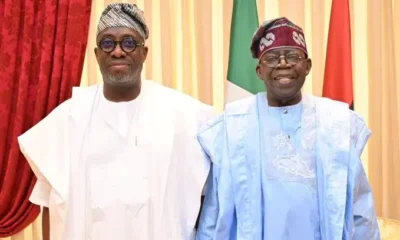
The increasing rate of political defections by many Nigerian governors to the All Progressives Congress (APC) has reached a worrying stage. What appears to be political realignment is gradually raising serious concerns about the future of democracy in Nigeria. Many observers believe that the influence and power of the ruling party at the national level are being used in ways that pressure governors and other politicians to abandon their original parties. This situation raises an important question: what kind of democracy are we truly practicing in Nigeria?
Nigeria operates under a democratic system of government, and within that system, the country officially practices a multiparty system. A multiparty system allows different political parties to exist, compete, and offer citizens alternative visions for governance. It promotes healthy political competition and ensures that power does not become concentrated in the hands of a single political group. However, recent developments suggest that the balance that defines a multiparty democracy may be gradually eroding.
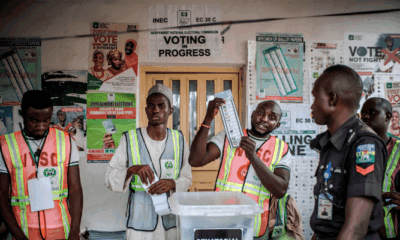
Democracy, in its simplest form, is a system of government that allows citizens to participate actively in choosing their leaders through free and fair elections. The former American president Abraham Lincoln famously defined democracy as government of the people, by the people, and for the people. This definition highlights the central role of citizens in determining who represents them in public office. For democracy to function properly, there must be genuine competition among political parties, giving voters meaningful choices during elections.
When politicians, especially elected governors, begin to defect massively to a single ruling party, it raises concerns about the health of democratic competition. While political defections are not illegal in themselves, the scale and pattern of these movements can signal deeper problems. If most state governors and influential political actors belong to one party, the political landscape may gradually shift toward a dominant-party or de facto one-party system.
In several regions of the country, particularly in the North-East and North-West, many governors have already moved to the ruling party. At present, only a few remain in opposition. For instance, in the North-East, the governor of Bauchi State stands as one of the few who has not joined the ruling party. This trend is not necessarily a criticism of the APC as a political organization; rather, it raises concerns about the broader implications for Nigeria’s democratic structure.
Political parties are essential institutions in every democratic society. They serve as platforms through which citizens organize their political interests and contest for power. Competition among parties encourages accountability, debate, and policy alternatives. When such competition weakens, the democratic system itself becomes vulnerable.
If Nigeria gradually drifts toward a situation where nearly all governors and major political actors belong to a single party, several dangers may emerge. The system of checks and balances could weaken. Opposition parties play a vital role in questioning government decisions and ensuring transparency. Without strong opposition, critical oversight may diminish.
Elections could lose their competitive nature. When one party dominates the political landscape, the fairness and credibility of electoral processes may be questioned, and institutions responsible for conducting elections could face pressure to favor the ruling party.
Constitutional principles may become vulnerable to manipulation. A dominant party with overwhelming influence across federal and state institutions could attempt to alter laws or constitutional provisions to maintain its hold on power.
The fundamental rights and freedoms of citizens could be at risk. When political power becomes too concentrated, dissenting voices may face intimidation, harassment, or suppression.
Furthermore, excessive political dominance can deepen ethnic and religious tensions, particularly in a diverse country like Nigeria. Political exclusion often breeds frustration, which can threaten peace and national unity. In extreme cases, such tensions may destabilize democratic institutions altogether.
A healthy democracy thrives on competition, debate, and diversity of political ideas. Rivalry between parties is not a weakness of democracy; it is one of its greatest strengths. It ensures that leaders remain accountable to the people and that governance reflects the will of the electorate.
Nigeria therefore stands at an important crossroads. Citizens, political leaders, and institutions must collectively reflect on the direction of the country’s democratic journey. The preservation of democracy requires vigilance, active participation, and a commitment to its core principles.
As citizens, Nigerians must continue to raise their voices, defend democratic values, and demand accountability from those in power. Silence in the face of political imbalance may weaken the foundations of the system that guarantees our freedoms.
Nigeria belongs to all of us. Protecting its democracy is not the responsibility of politicians alone it is the collective duty of every patriotic citizen. The choices made today will determine whether Nigeria strengthens its democratic traditions or gradually drifts away from them.