Africa
From Natasha to Ushie: How Tinubu and Akpabio’s War on Women’s Voices is Turning Nigeria into an International Symbol of Oppression -By John Egbeazien Oshodi
When Natasha Akpoti-Uduaghan was threatened for daring to expose sexual harassment, it sent a dangerous message that the system protects predators and punishes survivors. Now, Ushie Uguamaye is facing intimidation simply for voicing an opinion. These are not isolated incidents—they are symptoms of a deeper cultural resistance to accountability. This is no longer just about Nigeria. This is about the global perception of your administration. It is about whether the world sees Nigeria as a country that respects democratic values or one that stifles them.


The case of Ushie Uguamaye, a National Youth Service Corps (NYSC) member, facing alleged threats for criticizing President Tinubu’s administration highlights a concerning pattern of suppressing dissent in Nigeria. Her experience mirrors the ongoing controversy surrounding Senator Natasha Akpoti-Uduaghan, further reinforcing fears that the government is actively silencing critical voices rather than addressing the legitimate grievances of its citizens.
This government continues to disgrace itself nationally and globally, oblivious to the reality that we now live in an interconnected digital age where nothing remains hidden. Every act of repression, every abuse of power, and every silencing attempt is instantly broadcasted worldwide. They fail to grasp that control over narratives has shifted—people no longer rely solely on state-controlled media, and information spreads faster than censorship can contain it. America, Britain, France, Canada, and other world powers are watching, and no government can escape international scrutiny anymore.
Freedom of Speech Under Attack
Uguamaye’s viral TikTok video did not contain hate speech or incitement to violence—it was an expression of frustration over Nigeria’s economic hardship and poor governance. In her video, she simply said, “Tinubu, you are a terrible president.” This was not a coup attempt, nor was it a call for anarchy—it was a cry of frustration, a sentiment shared by millions of Nigerians struggling under rising costs, unemployment, and a declining standard of living.
Yet, instead of engaging with her concerns, the response from NYSC officials was intimidation and threats. Amnesty International Nigeria’s condemnation of the threats against her serves as a reminder that freedom of speech is a fundamental right, enshrined in the Nigerian Constitution and upheld by international law. When government agencies such as the NYSC resort to coercion rather than dialogue, it highlights a growing and dangerous trend of authoritarian governance.
The world is not blind. Nigerian leaders may think they can silence their people in isolation, but international watchdogs, human rights organizations, and foreign governments are watching. The more they suppress voices, the more their actions become global headlines, painting Nigeria as a country that fears criticism rather than embracing democratic debate.
Government’s Missteps and the ‘Streisand Effect’Rather than defusing the situation through dialogue, NYSC officials allegedly sought to pressure Uguamaye into deleting her video. However, their intimidation tactics backfired, amplifying her voice and drawing national and international attention. This is a classic example of the “Streisand Effect”—where attempts to suppress information lead to even greater public awareness.
In today’s world, social media ensures that no injustice goes unnoticed. The era of backdoor repression, where government officials could stifle dissent in silence, is long gone. Instead of learning from past mistakes, the administration continuously exposes itself to public embarrassment by failing to acknowledge that suppression only strengthens resistance.
A Pattern of Silencing Women
The parallels between Uguamaye’s case and that of Senator Natasha Akpoti-Uduaghan are striking. Akpoti-Uduaghan was suspended from the Senate shortly after publicly accusing Senate President Godswill Akpabio of sexual harassment. Now, Uguamaye faces threats for speaking out against government failures. Just as Akpabio attempted to suppress Natasha, we now see an NYSC official allegedly calling and threatening Uguamaye, attempting to coerce her into silence.
The tactics remain the same—intimidation, manipulation, and the abuse of institutional power to subdue female voices that challenge the system. Nigerian women who dare to question authority are met with hostility, threats, and systemic efforts to erase their voices. These patterns reflect deep-seated misogyny within governance structures—structures that view women as threats when they refuse to conform to silent obedience.
The government has not learned its lesson. Natasha Akpoti-Uduaghan has already taken Nigeria’s suppression of women’s voices to the global stage at the Inter-Parliamentary Union (IPU) in New York, exposing its tactics to international scrutiny. Now, this young woman—part of a fearless digital generation—may take it even further. Unlike previous generations, she has the full power of social media and international advocacy at her fingertips. Nigeria’s leadership is making the same mistake again, failing to recognize that the suppression of voices only makes them louder.
The Role of International ScrutinyWith Amnesty International and other human rights organizations weighing in, Nigeria’s government is under increasing global pressure to uphold democratic principles. If Uguamaye’s case gains further traction, she may even take her grievances to international platforms such as the Inter-Parliamentary Union (IPU) or the United Nations, just as Akpoti-Uduaghan did.
The international community is no longer a passive observer—global human rights groups, diplomatic bodies, and foreign governments are all closely monitoring Nigeria’s response to dissent. The country’s image is deteriorating on the world stage, as repression continues to overshadow any claims of democratic progress. The government’s actions not only weaken its credibility but also reinforce the perception that Nigeria is governed by leaders who fear accountability.
The psychologist in me urges Nigerian leadership: Learn. Learn before it is too late. Repression is not governance. Silencing voices is not strength. Every time you try to hide the truth, it will find its way to the global stage, exposing you to greater humiliation. If you believe suppressing a young woman’s voice will make her disappear, you have gravely misunderstood the modern world. The more you suppress, the more defiant people become. Natasha globalized your oppression at the IPU—Ushie, from a fearless digital generation, may take it even further.
The Tinubu Administration’s Dilemma
President Tinubu’s administration now faces a critical choice: continue down the path of repression or embrace a more democratic approach by engaging with dissenting voices constructively.
A competent and confident leadership would recognize the growing dissatisfaction among citizens and seek to engage with them. Instead, this administration appears to believe that repression is a sustainable strategy in the digital age. It is not. Suppressing critics only fuels discontent, fosters resentment, and damages Nigeria’s international reputation.
Rather than allowing NYSC officials to intimidate Uguamaye, the administration should consider inviting her for a dialogue, listening to her grievances, and addressing the concerns she raised in her video. Doing so would demonstrate maturity, empathy, and a commitment to democratic ideals. Unfortunately, the government continues to opt for force rather than understanding, deepening public disillusionment with its leadership.
Conclusion: A Call for Institutional Accountability
The Nigerian government must come to terms with an inescapable truth: in a democracy, the suppression of voices does not erase dissent—it magnifies it. Threatening individuals like Ushie Uguamaye for expressing frustration or Natasha Akpoti-Uduaghan for speaking out against sexual harassment does not restore order; it exposes the fragility of leadership. Silencing criticism does not mask failures; it confirms them. True governance is not about control—it is about courage. It is about addressing real concerns, not punishing those who raise them.
President Tinubu, you always say you asked for this job. That is true, sir, but leadership is not just about assuming power—it is about managing it wisely. Many under your administration are not helping you. They are acting recklessly, targeting women, abusing institutional authority, and pulling your leadership into a vortex of controversy that diminishes your legacy. You may not have personally directed these actions, but history will not distinguish between what you ordered and what was done under your watch. The world is watching, and in an era where digital footprints are eternal, judgment is swift and lasting.
When Natasha Akpoti-Uduaghan was threatened for daring to expose sexual harassment, it sent a dangerous message that the system protects predators and punishes survivors. Now, Ushie Uguamaye is facing intimidation simply for voicing an opinion. These are not isolated incidents—they are symptoms of a deeper cultural resistance to accountability. This is no longer just about Nigeria. This is about the global perception of your administration. It is about whether the world sees Nigeria as a country that respects democratic values or one that stifles them.
Sir, I urge you to pause. I hope you are checking your blood pressure, prioritizing your health, and reflecting on the weight of this moment. Even your own daughter—whether by coincidence or conviction—has taken a stand for these women. If those closest to you can recognize the problem, why do so many within your administration continue to behave as though accountability is an option rather than an obligation? Leadership is not about silencing critics—it is about proving them wrong through decisive action, ethical governance, and a commitment to justice.
As a psychologist, I say again: Learn. Learn before your suppression of voices becomes the very thing that dismantles your authority. Learn before the culture of fear you permit today turns into the resistance you cannot contain tomorrow. The world is no longer silent, and neither are the people you seek to suppress.
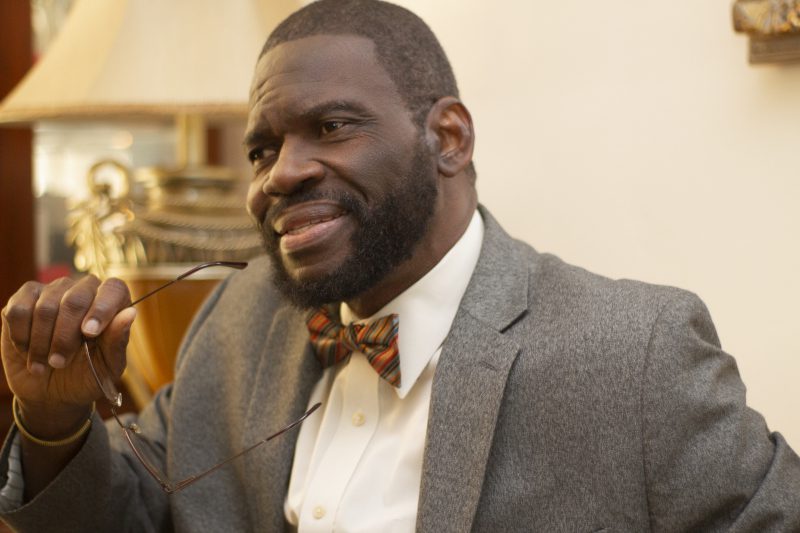
John Egbeazien Oshodi
Oshodi Open Door Public Training (OOPDT), also known as Oshodi Open Door, is a public awareness initiative dedicated to promoting transparency, accountability, and integrity in Africa. Through educational articles and resources, OOPDT fosters informed discourse on governance, institutional reform, and psychological well-being. It also provides specialized Timely Response Solutions (TRS) training at minimal or no cost, ensuring swift and effective interventions for critical institutional and societal challenges. For more information, contact: jos5930458@aol.com.
Professor John Egbeazien Oshodi is an American psychologist, educator, and author specializing in forensic and clinical psychology, cross-cultural psychology, police and prison sciences, and community justice. Born in Uromi, Edo State, Nigeria, he is the son of a 37-year veteran of the Nigeria Police Force, a background that shaped his lifelong commitment to justice, security, and psychological research.
As a pioneer in forensic psychology, he introduced state-of-the-art forensic psychology to Nigeria in 2011 through the National Universities Commission (NUC) and Nasarawa State University, where he served as an Associate Professor in the Department of Psychology. His contributions extend beyond academia into mental health, institutional reform, and behavioral change initiatives through the Oshodi Foundation and the Center for Psychological and Forensic Services.
Professor Oshodi has held faculty positions at Florida Memorial University, Florida International University, Broward College—where he also served as Interim Associate Dean and Assistant Professor—Nova Southeastern University, and Lynn University. He is a contributing faculty member at Walden University and a virtual professor with Weldios University and Iscom University.
Beyond academia, he is a government consultant for forensic-clinical psychological services in the USA, providing expertise in mental health, behavioral assessment, and institutional analysis. A prolific writer, he has published extensively on mental health, forensic psychology, justice, and institutional reform. He is the founder of the Psychoafricalysis theory, integrating African sociocultural perspectives into psychology.
A proud Black Republican, Professor Oshodi is guided by principles of individual empowerment, responsibility, and ethical leadership. His psychological approach emphasizes self-determination, cognitive resilience, and structured institutions in fostering societal well-being. He believes strong communities thrive when individuals are given the tools to build their own success, with policies that encourage self-sufficiency rather than dependency. With a perspective shaped by both African and global experiences, he is committed to promoting clean, ethical, and functional institutions as well as strong, democratic governance in Africa. His work remains focused on psychology, governance, and institutional reform, aligning with values of discipline, opportunity, and personal agency in building just and sustainable societies.