Education
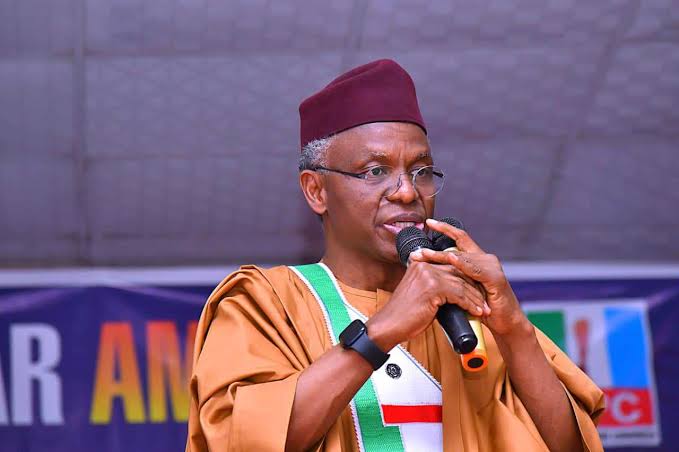
From Reform to Ruin: El-Rufai, Uba Sani, and Hassan Rilwan’s Role in Shaping Kaduna’s Educational Future -By Shamsuddeen Suleiman Malami
If he chooses to ignore these issues, he risks becoming complicit in the same cycle of deception that defined his predecessor’s approach to education. But if he acts decisively, he could redefine his legacy as a leader who restored trust and integrity to Kaduna’s scholarship system.

A Legacy of Unfulfilled Promises
In the wake of the El-Rufai administration’s education reforms, one name continues to stand out: Hassan Rilwan, the Executive Secretary of the Kaduna State Scholarship and Loans Board. Under his leadership, the promise of financial relief for students through scholarships and loans became nothing more than a mirage. Allegations of corruption, mismanagement, and favoritism tainted what was once presented as a revolutionary shift in Kaduna’s educational support system.
As the dust settles on El-Rufai’s years in power, his successor, Uba Sani, inherits both the structural foundation and the political liabilities of these policies. Having worked closely with El-Rufai and retained figures like Rilwan within his administration, Uba Sani now faces a crucial test: Will he rectify the failures of the past or perpetuate the same cycle of exclusion and neglect that left thousands of students stranded?
The scholarship and loan system, intended to bridge financial gaps for deserving students, instead became a symbol of unfulfilled potential. While billions of naira were allocated for scholarships, thousands of students were denied access due to arbitrary exclusions, opaque processes, and systemic inefficiencies. This failure is not just a financial mishap—it is an indictment of leadership at multiple levels, from El-Rufai’s overarching governance to Hassan Rilwan’s operational decisions, and now, Uba Sani’s handling of the fallout.
El-Rufai’s Grand Promises vs. Harsh Realities
El-Rufai’s administration aggressively marketed its education policies as transformative. The scholarship program, in particular, was portrayed as a major leap toward academic empowerment.
In a December 13, 2019 social media post, Hassan Rilwan proudly announced:
“The Kaduna State Government today in a landmark move became the first state in Nigeria to put in place an education loan scheme for its citizenry. A ₦2 billion loan deal was signed between the Kaduna State Scholarship and Loans Board and First City Monument Bank (FCMB). The state provided a ₦1 billion counterpart fund to reduce interest rates to 8% per annum, with a long-term goal of lowering it to 2%.”
On paper, this initiative seemed groundbreaking. However, in reality, students struggled to access these funds. Bureaucratic bottlenecks, unexplained disqualifications, and a lack of transparency characterized the scheme.
Similarly, in 2020, Daily Nigerian reported that the Kaduna State Government planned to spend ₦4.7 billion on local and foreign scholarships, supporting 107 students in foreign universities while disbursing bursaries to 7,598 others. Yet, investigations revealed that many eligible students never received these funds, while a select few with political connections benefited disproportionately.

Students’ Voices: Frustration, Betrayal, and Systemic Failures
For many students, applying for Kaduna’s scholarships became an annual exercise in futility. Social media and firsthand testimonies revealed deep frustration. A student from Kaduna State University (KASU) lamented:
“I applied for the scholarship every year since my first year, yet I never benefited. Many of my colleagues faced the same challenge, while students from other states enjoyed better opportunities. When the state government increased tuition fees, we were told scholarships and loans would cushion the impact. That never happened for most of us.”
Another student shared his disillusionment:
“I planned to apply for a foreign scholarship for my master’s degree, but I learned that only first-class graduates were being considered, despite the board’s claims of inclusivity. Those who did benefit struggled to access their funds.”
These testimonies were not isolated incidents. An October 24, 2022, Facebook post summed up the widespread discontent:
“Kaduna’s scholarship system is not transparent. 80% of Kaduna students know this, but some choose to defend it for selfish reasons. Other states provide better support for their students, yet in Kaduna, scholarships seem reserved for a select few.”
Hassan Rilwan: Controversial Leadership and Student Suppression
At the center of these grievances stood Hassan Rilwan. Students and activists frequently accused him of arrogance, insensitivity, and deliberate exclusionary tactics.
An anonymous student activist recalled an encounter with him at a NAKASS security summit:
“During his presentation, he falsely attributed a statement to me, called me out in front of the audience, and claimed I had failed to respond to his challenge. When I later tried to clarify the issue, he refused to grant me an audience.”
Rilwan’s leadership was further marred by public confrontations. On August 7, 2022, he ridiculed a student on social media for mistakenly writing “transparence” instead of “transparency”:
“This student should not look farther to understand why he may not get a scholarship. Written English is a major issue. How do our students pass examinations today?”
Instead of addressing concerns about the opaque scholarship system, Rilwan chose to mock students, sparking outrage. One commentator responded:
“We will not mock the student but the system you are part of. The scholarship board is failing students, and rather than fixing it, you choose to insult them.”
Beyond public ridicule, students alleged that Rilwan actively suppressed dissent. During the 2021 tuition fee hike protests, reports emerged that he attempted to have students expelled for their activism. Others claimed he worked with security agencies to intimidate and harass those who questioned his authority.
Uba Sani’s Dilemma: Continuity or Reform?
As Uba Sani assumed office, he inherited both the promises and the failures of El-Rufai’s education policies. His decision to retain Hassan Rilwan as his Special Adviser on Students Matters raised alarm among students who had hoped for a clean break from past injustices.
Rilwan’s continued influence signals that Sani may not be willing to confront the systemic issues that plagued the scholarship board. If he allows the same figures who failed students to remain in power, it raises a crucial question:
Is he truly committed to reform, or merely continuing a legacy of broken promises?
The failures of the Kaduna State Scholarship and Loans Board under El-Rufai’s administration are not just numbers on a budget sheet—they represent thousands of young lives disrupted by a system that was supposed to support them.
Students who should have been beneficiaries of a transparent, fair, and efficient scholarship system were instead met with exclusion, ridicule, and institutionalized neglect.
Uba Sani now stands at a crossroads. He has the power to correct these injustices, beginning with:
•A thorough audit of the scholarship board.
•Greater transparency in fund disbursement.
•The removal of individuals whose leadership has been marred by controversy.
If he chooses to ignore these issues, he risks becoming complicit in the same cycle of deception that defined his predecessor’s approach to education. But if he acts decisively, he could redefine his legacy as a leader who restored trust and integrity to Kaduna’s scholarship system.
For now, students remain in limbo, waiting to see whether the new administration will finally prioritize their education—or if they will remain victims of yet another political charade.
Shamsuddeen Suleiman Malami
Graduate of Mass Communication, Activist/Advocate


Continue Reading