
Africa
From Salisu Buhari To Geoffrey Nnaji: How History Keeps Exposing Nigeria’s Political Deceit -By Isaac Asabor
If democracy is to mean anything, it must begin with sincerity. Integrity, not forgery, must define those who govern. Nigeria cannot continue to build its democracy on lies and expect stability. The cupboard of deceit is already full, and the stench can no longer be hidden. The cleansing must begin now, starting with those who have made forgery their path to power.

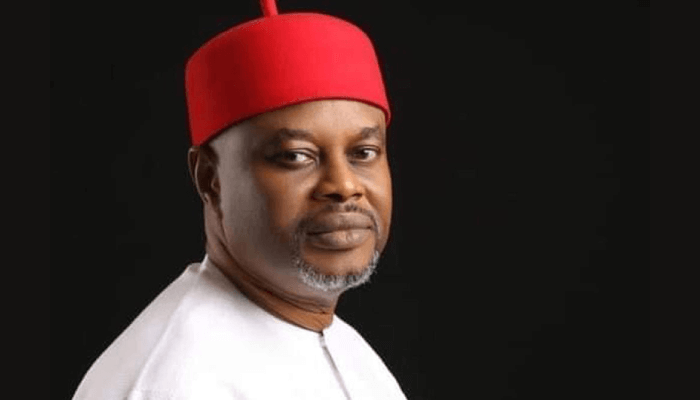
When Salisu Buhari, the then Speaker of the House of Representatives, was forced to resign in 1999 for forging a certificate, it was a defining moment in Nigeria’s political history. His disgrace marked one of the earliest scandals of the Fourth Republic, a rude awakening for Nigerians who had hoped democracy would restore moral integrity to public office. Over two decades later, history has shamelessly repeated itself with the case of Geoffrey Nnaji, the now-resigned Minister of Innovation, Science, and Technology, whose alleged certificate forgery has again exposed the enduring rot in Nigeria’s leadership culture.
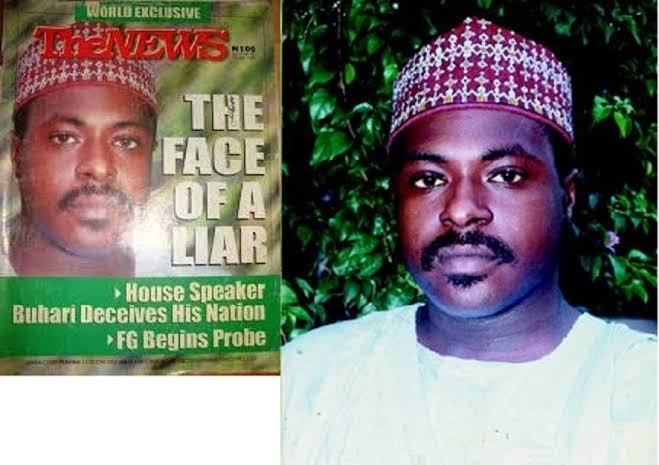
The similarity between both cases is striking; two men who rose rapidly through the political ranks, only to fall spectacularly because they thought deceit could be hidden behind paper credentials. It reveals a disturbing truth about Nigeria’s political class: many are obsessed with appearances, not substance.
Yet, the irony is painful. The Nigerian Constitution does not even require high academic qualifications for public office. To contest any elective position in the country, from councilor to president, all one needs is a school certificate or its equivalent. That is all. The framers of the Constitution understood that leadership is about service and character, not degrees and diplomas. So, what exactly drives a person to forge what is not even required? Vanity? Arrogance? On the other hand, a deep-seated inferiority complex masked by false credentials?
Whatever the reason, forging certificates in Nigeria’s political environment is sheer foolishness. It is not only criminal but also needless. To imagine that anyone would jeopardize their career, reputation, and public trust over something as inconsequential as a school certificate is both laughable and tragic.
When Salisu Buhari’s deceit was uncovered in 1999, Nigerians were stunned. Here was a 29-year-old who had ascended to one of the highest offices in the land, only to destroy it all by lying about his age and academic qualifications. He claimed to have graduated from the University of Toronto, an institution that promptly disowned him. Once the truth came out, the house came tumbling down. Buhari confessed, resigned, and convicted. Though later pardoned, his name remains synonymous with political dishonor.
Fast forward to 2025, and the case of Geoffrey Nnaji is an eerie replay of the same script. Despite technological advancements that make background checks easier than ever, some Nigerian politicians still think they can outwit the system. They underestimate the vigilance of civil society, investigative journalists, and the unforgiving permanence of digital records. Forgery in this age is not just dishonest, it is suicidal.
The persistence of this disgraceful trend says more about the value system of Nigeria’s political elite than about their educational background. It exposes a class that prioritizes image over integrity, showmanship over service, and vanity over virtue. In truth, Nigeria’s leadership problem is not about lack of education, it is about lack of honesty. We have seen well-educated crooks loot the treasury with intellectual precision. We have also seen humble, less-schooled individuals who led with conscience and courage. Leadership is not a classroom subject; it is moral calling.
The obsession with certificates is a national sickness. Nigerians have come to equate education with competence and paper qualifications with intelligence, forgetting that morality has no academic certificate. This warped perception pushes even the educated to fake what they already have or do not need. It is a cycle of deceit that cheapens both education and leadership.
Our political parties have made matters worse. They often overlook questionable credentials as long as the candidate can deliver votes or cash. INEC’s screening processes, though improving, remain largely administrative. Moreover, the electorate, battered by decades of disappointment, has become indifferent to moral infractions. When a society stops being shocked by dishonesty, corruption becomes a way of life.
However, this is not a hopeless situation. The first step toward change is truth. Nigeria must begin to prize integrity above certificates. There should be no shame in presenting a genuine school-leaving certificate if that is what one possesses. Leadership should not be a contest of degrees but a test of character. A man who forges his way into office cannot be trusted to tell the truth when it matters most. Forgery is the first act of corruption, a prelude to every other crime that follows.
To fix this, accountability must become non-negotiable. Political parties must conduct rigorous verification of all submitted credentials. INEC must collaborate with institutions to authenticate certificates before elections, not after scandals break. In addition, the judiciary must treat forgery cases with urgency, not as political chess games. Anyone found guilty of certificate forgery should not only be removed from office, but also permanently barred from holding any public position.
Salisu Buhari’s downfall in 1999 and Geoffrey Nnaji’s disgrace in 2025 are reminders that deceit always has an expiration date. They are cautionary tales that every aspiring politician should study carefully. The truth may take time, but it always arrives, and when it does, no forged paper can stop its sting.
The greater tragedy, however, is that Nigeria, as a nation seems unbothered by this recurring shame. We treat forgery as political gossip instead of a moral crisis. Each new scandal becomes a brief media sensation, and then fades into silence. That silence emboldens the next liar, who believes he can get away with it. However, he will not. The truth has a long memory.
For a country where the minimum qualification to be president is a school certificate, forging one is not only senseless, it is suicidal. It shows a vacuum of self-worth, a poverty of principle, and a complete misunderstanding of leadership. Public office should be a place for service, not for self-deception.
If democracy is to mean anything, it must begin with sincerity. Integrity, not forgery, must define those who govern. Nigeria cannot continue to build its democracy on lies and expect stability. The cupboard of deceit is already full, and the stench can no longer be hidden. The cleansing must begin now, starting with those who have made forgery their path to power.
From Salisu Buhari to Geoffrey Nnaji, history keeps teaching the same lesson: deceit may open doors temporarily, but it always shuts them permanently.
















You must be logged in to post a comment Login