Global Issues
Global Justice, Selectively Applied: The Politics Behind Legal Silence -By Fransiscus Nanga Roka
A policeman does not serve the public; it punishes the weak and excuses the strong, this is more than imperfect, this is unjust. A system that is wrong, but maintains a pretense to morality exposes itself not just as failure, it makes the far more dangerous mistake of becoming irrelevant.

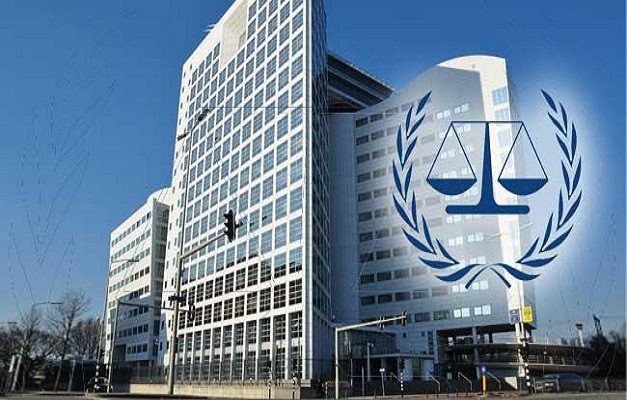
There is no scarcity of law across the world. It lacks the boldness to put it into action.
The charters of the United Nations and the solemn promises made by signatories to obey rulings from bodies such as the International Criminal Court, or ICC: they all proclaim that a perfectly just international system stands at hand as if it were simply above politics in way. But here is the tough truth that back to reality, set: Global justice isn’t blind, it picks and chooses. And that selectivity is no accident. It is political.
For transgressions of powerful states against international norms, the response is a statement (not consequences). The moment that the laws of international jurisprudence are wielded like swords by weaker states, however bam! It is not just hypocrisy; it is structural asymmetry. It demonstrates that the law is not a constraint on power, but rather yields to it.
Consider the recurring pattern. Military interventions justified with vague doctrines Labeling civilian deaths a collateral damage. Strategic necessity as the new name for economic coercion. In every case, the law-speaks never dies, t is merely suborned. Legal silence is a weapon, not an error.
The challenge lies not with international law as a system for governing state behaviour, and that is the case. On paper, it is formidable. The power of the United Nations Security Council is very broad. International Court of Justice have binding judgements The International Criminal Court has jurisdiction over the most serious crimes of concern to mankind as a whole. But in practice, enforcement buckles beneath geopolitics.
Why? Because international law does not have what national systems simply assume: a neutral enforcer with the will and capacity to coerce. Enforcement, in contrast, is mediated through states most notably the strongest ones whose interests often tend toward selective compliance. This creates a paradox: States least susceptible to the costs of violating international law are most able.
This is not only an institutional shortcoming. It is a legitimacy crisis.
An adjudicative scheme with rules that are applied selectively does not just fail, it lies. It gives the illusion of justice while legitimatizing impunity. It tells victims that the law is real, just not for you. This tells powerful actors that accountability is something we can bargain with.
The consequences are profound. First, selective enforcement erodes deterrence. If the applicability of law is contingent on political allegiance, and not legal principle, compliance becomes merely a strategic choice rather than a normative obligation. Second, it fuels global cynicism. The tendency is for both states and citizens to see international law not as a justice system, but an instrument of power. Third, it deepens inequality. Whoever commits the same violation, however, leads to completely different results.
Supporters of the status quo argue this is just how international relations are. Power matters, they say. Law must be pragmatic. This latter argument, however, concedes too much. It does so by turning international law from a limit on power into its linguistic justification.
The more insidious threat is in normalization. Selected justice will be cause for shock no more, given time. It becomes expected. In short, to remain silent in the face of massive violations is no longer a scandal; it has become normal. Once injustice becomes the norm, reform gets harder not easier.
So, what is the next step?
In the first place, how to deal with an illusion of neutrality which is also a fable for several people globally? Take note that selective application is a matter of systemic origin, not one arising from the devil himself rather funnily. Any reform would be impossible without this honest relationship.
Second, strengthen institutional independence. Formal independence can never provide the full substance of a truly independent courts; novel systems of funding, cooperation and enforcement mechanisms that cannot be placed entirely at the state´s will are needed to help insulate Courts like International Criminal Court from political pressure.
Third, implement penalties for legal silence in its own right. Institutions must be aware that refusing to act in the face of clear violations incurs reputational and political costs. Silence can not be without cost.
Fourth, enabling accountability by other means regional courts, universal jurisdiction and civil society documentation. Decentralized justice needs to step in when centralized systems fall short.
None of these measures will disempower international law. That is unrealistic. But they can readjust the scales casting a system that protects power as one which, at minimum, opposes it.
In the end, international law must not or rather should never be perfect. It cannot. Whether that is plausible or not, however, remains to be seen.
A policeman does not serve the public; it punishes the weak and excuses the strong, this is more than imperfect, this is unjust. A system that is wrong, but maintains a pretense to morality exposes itself not just as failure, it makes the far more dangerous mistake of becoming irrelevant.
Because when law only speaks with regard to safe and is silent at that which matters it cannot be justice.
Fransiscus Nanga Roka
Faculty of law University 17 August 1945 Surabaya Indonesia