Africa
How Nigeria’s Middle Class Is Shifting From Breadwinners To Barely Getting By -By Isaac Asabor
Sociologically, a society without a middle class is like a tree without a trunk, fragile and doomed to collapse. Economically, such a society lacks the consumption power, innovation, and skilled manpower necessary for growth. No country in history has attained prosperity without a strong and growing middle class. Nigeria cannot be the first to try.


There was a time when Nigeria’s middle class stood tall as the nation’s economic engine and stabilizing force. Made up of civil servants, teachers, nurses, small business owners, and professionals in various fields, these Nigerians were not wealthy, but they lived decently. They could afford good housing, send their children to school, access healthcare, and even enjoy the occasional luxury. They were the breadwinners, the ones who held families and communities together. Today, however, this same group is fighting for survival. Once the pride of socioeconomic balance, Nigeria’s middle class is now barely getting by.
The transformation is not just economic, it is psychological and social. Across the country, once-comfortable professionals are now skipping meals, withdrawing their children from private schools, postponing healthcare, or outright relocating abroad in search of stability. Small business owners struggle with vanishing customers and rising costs. Civil servants juggle loans just to make it through the month. Even once-revered professionals, such as bankers, journalists, teachers, are now under strain. The middle class is no longer the bridge between the poor and the rich; it is slowly becoming indistinguishable from the poor.
What went wrong? The answer to the foregoing question cannot be farfetched as the economic decline did not happen overnight, but recent years have accelerated the freefall. Since mid-2023, policy missteps and harsh economic reforms have dealt the middle class a heavy blow. Nigeria’s long-standing dependence on oil, chronic corruption, and lack of planning have always been problems, but the situation worsened with the removal of fuel subsidies, a chaotic exchange rate float, unrelenting inflation, and rising insecurity. Each policy, however well-intentioned, is hitting the middle class hardest.
Inflation is now above 33%, with food inflation crossing 40%. A 50kg bag of rice sells for over ₦70,000, more than the monthly minimum wage. Cooking gas, once affordable, is out of reach for most families. Transport fares have doubled or tripled due to high fuel prices. Electricity tariffs keep climbing, even as power supply remains epileptic. In effect, a salary that sustained a household five years ago now barely stretches beyond a week.
This erosion of purchasing power has had a cascading effect on lifestyle and mental health. Middle-income earners now face difficult choices every day, between feeding their families and paying rent, between buying drugs and paying school fees. Many have sunk into depression. Others have joined the growing wave of “Japa” migrants fleeing to countries where their skills are better valued. Those who stay behind have either joined the gig economy or are desperately reinventing themselves as side hustlers just to survive. For the sake of clarity, the gig economy is a labor market characterized by short-term, freelance, or contract work, often facilitated by digital platforms. It offers flexibility and opportunities for both workers and businesses but also presents challenges related to job security and benefits.
But the tragedy is not just about economic hardship, it is about the near-total neglect of this crucial demographic. There is no national policy targeted at rescuing or rebuilding the middle class. The political class seems more focused on self-preservation ahead of the next election cycle. Budgets are bloated with recurrent spending, and legislative focus remains on allowances, not reforms. Meanwhile, taxes are rising, fuel subsidies are gone, and services are shrinking.
The middle class, however, is not just another group in society, it is the lifeline of national stability. It is the segment that demands accountability, votes with a conscience, pays taxes, supports innovation, and drives demand in the economy. Without it, a country is left with only two extremes: the ultra-rich who wield unchecked power, and the impoverished majority who are vulnerable to manipulation, unrest, and hopelessness. This is the dangerous path Nigeria is now threading.
And the signs are everywhere. Crime has spiked. Kidnappings, cyber fraud, and ritual killings are commonplace. Many young people have lost faith in education as a ladder to progress. Why study for years to earn ₦40,000 a month when a political thug makes more in one weekend? In a country where honest work no longer pays, it is only a matter of time before social cohesion unravels completely.
Still, Nigeria can reverse course, if there is the political will to do so. First, the productive sectors must be revived. Agriculture, manufacturing, and technology are key to job creation. Nigeria cannot build a robust middle class on imports and consumption alone.
Second, tax relief is essential as the current tax regime is crushing businesses and discouraging entrepreneurship. In fact due to excruciating tax burden, small businesses, often run by middle-class families, need breathing room to survive and scale.
Third, massive investment in education and healthcare is non-negotiable. This is as strong middle class is built on a healthy, skilled workforce. If Nigeria keeps exporting its best minds through brain drain, the middle class will continue to hollow out.
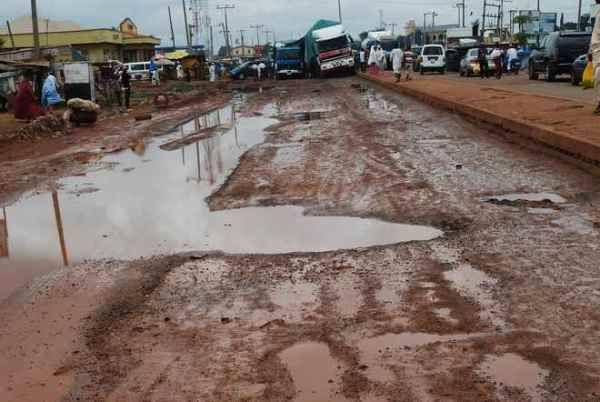
Fourth, public infrastructure must improve. Affordable housing and reliable public transport are basics that any thriving middle class must be able to access. In Nigeria today, they are out of reach for most.
Fifth, the government must get serious about stabilizing the currency and curbing inflation. No economic revival plan can work if people’s incomes are constantly being wiped out by price instability. Until salaries regain value and saving makes sense again, the middle class will continue to shrink.
Sociologically, a society without a middle class is like a tree without a trunk, fragile and doomed to collapse. Economically, such a society lacks the consumption power, innovation, and skilled manpower necessary for growth. No country in history has attained prosperity without a strong and growing middle class. Nigeria cannot be the first to try.
In conclusion, the Nigerian middle class is rapidly transitioning from breadwinners to barely surviving. It is a shift that threatens not just families, but the entire fabric of the nation. If Nigeria is to reclaim stability, reduce inequality, and chart a course toward progress, then rebuilding the middle class must become a national priority. Not tomorrow. Now.
Because a country that loses its middle class is like a table with broken legs, it may stand for a while, but it is only a matter of time before it crashes.