Africa
How Shaibu’s Exit And Obaseki’s Broken Alliances Cost PDP The Gubernatorial Election: A Cautionary Tale For Politicians, by Isaac Asabor

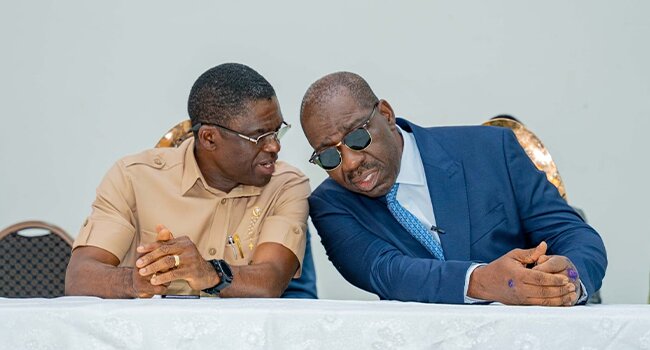
In the aftermath of the just-concluded gubernatorial election, it has become clear that the defeat of the People’s Democratic Party (PDP) can largely be attributed to a combination of political missteps, most notably the exit of Philip Shaibu, the deputy governor, and Governor Godwin Obaseki’s tendency to burn bridges with political allies. These events highlight a broader lesson for politicians: the need to manage crises and strained relationships with fellow leaders, as failure to do so can unravel the strongest political alliances and weaken a party’s electoral chances.
Philip Shaibu’s departure from the PDP earlier in the political cycle sent shockwaves through the party. As a key political figure in Edo State and a grassroots mobilizer, Shaibu had been instrumental in ensuring Governor Obaseki’s political success, especially during their joint defection from the All Progressives Congress (APC) to the PDP. His exit, however, was driven by mounting differences with Obaseki and a growing sense of isolation. As deputy governor, Shaibu became disillusioned with the way Obaseki managed internal affairs, leaving him little room to operate politically. His eventual exit did not just hurt the PDP but also reflected deeper cracks within the party structure.
Shaibu’s exit robbed the PDP of his loyal following in Edo North, a critical stronghold, significantly weakening the party’s voting base. Moreover, it sent a clear message to voters and supporters: if the party’s own leadership could not remain united, how could they be trusted to lead the state effectively? Shaibu’s defection highlighted the consequences of poor crisis management and failure to maintain healthy relationships among political allies, which became a key factor in the PDP’s electoral defeat.
However, Shaibu’s departure was only one symptom of a larger issue. Governor Obaseki’s penchant for alienating key political allies has been a recurring problem throughout his tenure. Over the years, he has distanced himself from powerful figures and internal party leaders, creating a reputation for burning bridges. His fallout with political allies, both within Edo State and at the national level, had weakened his support base well before the election.
One of the most notable instances of Obaseki’s tendency to burn bridges was his public clash with the PDP leadership shortly after his re-election in 2020. The governor’s refusal to fully integrate into the party’s structure caused a rift between him and core PDP members, many of whom felt sidelined. Obaseki’s perceived lack of commitment to party unity bred resentment, creating internal divisions that festered until they reached a breaking point.
This inability to manage political relationships not only weakened the PDP but also cost the governor the confidence of party faithful and the electorate. In a political landscape where loyalty and unity are critical, Obaseki’s habit of severing ties with key allies made it difficult for the party to present a unified front, further damaging their prospects in the election.
Beyond internal party issues, Obaseki’s administration struggled to deliver tangible democratic dividends to the people of Edo State. Voters became increasingly frustrated with the lack of visible progress in critical sectors such as infrastructure, employment, and economic empowerment. Despite numerous promises, many citizens felt the administration was more focused on political wrangling than delivering real benefits to the people.
This perception of underperformance became a potent weapon for the opposition, which capitalized on the growing dissatisfaction. Obaseki’s failure to demonstrate meaningful progress on the ground further alienated voters, who began to see his administration as disconnected from their daily struggles. By the time the election arrived, the PDP was fighting an uphill battle against not just a united opposition but also widespread discontent among its traditional supporters.
The PDP’s loss in the Edo gubernatorial election serves as a cautionary tale for politicians across Nigeria. The exit of Shaibu and Obaseki’s deteriorating relationships with political allies underscore the critical importance of managing crises and maintaining alliances. In politics, relationships are often the glue that holds parties and administrations together, especially during challenging times. Leaders must be adept at conflict resolution, compromise, and managing strained partnerships, as the failure to do so can have devastating electoral consequences.
This lesson is particularly relevant to other political figures currently facing internal discord. In Rivers State, for example, the strained relationship between Governor Siminalayi Fubara and former Governor Nyesom Wike has been making headlines. Fubara and Wike, both of whom played significant roles in the PDP’s political dominance in Rivers, are now at odds, with signs of growing friction. If not managed properly, their conflict could have similar consequences as seen in Edo, weakening the party’s base and giving the opposition room to make gains.
Likewise, in states where political relationships are strained, this scenario serves as a warning. Politicians must prioritize the management of internal conflicts and maintain open channels of communication with their allies. Failing to do so risk the kind of fragmentation that plagued the PDP in Edo and contributed to its eventual defeat.
The collapse of the PDP’s electoral fortunes in Edo State can be traced back to a series of avoidable political missteps, most notably, the exit of Philip Shaibu and Governor Obaseki’s inability to maintain strong alliances. In the complex world of Nigerian politics, where personal relationships and grassroots mobilization are key to electoral success, political leaders must learn to manage crises with care. Obaseki’s experience should serve as a reminder to politicians across the country, especially in states like Rivers and beyond, that political bridges should be built and maintained, not burned.
As the PDP reflects on its defeat, the lessons from this election should resonate beyond Edo State. Politicians everywhere should take heed: mismanagement of internal conflicts, coupled with a failure to deliver democratic dividends, can derail even the most promising political careers. Only through careful crisis management and alliance-building can they hope to maintain the trust of the electorate and secure lasting political success.