Africa
Humanism, and Secular Awakening in 21st Century Nigeria -By Leo Igwe
The future of humanism rests on the flourishing of freethought, critical thinking, and technological intelligence. To realize this future, a campaign of intellectual awakening is urgent and necessary. Nigerians must wake up and cease to religiously slumber and existentially smolder away. Nigerians, nay Africans must overcome the religion-induced amnesia and become mindful, conscious, and conscientious bearers of humanism that befits the 21st century.

As in other African societies, humanism is present in ancient and contemporary Nigeria. Humanism has manifested since the emergence of homo sapiens, and attempts by modern humans to be and to become. The humanist outlook lurks in every aspect and facet of life and society. The wave of reason and progressive emancipation of the human spirit simmers across society. Humanistic tendencies predate religion or theism as we know it today. The humanist spirit remains in contention with anti-human, antediluvian forces, with the debilitating and deleterious currents of supernatural and superstitious ideologies. In this piece, the specifics and particularities of this contention will be highlighted and the promises identified in situating humanism in 21st century Nigeria.
British colonialists created the political entity called Nigeria, and that creation was one of the external influences that left a lasting effect on the country. Before then, societies and communities connected and unconnected by common languages, and cultures existed and populated the place known today as Nigeria. These constituent societies had their laws, norms and traditions, ritual beliefs, and practices including belief in gods, and ancestors. They had spirits that they worshipped and revered in making sense of everyday life and existence. With limited knowledge about nature and how it works, people created gods; they acknowledged the presence or role of supernatural forces in their lives, the organization of their societies, and in making sense of fortune and misfortune. Supernaturalism is not Africa specific, it is a cultural universal.
So religion and theism are later developments. Gods are inventions, ideas, and mechanisms that humans forged as a part of social existence and reckoning. Through tutelage or lineage, some people, recognized as experts and specialists in religious and god matters, managed societies. They were consulted, commissioned, or contracted to divinize or consult the gods or unravel the inscrutable and mysterious on behalf of humans. Thus people created fictional characters, gods, deities and mermaids, bearing different names to serve or further the human cause and development, happiness, and well-being. They invoked the supposedly superhuman in the quest to cure diseases, end drought and famine and other ills that defied known and commensensical remedies.
In addition, people used religion and gods to control, tyrannize and assert power over others. God’s belief was employed to cheat, deceive, exploit, extort, dispossess, and violate other human beings. Faith in ancestors constituted a pretext to murder, mutilate, and annihilate humans. People impersonated the gods, the god of the river, thunder, iron, and harvest, claiming to be their messengers and mouthpieces. As messengers, these self-styled godmen and women sanctified violence and human bloodletting. They caused people to sacrifice other human beings including their relatives to imagined deities. The name of god was used to legislate and perpetuate caste discrimination, slavery, subordination of women, child marriage, and genital mutilation. Of course, there were nonbelievers, doubters, dissenters, and skeptics who held opposing views and opinions, and who contested and challenged theistic infractions, exploitation, and violations by god-men and women. However, contact with Eastern and Western colonialism changed the humanism-religion dynamics in the region because the religious forces ceased to be local. The introduction of transnational and imperialist religions of Christianity and Islam have had overbearing effects on humanism in Nigeria. They subordinated the political economy of traditional religious beliefs because these faiths were predicated on superiority-racial, socio-cultural, political, economic, religious, and divine superiority. The humanist outlook has been up and against the dominating and degrading effects of these global religious forces.
Before Christianity and Western colonization of Africa gained a foothold, Arab imperialism held sway. In search of slaves, cities, markets, commerce, raw materials, and empires, scholars, migrants, jihadists and imperialists from the east colonized the region and foisted the political economy of Islam on Africans. They used trade including the slave trade, scholarship, violence, and Islamization to enforce their rule and control of the region. Later came Western imperialism and Christianity tried to undo Islamic and traditional political economies. So, Nigeria found and still finds itself at the crossroads of these influences.
At independence in 1960, humanism in Nigeria contended with religious and other anti-human forces and superstitions on different fronts- traditional, Christian, and Islamic. These religious formations are in contention with each other; they try to undo themselves, and the humanity of Nigerians; they battle to control and dominate the minds, manners, state, and estate of Nigerians. The only difference in post-independent Nigeria is that the main actors of Christianity and Islam are no longer white missionaries from the west or Arab jihadists from the east, but Nigerians remotely controlled, supported, and enabled from Europe, America, Iran, Saudi Arabia, and other epicenters of Christianity and Islam. At independence, Nigeria had citizens who valued their religious communities more than the Nigerian state, their holy books more than the constitution, and their clerics more than state agents. Nigeria was populated by those whose primary loyalty was to the Christian god and the Mohammedan Allah, not the African gods and African states.
Centuries of Christian missionary activities and Islamization consigned traditional religious beliefs and identities to the margins. Africans became born-again Muslims and Christians complicating pathways to enlightenment and the flourishing of humanism and secularism. Christians impose political versions of their religion. Muslim politicians campaign for Islamic theocracy and separatism. At Independence, Nigeria adopted a national anthem that states, “Though tribe and tongue may differ, in brotherhood we stand”. Unfortunately in reality it is a different case. Christian and Islamic faith groups promote a divisive sense of brotherhood, based, dictated and driven more by Christianhood and Ummahood, humanhood.
Political Christianity and Islam hamper the emergence of a secular Nigeria that is a Nigeria unbiased for or against persons of faith or no faith affiliations because a secular Nigeria is incompatible with religious totalitarian tendencies. Christians and Muslims use their political and economic positions to further their religious agenda and ensure state support, and subsidy for their faith programs. They use state money to build churches and mosques, and fund sharia courts, religious schools, and pilgrimages. Muslim politicians pressured and made sharia a part of the constitution and implemented the criminal aspects in Muslim-majority states. Christian politicians exert so much influence on education and legislation, that they lobby and ensure that bills and legislations align with Christian doctrines and dogmas.
So the future of humanism is in peril because there is a growing threat of religious extremism. Magical thinking is pervasive and maintains a stranglehold on too many minds. Religious tyranny is so visible and religious oppression and discrimination are systemic. Witchcraft beliefs and other superstitions are holding the country hostage. While it is unlikely that one religion, Christianity or Islam would overrun and dominate the Nigerian state, there are indications that these imperialist religions would politically hold sway in regions for the foreseeable future. Religious forces would maintain a fierce grip on the minds and morals of the people. Political Christianity and Islam undermine the rights of religious minorities including the rights of nonreligious humanists and atheists. In Muslim-majority states, where Sharia is in force, Islam is the state religion, and non-muslims are treated as second-class citizens.
State governments fund sharia police, courts, and judges. States fund the construction of mosques, Hajj pilgrimages, and Qur’anic recitation contests. Apostasy and blasphemy are criminal offenses. Only alleged apostates and blasphemers of Islam, and sometimes Christianity including atheists, agnostics, and freethinkers are sanctioned, attacked, abused, and sometimes killed with impunity. There are no guarantees for the human rights of gays and nonbelievers or anyone who renounces Islam or says anything critical of the prophet Muhammad. In sections of the country, where Christianity is dominant there is Christian privilege in state matters. State functions begin and end with Christian prayers. Nonbelievers and traditional religious worshippers are demonized. Faith-based homophobic sentiments are high. Alleged witches are attacked, persecuted, and killed. Ritual attacks and human sacrifice persist.
While the situation is dire, difficult, and dangerous, hope exists for humanism in Nigeria because wherever there are human beings there is hope. Some light glows at the end of this dark tunnel of superstition and religious extremism because the social media has amplified the voices of dissent and disbelief. There is a growing wave of criticism of religious and extremist ideologies. Although the somber situation makes people despair for Africa, it presents an opportunity to realize a Nigerian nay an African intellectual awakening and enlightenment with a global dimension. The darkness in Nigeria is not only local but also globally induced. It is not only national it is transnational. The situation demands bold and courageous deployment of the virtues of humanism and secularism against the forces of superstitions and irrationalism. While Christianity and Islam are linked to enlightenment in the West and the East, these faiths have caused darkness and despair; they have hampered moral and intellectual progress. And a Nigerian-grounded effort to dispel this darkness has become necessary and would have a global resonance.
The future of humanism in Nigeria rests on defiance and resistance to religious tyrannies and absolutisms. It is predicated on the tendency and ability to oppose and rebel against oppressive religious proclivities, highlight erroneous and outdated doctrines of various faiths, foreground dogmas and absurdities that compel believers to commit atrocities, challenge mistaken and outlandish ideas, recreate and renew the society, restore the humanity that has for so long been violated. The future of humanism rests on the flourishing of freethought, critical thinking, and technological intelligence. To realize this future, a campaign of intellectual awakening is urgent and necessary. Nigerians must wake up and cease to religiously slumber and existentially smolder away. Nigerians, nay Africans must overcome the religion-induced amnesia and become mindful, conscious, and conscientious bearers of humanism that befits the 21st century.
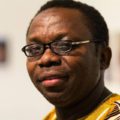
Leo Igwe is a board member of Humanists International and the Humanist Association of Nigeria. He directs the Advocacy for Alleged Witches and Critical Thinking Social Empowerment Foundation.