
Africa
Hunger In The Land Of Plenty: Tracking Food Insecurity In West Africa -By Hadiza Kaka Mele
Lack of access to diverse diets rich in vitamins and proteins leads to stunted growth and weakened immune systems. Governments and NGOs must prioritize not only the quantity of food available but also its quality. School feeding programs, community gardens, and nutrition awareness campaigns have shown positive results in countries like Cape Verde and Ghana. Expanding such initiatives across the region can help combat the silent crisis of malnutrition that undermines human development.

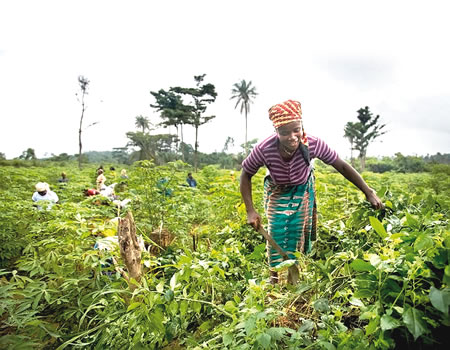
In the fertile lands of West Africa, where rivers flow and the soil is rich, it seems paradoxical that millions go to bed hungry each night. Yet, hunger remains one of the most persistent challenges in the region, affecting both rural farmers and urban families alike. Food insecurity in West Africa is not simply a result of scarcity — it is the product of deep-rooted economic, environmental, and political issues. From the arid plains of Niger to the markets of Lagos and the rice fields of Sierra Leone, the struggle to put food on the table has become a daily reality. Despite vast agricultural potential, the region continues to rely heavily on imported food, leaving it vulnerable to global price shocks and trade disruptions.
The problem begins with the region’s dependence on rain-fed agriculture, which makes food production highly susceptible to climate variability. Droughts, floods, and unpredictable rainfall patterns have devastated farms and reduced harvests in recent years. In countries like Burkina Faso and Mali, farmers watch helplessly as crops wither before maturity, while in coastal nations such as Liberia and Guinea, heavy rains destroy farmlands and infrastructure. Climate change has turned farming — once a stable way of life — into a gamble. Without modern irrigation systems, mechanization, and access to climate-resilient seeds, many smallholder farmers find themselves trapped in poverty, unable to produce enough to feed their families, let alone sell in the market.
Conflict and insecurity have worsened the situation. In northern Nigeria, Mali, and parts of Niger, armed groups have displaced thousands of farming communities, forcing them to abandon their lands. The destruction of farms and rural infrastructure has crippled local food production. Internally displaced persons (IDPs), now living in overcrowded camps, depend almost entirely on humanitarian aid. These conflicts have not only disrupted agriculture but have also severed critical trade routes, making it difficult for food to move across borders. The ripple effects are felt in urban centers where food prices continue to soar, pushing millions into hunger and malnutrition.
Urban food insecurity is a growing crisis of its own. As cities across West Africa expand rapidly, the cost of living rises faster than income levels. Inflation, coupled with the global increase in fuel and fertilizer prices, has made basic food items such as rice, maize, and cooking oil unaffordable for many households. Families that once ate three meals a day now struggle to have one. Street vendors and informal workers — who make up the bulk of the urban labor force — are hit the hardest. In markets from Dakar to Accra, traders lament the dwindling number of customers, as economic hardship forces people to cut back on food purchases. Hunger is no longer confined to the rural poor; it now thrives in the cities too.
Governments in the region have launched various programs aimed at improving food security, but their impact remains limited. Initiatives such as Nigeria’s Anchor Borrowers’ Programme and Ghana’s “Planting for Food and Jobs” have provided some relief but face challenges of corruption, inadequate funding, and poor implementation. Regional organizations like ECOWAS have also developed agricultural policies to boost local production and reduce imports, yet progress has been slow. Many of these initiatives fail to reach the most vulnerable — small-scale farmers, women, and youth — who form the backbone of agricultural labor. Policy reforms that focus on inclusivity and transparency are crucial for meaningful change.
Women play a vital but often overlooked role in food production. Across West Africa, women farmers are responsible for more than half of agricultural labor, yet they face systemic discrimination in land ownership, access to credit, and agricultural inputs. Empowering women through targeted support programs can significantly boost productivity and food availability. Projects in Senegal and Gambia have shown that when women receive tools, training, and financial resources, they produce more and reinvest in their families’ nutrition and education. Recognizing women as key actors in the fight against hunger is essential to achieving sustainable food security.
Innovation and technology also hold the key to transforming West Africa’s agricultural landscape. The use of mobile technology for weather forecasting, digital payments, and market access is helping farmers make informed decisions. In Côte d’Ivoire, for instance, mobile apps connect cocoa farmers directly to buyers, ensuring fair prices and reducing exploitation by middlemen. Similarly, solar-powered irrigation systems are helping farmers adapt to changing weather conditions. However, scaling these innovations requires greater investment in rural infrastructure, research, and capacity building. Governments must create an enabling environment where technology can thrive and reach even the most remote areas.
Nutrition is another critical aspect of food security. Malnutrition continues to affect millions, particularly children and pregnant women. Lack of access to diverse diets rich in vitamins and proteins leads to stunted growth and weakened immune systems. Governments and NGOs must prioritize not only the quantity of food available but also its quality. School feeding programs, community gardens, and nutrition awareness campaigns have shown positive results in countries like Cape Verde and Ghana. Expanding such initiatives across the region can help combat the silent crisis of malnutrition that undermines human development.
Ultimately, food insecurity in West Africa is both a challenge and an opportunity. The region has the land, the people, and the resources to feed itself — what is needed is the political will and coordinated effort to make it happen. Investing in agriculture is not just about feeding people; it’s about empowering communities, creating jobs, and driving economic growth. If West Africa can unlock its agricultural potential through innovation, inclusivity, and sustainability, hunger could one day become a story of the past rather than the present. Until then, the struggle to conquer food insecurity continues — a fight for survival, dignity, and hope in the land of plenty.
Hadiza Kaka Mele is a 300 level student from Kashim Ibrahim University (Formerly Borno State University, Maiduguri)

























You must be logged in to post a comment Login