
Africa
If Amaechi Is Complaining Of High Cost Of Living, What Shall The Masses Do?, by Isaac Asabor

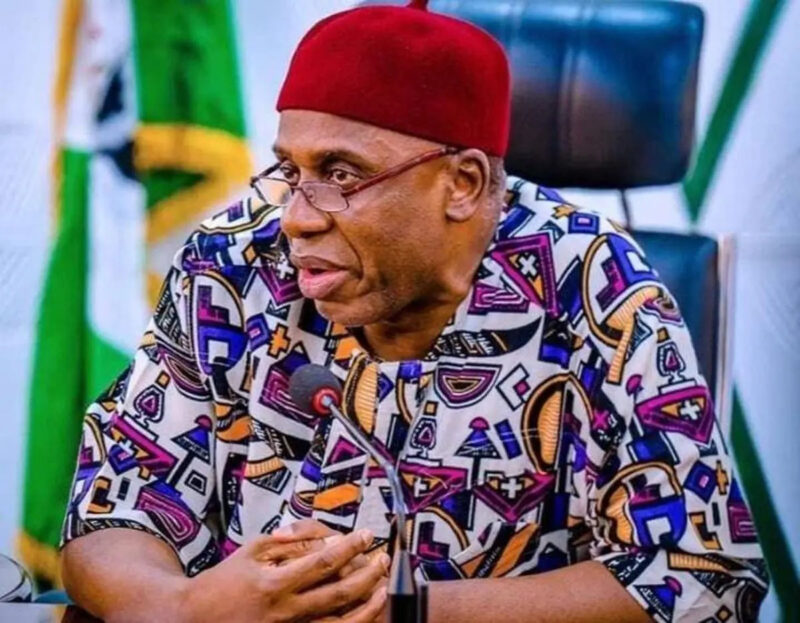
When former Governor of Rivers State and ex-Minister of Transportation, Rotimi Amaechi, and a prominent figure in Nigerian politics, recently lamented the high cost of living, it sent shockwaves across the country. Amaechi, who has long been part of Nigeria’s elite political class, has traditionally been seen as insulated from the economic struggles of the masses. His public complaint raises a crucial question: “If a man of his stature is complaining about the unbearable economic situation, what hope is left for the ordinary Nigerian?”
The foregoing question cannot be easily pooh-poohed as Nigeria is currently facing one of its most challenging economic periods in decades. Inflation, unemployment, and widespread poverty are wreaking havoc on the lives of millions. According to the National Bureau of Statistics (NBS), inflation surged to 25.8% in August 2023, the highest rate in nearly two decades, while food inflation has reached even more alarming levels, hovering at around 30%.
In fact, as gathered, Nigeria’s headline inflation rate rose to 34.19% in June 2024, 11.4 percentage points (ppt) higher than 22.79% in June 2023. This is the 18th consecutive monthly increase since January 2023 and the highest inflation rate in 28 years. Compared to May 2024 (33.95%), inflation rose by 0.24ppt. Food and energy costs drove the price increase. Y-o-Y food and core inflation rates increased to 40.87% and 27.40% from 40.66% and 27.04% in May, respectively.
With the rising costs of essential goods and services, the average Nigerian is left with little to nothing to survive on.
The removal of fuel subsidies in mid-2023 by President Bola Tinubu’s administration acted as a catalyst, further worsening an already fragile economic environment. The subsidy removal led to a threefold increase in fuel prices, which in turn increased the cost of transportation, food, and virtually every other commodity that depends on logistics. As a result, the quality of life for ordinary Nigerians has plummeted, with many unable to afford basic necessities.
Rotimi Amaechi, a veteran of Nigerian politics who has held various high-profile positions, recently found himself making headlines not for political reasons, but for joining the chorus of those decrying the soaring cost of living. His remarks came as a surprise to many Nigerians, primarily because politicians like Amaechi are typically perceived to live in a bubble of privilege, far removed from the everyday struggles of the people.
Amaechi’s complaint, whether intentional or not, is an indictment of the nation’s economic policies. His acknowledgment of the hardship that even the wealthy are beginning to feel suggests that the situation has reached a tipping point. If the elites, who enjoy government allowances, hefty salaries, and other benefits, are feeling the squeeze, it is a sign that Nigeria’s economic problems have crossed a dangerous threshold.
Yet, while Amaechi and others in his class may feel inconvenienced by the high cost of living, for the masses, the economic situation is much more than a discomfort, it is a battle for survival.
For the majority of Nigerians, economic hardship is not a new phenomenon, but the current crisis is one of the worst in recent history. Millions of families can no longer afford to eat three square meals a day, and many are forced to make difficult choices between food, healthcare, and education for their children. Wages have stagnated, while prices of basic goods and services continue to soar. According to a World Bank report, more than 40% of Nigeria’s population, over 83 million people, lives below the poverty line, and the numbers are rising.
The price of staple foods like rice, beans, and garri has doubled in some regions, making it increasingly difficult for the average Nigerian to survive. Transportation costs have tripled in the wake of the fuel subsidy removal, and this has had a cascading effect on food prices, school fees, and other essential services. Informal workers, who make up the bulk of the Nigerian labor force, are hardest hit, as their incomes have not kept pace with the rising cost of living. Many have resorted to living on credit, borrowing from friends and family just to get by.
With the elite feeling the sting of inflation and high costs, one wonders what options are left for the masses. The truth is, there are very few options. Ordinary Nigerians have been left to rely on their creativity and resourcefulness to survive. From petty trading to offering various informal services, many have taken up side hustles just to make ends meet.
In rural areas, subsistence farming has become a lifeline for many, but even that has been affected by rising costs of farming inputs like fertilizers and seeds. Urban dwellers have had to cut down drastically on their spending, with many opting to live without basic amenities like electricity, water, and healthcare.
Nigerians have also turned to protests and strikes to express their frustration. The Nigeria Labour Congress (NLC) and Trade Union Congress (TUC) have staged several strikes demanding wage increases and government intervention to ease the economic burden on citizens. While these strikes have temporarily halted economic activities, they have done little to change government policy or offer any lasting relief.
Amaechi’s lamentation serves as a poignant reminder of the growing disconnect between Nigeria’s ruling elite and the people they govern. For decades, Nigeria’s political class has largely been shielded from the harsh economic realities faced by the masses. Their access to government-funded luxuries, including housing, security, healthcare, and transportation, ensures they are cushioned from the inflationary pressures that grip the nation.
However, the current economic crisis has begun to blur that line of privilege. Politicians who once claimed not to feel the effects of Nigeria’s deteriorating economy are beginning to show cracks in their shield of affluence. But while they experience these challenges as inconveniences, ordinary Nigerians face them as life-altering catastrophes. It is a sobering reality that many in positions of power have failed to grasp.
To bring lasting relief to the masses, Nigeria needs a government that is willing to implement real economic reforms, reforms that go beyond austerity measures that disproportionately affect the poor. There is a desperate need for social safety nets, subsidies for essential goods, and a significant investment in public infrastructure that can reduce the cost of doing business and help lower the prices of basic necessities.
Corruption, long a scourge of the Nigerian economy, must be tackled head-on. Billions of naira that could be used to provide economic relief and improve infrastructure are instead siphoned into private bank accounts, leaving the public with little hope for meaningful change. Until these structural issues are addressed, the economic situation is unlikely to improve.
Amaechi’s complaints about the high cost of living, while noteworthy, should be seen as a call to action for the Nigerian government. If someone as powerful as Amaechi is feeling the effects of the economic downturn, then it is clear that the situation is critical. For the masses, the question remains: What hope is left for us? The future may seem grim, but it is not without hope if the right steps are taken.
The Nigerian government must move beyond empty rhetoric and take tangible steps to alleviate the suffering of the people. Only through comprehensive economic reforms, tackling corruption, and implementing policies that truly benefit the masses can the government begin to restore faith in its ability to lead the country out of this economic quagmire. In the end, Amaechi’s words serve as a reminder that no one, not even the political elite, is immune to the consequences of bad governance and poor economic management. The sooner the government acts, the better it will be for everyone.




















You must be logged in to post a comment Login