
Africa
A Government Gone Deaf Amid Nigerians Cry As Tinubu-led Administration Keeps Tightening The Noose Of Anti-People Policies, by Isaac Asabor

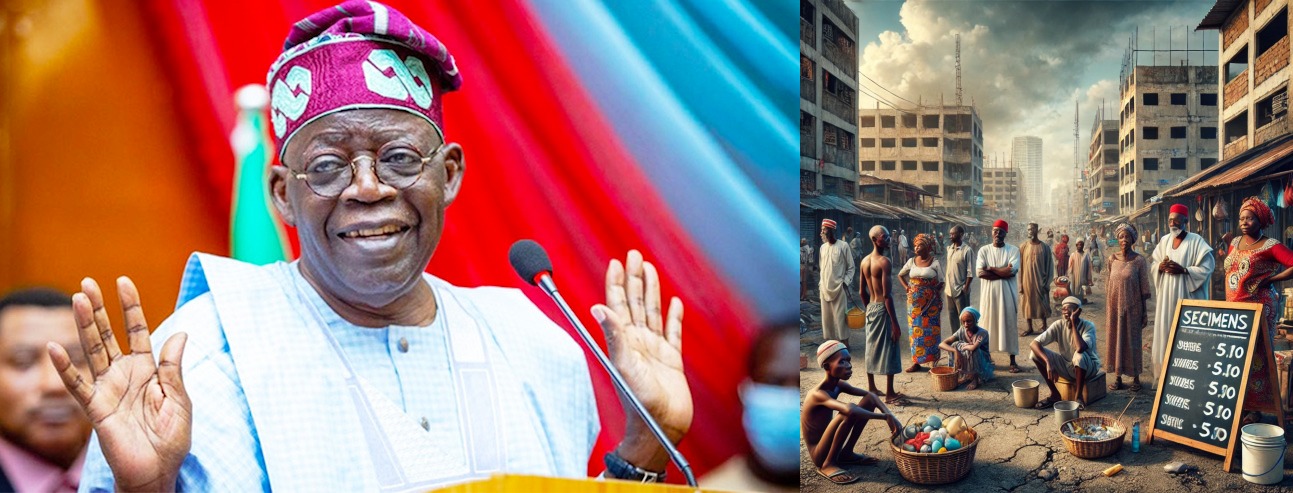
In the streets, markets, and homes across Nigeria, a rising chorus of discontent can be heard, a cry from the people burdened by a government they feel has lost touch with their realities. Under the Tinubu administration, policies that were meant to revitalize the economy and improve the lives of Nigerians have instead been perceived as further inflicting hardship on the already struggling masses. From fuel subsidy removal to skyrocketing inflation, Nigerians are bearing the brunt of anti-people policies that seem more punitive than remedial.
“We are already suffering. The little we could afford before is now beyond our reach. Is this the change we voted for?” laments Musa Ibrahim, a commercial motorcyclist in Abuja. His words echo across the nation as the cost of living has soared since the removal of fuel subsidies, sending transportation costs through the roof and putting basic commodities out of reach for the average Nigerian.
Tinubu’s administration, barely a year old, introduced a series of economic reforms that, on paper, aim to stabilize the country’s economy and boost investor confidence. But in practice, these policies have been described as “anti-people,” hitting the poorest the hardest while leaving the ruling elite largely insulated from their impacts.
The removal of the fuel subsidy, hailed by some as a long-overdue reform, has had far-reaching consequences. Nigerians, already grappling with high inflation and low wages, now find themselves paying more than ever before for basic necessities. “I used to buy a bag of rice for N20, 000. Now, it is over N40, 000. How are we supposed to survive?” asks Adebimpe, a market woman in Lagos. “This government seems sadistic. We are crying out, but they are not listening.”
One of the most glaring criticisms of the Tinubu administration’s economic strategy is the perceived lack of empathy in its implementation. The introduction of value-added tax (VAT) hikes, the devaluation of the naira, and cuts in government spending are all seen as economic moves that prioritize fiscal tightening over the well-being of the people.
In a nation where over 40% of the population lives below the poverty line, these policies are seen as cruel. “This is sadism, pure and simple,” declares Peter Okeke, a civil servant in Mowe-Ibafo, Lagos. “We are drowning, and instead of giving us a lifeline, they’re throwing stones at us.”
The cries of Nigerians have been loud and clear. From street protests to social media campaigns, the people are calling for policies that address their immediate needs, affordable food, stable power supply, access to healthcare, and employment opportunities. However, these calls seem to be falling on deaf ears, as the government remains entrenched in its reforms.
The question on every Nigerian’s lips is whether there is a way forward under this administration. “We need policies that are for the people, not against them,” says Chinyere, a school teacher in Onitsha. “We understand the need for economic reforms, but they must be balanced with the realities of those who are suffering. The government should find a middle ground.”
Despite the harsh reception of its policies, the Tinubu government insists that these reforms are necessary to correct years of economic mismanagement and steer the nation toward recovery. However, for many Nigerians, the cost of these corrections has become too high to bear.
What remains troubling is the government’s continued unresponsiveness to the suffering of the people. The administration’s reforms, intended to create a more stable economy, have, in the short term, made life unbearable for millions of Nigerians. If the government does not recalibrate its approach to address the immediate concerns of the masses, it risks further alienating itself from the very people it was elected to serve.
Is the Nigerian government under Tinubu’s leadership truly sadistic, as many have claimed? Or is it simply disconnected from the harsh realities its citizens face? As the cries of Nigerians grow louder, the government’s indifference becomes more glaring.
“We elected them to serve us, not to punish us,” says Chinedu, a frustrated trader in Aba. His sentiment mirrors that of millions of Nigerians who are tired of bearing the brunt of policies that seem to favor the few at the expense of the many.
For now, the government remains unmoved. And the people, left with little choice, continue to cry out, hoping that one day, their voices will finally be heard.
Without a doubt, Nigerians are groaning under the weight of severe economic hardship, from skyrocketing prices of food and essential commodities to the removal of fuel subsidies, which has led to unbearable living costs. Yet, instead of offering relief, the Tinubu administration appears to be tightening the noose further with anti-people policies that disproportionately affect the poor and middle class. Despite the loud cries of suffering from all corners of the country, the government’s response has been largely indifferent, continuing to implement harsh fiscal measures without any meaningful palliatives or interventions. The failure to address the worsening plight of millions leaves many wondering how long the people can endure such crippling conditions.
Is this not an act of sadism, where those in power seem more willing to exacerbate the citizens’ suffering than to alleviate it? The government’s preparedness to double down on these harmful policies, the ones that are stripping Nigerians of their dignity and security, raises disturbing questions about the empathy and priorities of the leadership. Rather than responding to the pulse of the people, it appears Tinubu’s government is content with policies that deepen poverty and inequality, pushing the masses into even greater despair.



























You must be logged in to post a comment Login