
Business
If Votes Count, SBM’s 2027 Projection Could Become Nigeria’s Reality -By Isaac AsaborIf Votes Count, SBM’s 2027 Projection Could Become Nigeria’s Reality -By Isaac Asabor
Whether that dissatisfaction ultimately translates into a change of government will depend on several factors: the performance of the current administration over the next year, the ability of the opposition to remain united, the willingness of citizens to participate in the electoral process, and above all, the credibility of the election itself.


As Nigeria inches closer to the 2027 general election, a newly released voter sentiment survey by SBM Intelligence has offered what may be the clearest indication yet of the country’s political mood. While elections are ultimately won at the ballot box and not in opinion polls, the report raises an important question: if Nigerians are allowed to freely express their choices through a credible electoral process, could the survey’s projections become reality? The answer, based on prevailing conditions across the country, appears to be yes.
The SBM Voter Sentiment Tracker comes at a time when millions of Nigerians are grappling with severe economic hardship. Inflation continues to erode purchasing power, food prices remain beyond the reach of many households, and unemployment and underemployment have left countless citizens struggling to make ends meet. The United Nations’ warning that 35 million Nigerians could face acute hunger between June and August this year underscores the magnitude of the crisis.
Alongside economic distress is the persistent challenge of insecurity. From bandit attacks and kidnappings in the North to violent criminal activities in other parts of the country, many Nigerians continue to live under the shadow of fear. Despite repeated assurances by government officials, citizens are yet to experience the level of security that would restore confidence in the state’s ability to protect lives and property. It is within this context that the SBM survey should be understood.
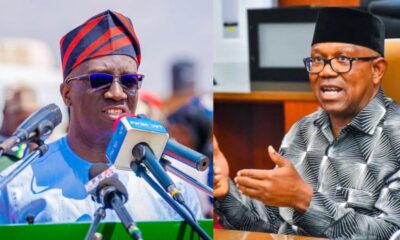
According to the report, President Bola Tinubu recorded a net favorability rating of minus 58.5, the lowest among the political figures assessed. Former presidential candidate Peter Obi emerged as the most favoured contender, posting a positive rating of 58.3. Even more revealing is the survey’s conclusion that high voter turnout could significantly boost the chances of the opposition’s newly formed National Democratic Congress (NDC).
Expectedly, supporters of the ruling party may question the methodology or findings of the survey. Such skepticism is natural in politics. However, dismissing the report outright would be a mistake.
Opinion polls do not create public sentiment; they measure it. The figures released by SBM merely reflect what many Nigerians discuss daily in markets, offices, commercial buses, campuses and social gatherings. Across the country, frustration over the rising cost of living has become a recurring theme. Citizens are increasingly evaluating political leaders through the lens of their personal experiences and economic realities.
In democracies, voters often reward governments when conditions improve and punish them when living conditions deteriorate. Nigeria is unlikely to be different. This does not mean that the 2027 election is already decided. Far from it.
President Tinubu still has time to alter public perception. Governments possess the advantage of incumbency and the ability to implement policies that can improve citizens’ lives before an election. If the administration succeeds in reducing inflation, improving security and creating visible economic opportunities, voter attitudes could shift significantly before 2027.
The opposition, on its part, also faces challenges. Popularity is not the same as political victory. Electoral success depends on organisation, coalition-building, voter mobilisation and effective grassroots structures. A favourable poll today does not automatically translate into votes tomorrow. Yet one aspect of the SBM report deserves particular attention: voter turnout.
The survey suggests that support for the opposition rises dramatically when voter participation increases. This finding reflects a broader reality in Nigerian politics. Many elections are determined not necessarily by who is preferred by the majority of citizens, but by who succeeds in getting supporters to the polling units.
If millions of dissatisfied Nigerians who ordinarily remain on the sidelines decide to participate actively in 2027, the political equation could change dramatically.
However, there is an even more fundamental factor. For the SBM projections to materialize, Nigerians must have confidence that their votes will count. The credibility of the electoral process remains the foundation upon which every democratic outcome rests. Public sentiment can only shape political outcomes when elections are transparent, fair and reflective of the choices made by voters.
Where electoral integrity is strong, surveys often serve as useful indicators of future outcomes. Where electoral processes are compromised, voter preferences become less reliable predictors of election results.
This is why the real significance of the SBM report extends beyond the fortunes of any particular candidate. It serves as a barometer of public mood and a warning signal to those in power. The survey suggests that many Nigerians are dissatisfied with the direction of the country and are increasingly open to political alternatives.
Whether that dissatisfaction ultimately translates into a change of government will depend on several factors: the performance of the current administration over the next year, the ability of the opposition to remain united, the willingness of citizens to participate in the electoral process, and above all, the credibility of the election itself.
For now, the SBM survey offers a snapshot of a nation searching for answers. It reveals a population burdened by economic hardship, troubled by insecurity and increasingly eager for effective leadership.
If current trends persist, if voter enthusiasm remains high, and if the electoral process faithfully reflects the will of the people, SBM’s 2027 projection could indeed become Nigeria’s reality.






















You must be logged in to post a comment Login