
Africa
If Wike Had Left The Rope After Gifting The Goat To Fubara, Rivers Would Have Been Peaceful Today -By Isaac Asabor
The problem of political godfatherism is not just a state-level issue, it is a challenge that must be addressed before it escalates to the national level. If not checked, a similar crisis could rear its ugly head at the presidential level, throwing the entire country into chaos. Imagine a scenario where a former president installs a successor and then refuses to step aside, using political influence to control national affairs from behind the scenes. The consequences would be disastrous for Nigeria’s democracy, leading to instability at the highest levels of government.

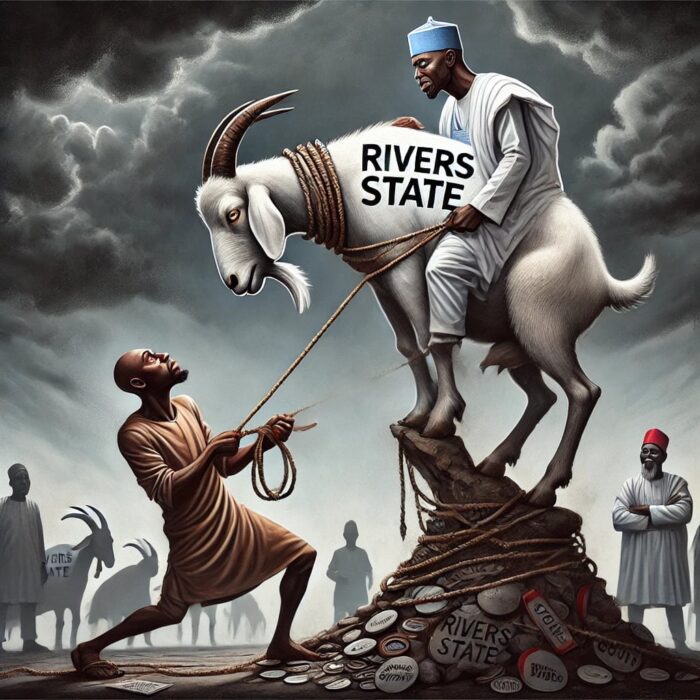
There is an African proverb that says, “When you give someone a goat, you must also release the rope.” This wise saying warns against the tendency of benefactors to maintain control over what they claim to have relinquished. The ongoing political crisis in Rivers State is a clear reflection of this truth. Former Governor Nyesom Wike, minister of the FCT, anointed and supported Siminalayi Fubara as his successor, yet he has found it difficult to step aside and allow his protégé to govern independently. Instead, Rivers State has been plunged into political chaos, with a battle for supremacy between a former leader who refuses to let go and a sitting governor struggling to assert his authority. Alas! The squabble has compelled President Bola Tinubu to recently declare a state of emergency in Rivers State, citing the prolonged political crisis and governance paralysis. Against the foregoing backdrop, it is not illogical to reason that had Wike truly released the “rope” after gifting the “goat,” Rivers State would have been enjoying political stability today.
Without a doubt, the Wike-Fubara crisis is not an isolated case; it is a symptom of a much deeper problem that has plagued Nigerian politics for decades. Across the country, the godfather-godson syndrome continues to wreak havoc on governance and development. In many instances, outgoing political leaders handpick successors, not necessarily based on competence, but on perceived loyalty and the ability to continue serving the interests of their political benefactors. However, once these successors assume office and begin to understand the weight of governance, they often seek to establish their own authority, leading to bitter power struggles.
We have seen this scenario play out in multiple states. In Lagos, President Bola Tinubu’s political dominance has ensured that successive governors remain firmly under his influence. Although Tinubu has successfully maintained control, not every godfather is as lucky. The conflict between former Lagos State Governor Akinwunmi Ambode and Tinubu led to Ambode’s political downfall when he sought to exercise independence. In Kano, a similar battle for supremacy occurred between former Governor Rabiu Kwankwaso and his successor, Abdullahi Ganduje. Their fallout created deep political divisions in the state. In Edo, Adams Oshiomhole and Godwin Obaseki went from allies to fierce political rivals, leading to an intense struggle that reshaped the political landscape of the state.
In fact, the godfather syndrome has proven to be one of the biggest threats to Nigeria’s democracy. Instead of allowing the electorate to choose their leaders, political heavyweights impose candidates who they believe will serve their interests. The result is that many governors come into office shackled by expectations that they must remain loyal to their predecessors rather than serve the people. This breeds mediocrity in governance, as the focus shifts from development to appeasing political benefactors.
Moreover, the battle for control often leads to instability, which in turn affects governance and service delivery. When a godfather and his successor fall out, the entire state apparatus is often thrown into turmoil. Political loyalists are divided, state assemblies become battlegrounds, and critical governance issues take a backseat to power struggles. The people, who should be the primary beneficiaries of governance, end up suffering the most.
Without a doubt, the crisis in Rivers State is particularly troubling because it highlights how political godfatherism can derail a state’s progress. Wike was a dominant force during his tenure as governor. He built a strong political structure and was instrumental in Fubara’s emergence as governor. However, instead of stepping back and allowing his successor to lead, Wike has continued to exert influence over the state’s affairs. Fubara, on the other hand, has gradually begun to assert his independence, leading to a bitter fallout between the two.
The Rivers State House of Assembly has been a key battleground in this crisis. Lawmakers loyal to Wike have clashed with those siding with Fubara, leading to legislative paralysis. The in-fighting has also affected governance, as key decisions and policies have been stalled due to the political crisis. Instead of focusing on development and governance, Rivers State has been consumed by political maneuvering and factional battles.
Had Wike truly allowed Fubara to govern without interference, Rivers State would have remained peaceful. The lesson here is clear: political godfathers must learn to let go. Once a leader has handed over power, they should step aside and allow their successor to govern independently. Anything short of this leads to unnecessary strife and instability.
In fact, political godfatherism is deeply entrenched in Nigeria’s political system. Many politicians see public office as an extension of their personal estates, and they are unwilling to relinquish control even after leaving office. This has led to a situation where many state governors operate under the influence of political heavyweights who dictate key decisions behind the scenes.
The only way to break this cycle is to strengthen Nigeria’s democratic institutions. Political parties must move away from the culture of imposition and allow internal democracy to thrive. The electorate must also demand accountability from their leaders and resist attempts to impose candidates who are merely stooges of powerful politicians. Until these changes occur, the problem of political godfatherism will continue to plague Nigeria’s democracy.
For Nigeria to move forward, political leaders must learn to embrace true leadership. True leadership is about service, not control. It is about mentoring the next generation of leaders and allowing them the freedom to govern independently. A good leader should not seek to manipulate or dictate to their successor but should instead offer guidance when sought and step aside when necessary.
The crisis in Rivers State serves as a cautionary tale. It is a reminder that power is transient and that no leader, no matter how influential, can hold onto it forever. Those who fail to understand this end up being consumed by the very system they seek to control.
The problem of political godfatherism is not just a state-level issue, it is a challenge that must be addressed before it escalates to the national level. If not checked, a similar crisis could rear its ugly head at the presidential level, throwing the entire country into chaos. Imagine a scenario where a former president installs a successor and then refuses to step aside, using political influence to control national affairs from behind the scenes. The consequences would be disastrous for Nigeria’s democracy, leading to instability at the highest levels of government.
To prevent this, decisive action must be taken to discourage the culture of political godfatherism. Institutions must be strengthened to ensure that power truly resides with the people and not with a select few individuals who manipulate the system to their advantage. Political leaders must be made to understand that governance is about service to the people, not about maintaining personal control over public office.
If Wike had left the rope after gifting the goat to Fubara, Rivers State would have been peaceful today. But the political crisis in Rivers is just one of many examples of how political godfatherism continues to undermine Nigeria’s democracy. From Lagos to Kano, from Edo to Anambra, the same story repeats itself: political benefactors refusing to let go, leading to instability and setbacks in governance.
Until Nigerian politicians learn that leadership is about service rather than control, the cycle of godfatherism and political conflict will continue. The people deserve better. Governance should not be a personal empire; it should be about delivering progress and development to those who elected leaders into office. If Nigerian leaders can embrace this simple truth, the country’s democracy will be the better for it.






















You must be logged in to post a comment Login