
Africa
If You Understand Nigeria, You Fit Craze -By Prince Charles Dickson PhD
We build systems and then emotionally sabotage them. We complain about lack of infrastructure, but when infrastructure shows up, we treat it like an optional suggestion. Pedestrian bridges become decorative monuments. Traffic lights become Christmas decorations. Zebra crossings become modern art—beautiful, symbolic, and useless.

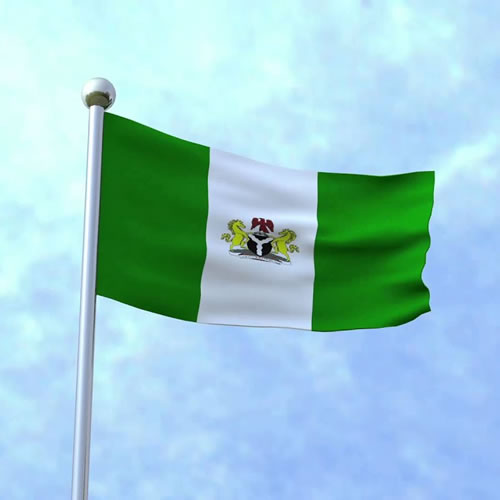
There is a popular Nigerian lingo cum proverb that has graduated from street humour to philosophical thesis: “If dem explain Nigeria give you and you understand am, you fit craze.” It sounds funny. It is funny. But like most Nigerian jokes, it is also dangerously accurate.
Catherine’s story from Kubwa Road is the kind of thing that does not need embellishment. Nigeria already embellishes itself. Picture this: a pedestrian bridge built for pedestrians. A bridge whose sole job description in life is to allow human beings cross a deadly highway without dying. And yet, under this very bridge, pedestrians are crossing the road. Not illegally on their own this time, but with the active assistance of a uniformed Road Safety officer who stops traffic so that people can jaywalk under a bridge built to stop jaywalking.
At that point, sanity resigns.
You expect the officer to enforce the law: “Use the bridge.” Instead, he enforces survival: “Let nobody die today.” And therein lies the Nigerian paradox. The officer is not wicked. In fact, he is humane. He chooses immediate life over abstract order. But his humanity quietly murders the system. His kindness baptises lawlessness. His good intention tells the pedestrian: you are right; the bridge is optional.
Nigeria is full of such tragic kindness.
We build systems and then emotionally sabotage them. We complain about lack of infrastructure, but when infrastructure shows up, we treat it like an optional suggestion. Pedestrian bridges become decorative monuments. Traffic lights become Christmas decorations. Zebra crossings become modern art—beautiful, symbolic, and useless.
Ask the pedestrians why they won’t use the bridge and you’ll hear a sermon:
“It’s too stressful to climb.”
“It’s far from my bus stop.”
“My knee dey pain me.”
“I no get time.”
“Thieves dey up there.”
All valid explanations. None a justification. Because the same person that cannot climb a bridge will sprint across ten lanes of oncoming traffic with Olympic-level agility. Suddenly, arthritis respects urgency.
But Nigeria does not punish inconsistency; it rewards it.
So the Road Safety officer becomes a moral hostage. Arrest the pedestrians and risk chaos, insults, possible mob action, and a viral video titled “FRSC wickedness.” Or stop cars, save lives, and quietly train people that rules are flexible when enough people ignore them.
Nigeria often chooses the short-term good that destroys the long-term future.
And that is why understanding Nigeria is a psychiatric risk.
This paradox does not stop at Kubwa Road. It is a national operating system.
We live in a country where a polite policeman shocks you. A truthful politician is treated like folklore—“what-God-cannot-do-does-exist.” A nurse or doctor going one year without strike becomes breaking news. Bandits negotiate peace deals with rifles slung over their shoulders, attend dialogue meetings fully armed, and sometimes do TikTok videos of ransoms like content creators.
Criminals have better PR than institutions.
In Nigeria, you bribe to get WAEC “special centre,” bribe to gain university admission, bribe to choose your state of origin for NYSC, and bribe to secure a job. Merit is shy. Connection is confident. Talent waits outside while mediocrity walks in through the back door shaking hands.
You even bribe to eat food at social events. Not metaphorically. Literally. You must “know somebody” to access rice and small chops at a wedding you were invited to. At burial grounds, you need connections to bury your dead with dignity. Even grief has gatekeepers.
We have normalised the absurd so thoroughly that questioning it feels rude.
And yet, the same Nigerians will shout political slogans with full lungs—“Tinubu! Tinubu!!”—without knowing the name of their councillor, councillor’s office, or councillor’s phone number. National politics is theatre; local governance is invisible. We debate presidency like Premier League fans but cannot locate the people controlling our drainage, primary schools, markets, and roads.
We scream about “bad leadership” in Abuja while ignoring the rot at the ward level where leadership is close enough to knock on your door.
Nigeria is a place where laws exist, but enforcement negotiates moods. Where rules are firm until they meet familiarity. Where morality is elastic and context-dependent. Where being honest is admirable but being foolish is unforgivable.
We admire sharpness more than integrity. We celebrate “sense” even when sense means cheating the system. If you obey the rules and suffer, you are naïve. If you break them and succeed, you are smart.
So the Road Safety officer on Kubwa Road is not an anomaly. He is Nigeria distilled.
Nigeria teaches you to survive first and reform later—except later never comes.
We choose convenience over consistency. Emotion over institution. Today over tomorrow. Life over law, until life itself becomes cheap because law has been weakened.
This is how bridges become irrelevant. This is how systems decay. This is how exceptions swallow rules.
And then we wonder why nothing works.
The painful truth is this: Nigeria is not confusing because it lacks logic. It is confusing because it has too many competing logics. Survival logic. Moral logic. Emotional logic. Opportunistic logic. Religious logic. Tribal logic. Political logic. None fully dominant. All constantly clashing.
So when someone says, “If dem explain Nigeria give you and you understand am, you fit craze,” what they really mean is this: Nigeria is not designed to be understood; it is designed to be endured.
To truly understand Nigeria is to accept contradictions without resolution. To watch bridges built and ignored. Laws written and suspended. Criminals empowered and victims lectured. To see good people make bad choices for good reasons that produce bad outcomes.
And maybe the real madness is not understanding Nigeria—but understanding it and still hoping it will magically fix itself without deliberate, painful, collective change.
Until then, pedestrians will continue crossing under bridges, officers will keep stopping traffic to save lives, systems will keep eroding gently, and we will keep laughing at our own tragedy—because sometimes, laughter is the only therapy left.
Nigeria no be joke.
But if you no laugh, you go cry—May Nigeria win.
















You must be logged in to post a comment Login