
Africa
Imasuen, Akpabio, and the Burden of Their Past—A Time to Step Down for Now -By John Egbeazien Oshodi
Nigeria stands at a defining moment. Will it continue to allow ethically compromised individuals to hold power without question, or will it demand accountability from its leaders? The unchecked abuse of power is not just a problem for individuals—it is a systemic issue that, if left unaddressed, weakens the very foundations of governance.

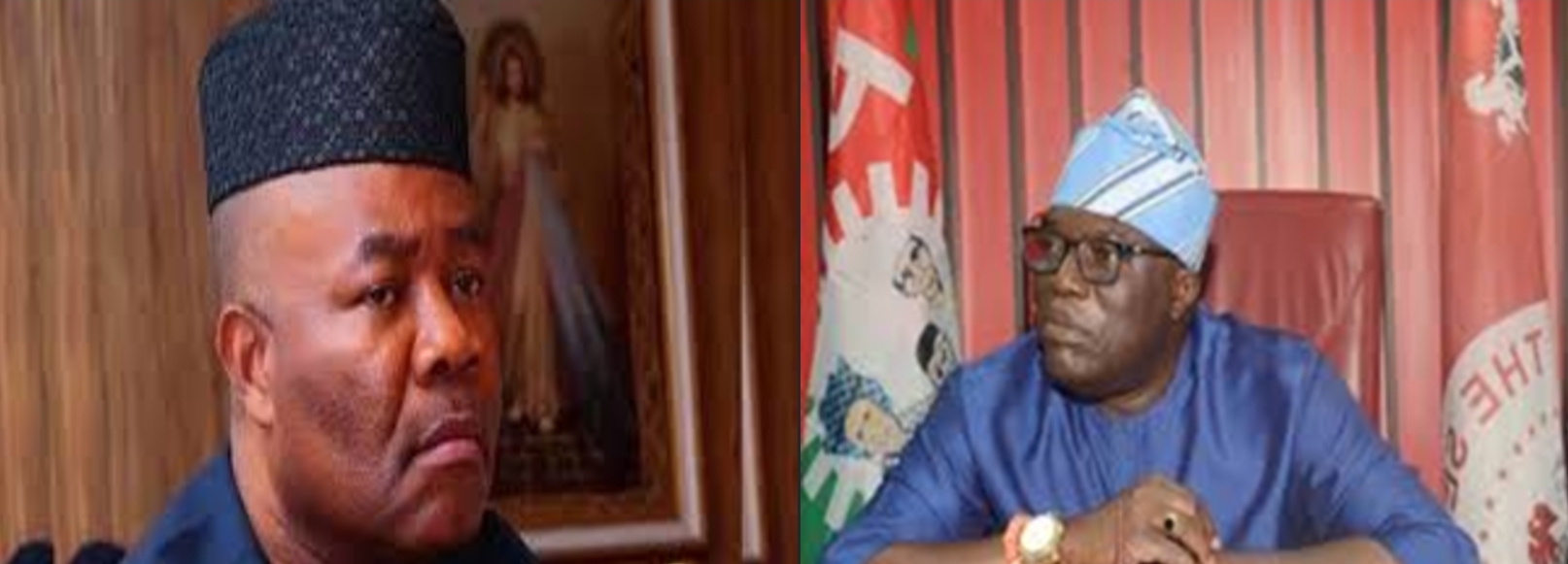
The ongoing controversy surrounding Senator Neda Bernards Imasuen serves as a mirror reflecting Nigeria’s leadership crisis. A man disbarred by the New York State Supreme Court in 2010 for fraudulent activities now chairs the Senate Committee on Ethics, Privileges, and Public Petitions. This raises important ethical and moral questions—how does someone previously deemed unfit to practice law abroad now oversee ethical governance in Nigeria’s legislature? His rejection of Senator Natasha Akpoti-Uduaghan’s sexual harassment petition against Senate President Godswill Akpabio highlights complex issues of power, accountability, and the treatment of women in politics.
However, this situation is not just about Imasuen or Akpabio—it reveals deeper concerns about governance, where individuals with unresolved pasts reappear in positions of influence. Nigeria’s democracy, still finding its footing in the face of systemic corruption, is being challenged by those who claim to uphold it. Public trust erodes when impunity is normalized, when leaders recycle themselves into positions of power, and when accountability is seen as selective rather than universal. These moments demand introspection, not just from those involved but from a nation struggling with leadership credibility.
Examining Power and Its Consequences: Can We Listen Before We Judge?
Despite Imasuen’s outright dismissal of Natasha’s petition as ‘dead on arrival,’ his handling of a fellow senator’s claims, and his disregard for a court order, immediate condemnation without consideration may not be the most productive path. He did not merely bypass legal procedures; his actions reflect a broader issue of how power is exercised in Nigeria’s political space. Even after disregarding judicial directives, he pushed forward with a six-month suspension recommendation for Natasha—an action that invites scrutiny into the unchecked use of influence.
Yet, rushing to judgment does not necessarily lead to justice. Imasuen is not an isolated case—he is part of a system where ethical concerns are often disregarded. Many who now call for his resignation exist within institutions where ethical breaches are common. But before conclusions are drawn, it is important to hear from him. If he has any integrity left, he should address the public, explaining not just his past disbarment but also his position on this matter. Could there be information Nigerians are not yet privy to? The nation deserves to hear his side before final judgment is passed.
Yes, he was disbarred. Yes, he concealed it. Yes, his handling of Natasha’s petition raises concerns. But there is always room for transparency. Imasuen should return to Arise TV or another credible platform and speak directly to Nigerians. Silence only deepens mistrust. If he believes his actions are justifiable, then let him defend them publicly.
That said, no defense can erase the contradictions in his record. His misconduct is not speculative; it is documented. He abandoned a client, misappropriated funds, ignored legal authorities, and fled from accountability. These are the facts. His disbarment was not a mere bureaucratic issue—it was a legal and ethical determination that he could not be trusted with legal practice. And yet, he now sits at the helm of ethical oversight in Nigeria’s Senate. This is not just about legality—it is about integrity in leadership.
The Psychological and Institutional Impact of Disregarding Ethical Concerns
How does Akpabio preside over a case in which he is personally accused? How does Imasuen—of all people—take charge of a process that resulted in Natasha’s suspension? These contradictions raise valid concerns about governance and the credibility of Nigeria’s leadership structures.
For democracy to function effectively, its foundations must rest on transparency, accountability, and a shared commitment to fairness. The role of the media and civic organizations is not just to expose wrongdoing but also to ensure that ethical concerns are given due consideration rather than buried under political maneuvering. The dismissal of Natasha’s petition does not merely affect her—it reflects how the system handles accusations against powerful individuals.
When institutions meant to protect justice instead suppress valid concerns, democracy is weakened. Natasha’s suspension sends a troubling message—one that suggests speaking out against misconduct carries personal and professional risks. This is not just about one case; it is about whether political spaces are safe for everyone, regardless of gender, position, or influence.
When the Past Returns: Imasuen’s Disbarment and Akpabio’s Slap
History has a way of returning to demand accountability. For Imasuen, it is his past disbarment in New York—a reminder of a time when his ethical violations had consequences. For Akpabio, it is the moment Joy Nunieh, the former NDDC Managing Director, publicly accused him of sexual harassment and physically resisted his advances. That incident became a symbol of resistance against power abuse. Now, as Akpabio faces another petition from Natasha, echoes of his past resurface, reinforcing concerns about repeated patterns of behavior.
These moments remind us that no matter how much influence one accumulates, the past remains a force that cannot be erased. It is not just about scandal; it is about whether history will continue to repeat itself when leaders refuse to address unresolved ethical concerns.
Rethinking Governance:Can Nigeria Escape the Cycle of Corruption?
Nigeria has long struggled with the recycling of individuals with ethical and legal baggage into high-ranking positions. The ability to move from disgrace to political prominence has become an unfortunate norm. Figures who should be addressing their past misdeeds instead find themselves in positions where they dictate the ethical rules for others.
Imasuen’s case is not an isolated one—it represents a larger problem where past transgressions are often overlooked rather than addressed. Akpabio’s presence in leadership, despite previous accusations, further reinforces this trend. If leadership credibility is to be restored, there must be a willingness to address concerns rather than dismiss them.
History teaches that power is temporary, and accountability is inevitable. While some may believe that their influence shields them from consequences, the reality is that integrity gaps eventually surface. The question remains: will Nigeria’s political system continue to enable such figures, or will it demand higher ethical standards?
A Call for Reflection: Should Imasuen and Akpabio Step Aside?
This is not a call for blind condemnation, nor is it an endorsement of impunity. Instead, it is a call for dignity, self-reflection, and responsible leadership. Imasuen and Akpabio must seriously consider whether their continued presence in these roles serves the greater good. If governance is to be taken seriously, ethical credibility must matter.
They may believe that their positions protect them, but credibility is earned through accountability. If they refuse to step aside and address these concerns properly, they risk further eroding trust—not just in their leadership, but in the institutions they represent.
Conclusion: The Moment of Truth for Nigeria’s Democracy
Nigeria stands at a defining moment. Will it continue to allow ethically compromised individuals to hold power without question, or will it demand accountability from its leaders? The unchecked abuse of power is not just a problem for individuals—it is a systemic issue that, if left unaddressed, weakens the very foundations of governance.
The world is watching, history is recording, and the time for impunity is running out. Leadership should not be about positions—it should be about trust, service, and responsibility. If Nigeria is to build a future rooted in credibility, then leaders must be willing to do what is right, even when it is difficult.
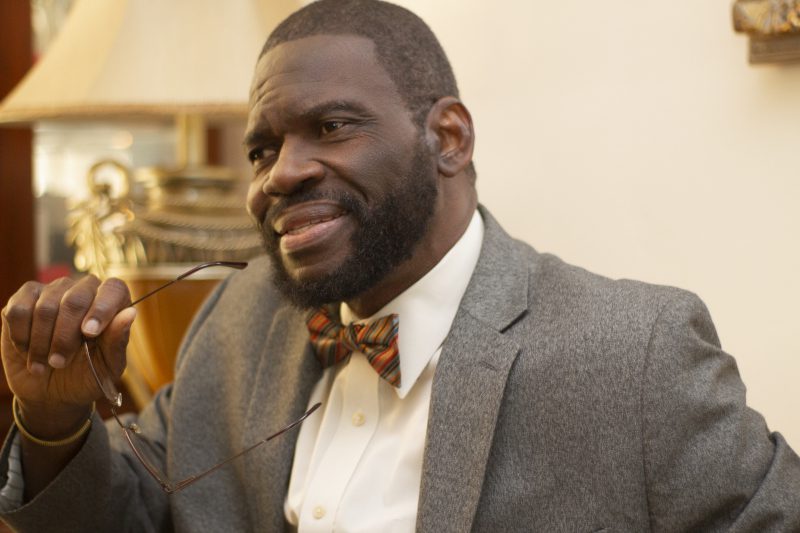
John Egbeazien Oshodi
Oshodi Open Door, also known as Oshodi Open Door Public Training (OOPDT, pronounced opidt), is a public awareness initiative promoting transparency, accountability, and integrity in Africa through educational articles and resources at jos5930458@aol.com, and offers specialized Timely Response Solutions (TRS) training at minimal or no cost.
Professor John Egbeazien Oshodi is an American psychologist, educator, author specializing in forensic clinical psychology, cross-cultural psychology, police prison science, social justice. Born in Uromi, Edo State, Nigeria, he is the son of a 37-year veteran of the Nigeria Police Force, a background that shaped his commitment to justice, security, psychological research.
A pioneer in forensic psychology, he introduced state-of-the-art forensic psychology to Nigeria in 2011 through the National Universities Commission (NUC) Nasarawa State University, where he served as an Associate Professor in the Department of Psychology. His contributions extend beyond academia into psychological health behavioral change initiatives through the Oshodi Foundation the Center for Psychological Forensic Services.
Professor Oshodi has held faculty positions at Florida Memorial University, Florida International University, Broward College, Nova Southeastern University, Lynn University. He is also a contributing faculty member in the doctoral undergraduate psychology programs at Walden University serves as a virtual professor with Weldios University and Iscom University.
Beyond academia, he is a government consultant for forensic-clinical psychological services in the USA previously served as Interim Associate Dean Assistant Professor at Broward College, Florida.
He has published extensively on mental health, justice, institutional reform is the founder of the Psychoafricalysis theory, which integrates African sociocultural perspectives into psychology.
Professor Oshodi remains an influential force in advancing psychology institutional reform globally, particularly in Africa.


























You must be logged in to post a comment Login