Africa
In Our Culture, Sons Stand By Their Fathers, Why Not Seyi Tinubu? -By Isaac Asabor
Assertively put in this context, Seyi Tinubu is not guilty of being the son of the President. And in our culture, that is not a position you reject, it is a bond you honor. If tomorrow he crosses the line into governance without a mandate, let the public and the law rise in response. But until then, let us not attack a man for loving his father. After all, in our culture, sons stand by their fathers.

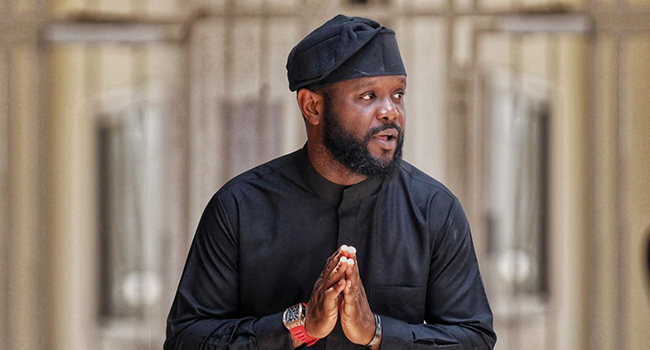
When President Bola Ahmed Tinubu embarked on his recent official visit to Rome for the historic inauguration of Pope Francis XIV, it was expected to be a moment of international diplomacy and global recognition for Nigeria. Instead, what should have been a proud moment for the country was overshadowed by controversy at home. Surprisingly, the source of the backlash was not the President’s policies or diplomatic moves, but the mere presence of his son, Seyi Tinubu, who was seen in his entourage.
Across media platforms, particularly social media, the younger Tinubu was lambasted by critics who claimed he had no business accompanying his father on an official trip, especially one of international importance. Allegations flew, suggesting he was unofficially influencing state matters, enjoying the perks of power without electoral mandate or formal appointment. Some even went as far as painting him as a “shadow president,” always hovering around his father.
As a public affairs analyst who values both governance ethics and our deep-rooted cultural heritage, I found myself caught in a conflict of thought. I initially leaned toward writing a critical piece, raising concerns about the optics of Seyi’s consistent proximity to the corridors of power. However, as I put pen to paper, several honest and human questions emerged: “If my father were the President, would I decline the opportunity to witness such a rare moment in history?” “Would I pretend not to be his son to please the public?” “Would I not share in the pride of my family’s elevated status?”
Seyi Tinubu is a young man born into a politically powerful family. He did not choose his surname, and he certainly didn’t appoint himself into any government position. What he did, in this case, was accompany his father to an international ceremony of great spiritual and historical significance. The inauguration of a Pope is a once-in-a-generation event, and as the son of Nigeria’s president, the decision to be present is not just understandable, it is human.
We must take a step back and ask: “Since when did standing by one’s father become a political crime in Nigeria?”
In our culture, especially across African societies, family ties are sacred. The respect and loyalty shared between father and son are not mere emotional sentiments; they are cultural expectations. It is normal for sons to accompany their fathers during moments of honor. In many royal and political families across Africa, this is not even questioned. Sons stand by their fathers not just to share in their success, but to learn, to honor, and to uphold family dignity. Why then is it problematic when Seyi Tinubu does the same?
Critics will say, “This is not about culture; it is about governance.” They argue that Nigeria has suffered from the toxic effects of nepotism and the misuse of public office by family members. This concern is valid. We have seen in our history how unelected relatives have wielded influence behind the scenes, often to the detriment of national interest. But there is a crucial difference between being visible and being influential. As of today, there is no credible evidence that Seyi Tinubu is making policies, signing deals, or directing the affairs of the state. He is not on the presidential payroll. He is not a minister. He has not addressed the nation in any official capacity.
We must also examine the context of our outrage. Is this scrutiny driven by actual actions, or is it fueled by a general distrust in political elites and the baggage associated with the Tinubu name? It is important for the media and the public to differentiate between political participation and familial presence. If every child of a public officer is forced into hiding to avoid public backlash, we would be undermining not just family values, but individual freedom.
Furthermore, the argument that Seyi Tinubu is everywhere with his father needs to be weighed carefully. It is true that he has been seen in several events and occasionally in the company of his father. But is that unusual? Let’s consider the global scene. In the United States, for example, former President Donald Trump’s children played visible roles in his administration. Ivanka Trump and Jared Kushner were both appointed to White House roles. In India, the Gandhi political dynasty has always been surrounded by family. In Nigeria, we have seen the sons and daughters of governors and former presidents take on public and private roles connected to their family’s legacy. So, again, why is Seyi Tinubu’s visibility such a problem?
There is also the moral question: should Seyi isolate himself from his father simply because of political correctness? Should the love, admiration, and loyalty he shares with his father be hidden from the public eye to appease critics? The truth is, he is a son first before anything else. That biological bond predates any political title. To expect otherwise is to deny basic humanity.
This is not a blanket defense of Seyi Tinubu. If at any point evidence surfaces that he is influencing state policy or misusing access to the presidency, then he should be held accountable like any other citizen. But accountability should be based on facts, not assumptions. Presence is not proof of power. Until there is proof, let us not let our frustrations with Nigeria’s political system drive us into the arena of unfair judgment.
We must also understand how optics work. Yes, the optics of Seyi traveling with the president may not sit well with some Nigerians, especially in a time when the country is grappling with economic hardship, insecurity, and public mistrust. The Tinubu administration must be more sensitive to public perception and perhaps communicate more clearly the line between family and government roles. But again, perception cannot take the place of reality.
In conclusion, the debate around Seyi Tinubu’s presence at official or semi-official events should be anchored on logic, fairness, and cultural context. Let us hold our leaders accountable, but let us also remember that even presidents are human. They have families. They have children who will walk beside them, take photos with them, and sometimes travel with them. That alone is not a crime.
Assertively put in this context, Seyi Tinubu is not guilty of being the son of the President. And in our culture, that is not a position you reject, it is a bond you honor. If tomorrow he crosses the line into governance without a mandate, let the public and the law rise in response. But until then, let us not attack a man for loving his father. After all, in our culture, sons stand by their fathers.