
Africa
Incessant Grid Collapse: When Government’s View Differs From Public Opinion, by Isaac Asabor

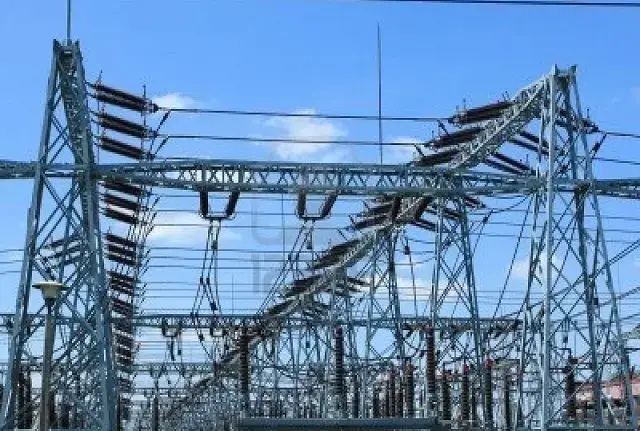
For millions of Nigerians, power outages have become an unwelcome part of daily life, with recent national grid collapses causing prolonged blackouts across the country. The Transmission Company of Nigeria (TCN) has attributed these frequent collapses to “frequency surges” and technical instabilities within the grid. Yet, on the streets, in marketplaces, and even across social media, a different narrative is unfolding, one that blames systemic corruption and mismanagement for the incessant power failures.
This divergence between the government’s explanation and public opinion is creating a growing sense of distrust among citizens who are fed up with the country’s unreliable power supply.
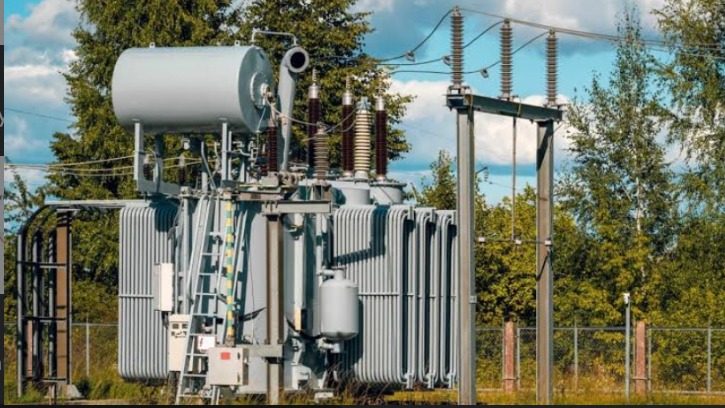
Following the most recent collapse, TCN officials were quick to issue a statement, claiming that a sudden frequency surge had caused the grid to shut down as a protective measure. According to TCN spokesperson Ndidi Mbah, “The protective mechanism was triggered to prevent damage to the entire system. We are currently investigating the cause of the frequency fluctuation and are working on stabilizing the grid.”
To many, however, these explanations have become all too familiar. Year after year, Nigerians hear the same technical jargon without seeing any lasting improvements. The assurances of ongoing investigations and repairs ring hollow, especially when blackouts are so frequent that people plan their daily activities around them.
The Transmission Company of Nigeria (TCN) has identified sudden rise in frequency from 50.33Hz to 51.44Hz as the cause of the latest National grid collapse on Thursday.
As noted by Mbah, disturbances at the grid, a second in the space of 3 days, started at approximately 11:29 am Thursday morning, and explained that recovery efforts began immediately, and the Abuja Axis was restored within 28 minutes, adding that recovery remains ongoing.
The TCN further disclosed that the frequency spike was caused by issues encountered at one of our substations, which had to be shut down to prevent further complications, and noted that it is actively engaged in significant repair work on several critical transmission lines and substations.
She further explained that this includes the 330kV transmission lines along the Shiroro–Mando axis, major upgrades at the Jebba Transmission Substation, and the restoration of the second Ugwuaji–Apir 330kV transmission line.
“Furthermore, following the submission of the investigative report on the causes of previous grid collapses, we have begun addressing the identified weaknesses in the transmission system.
“Efforts are being made to close the gaps highlighted in the report and to enhance the overall stability and resilience of the grid. These efforts include both technical upgrades and strategic interventions based on the committee’s recommendations.
“However, it is important to note that while these repairs and improvements are underway, some degree of instability in the system is likely to persist until all major works are completed. We acknowledge the impact of these disruptions and ask for the understanding and patience of the public during this challenging period,” the statement read in part.
The company said it remains committed to improving the reliability of electricity supply, recognizing the vital role that stable power plays in Nigeria’s socio-economic development.
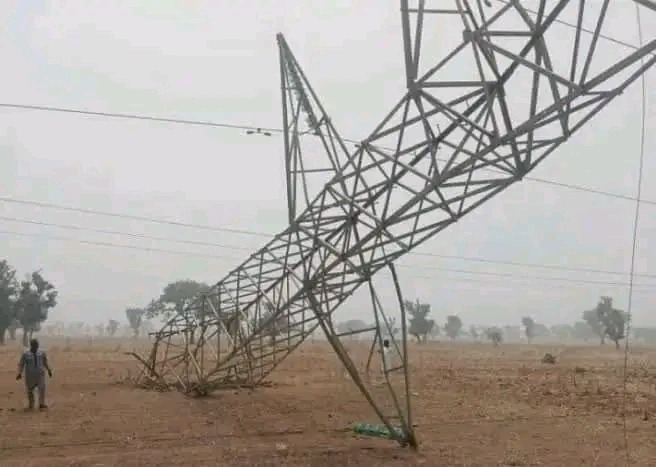
“We assure the public that all necessary measures are being taken to ensure the grid’s long-term stability, in line with the recommendations of the investigative committee, while also addressing infrastructure damage such as vandalized transmission lines,” it added.
Without a doubt, Thursday’s development adds to the growing cases of grid collapses in the country. It will be recalled that on Tuesday, several parts of Nigeria were thrown into blackouts after the system experienced a collapse. Millions of homes were without power and waiting for the full restoration of the system.
The TCN blamed that incident on “a series of lines and generators trippings that caused instability of the grid and, consequently, the partial disturbance of the system.
For many Nigerians, the technical explanations provided by the government do little to address the deeper issues they believe are at play. Standing outside his shop in Yaba, Lagos, Moses Adeyemi, a welder, expressed his frustration: “Every time they say it’s a technical problem. But for how long? This is not about frequency surge; it’s because they’re eating the money meant for fixing the grid.”
Similar sentiments echoed through the busy Balogun Market in Lagos. A trader, Iya Risi, who relies on electricity to preserve her goods, said, “Na demsabi say na surge. But if dem no dey chop the money, why we dey still suffer blackout after all the loans and billions dem don collect?”
Across social media, Nigerians vent their frustrations with trending hashtags like #FixTheGrid and #EnoughIsEnough, where users share stories of ruined businesses and failed exams due to power cuts. Many believe that the issue is not merely a technical one but rather a reflection of deeper rot within the power sector.
The power sector, once heavily invested in by successive governments, has struggled to deliver results. In fact, not a few Nigerians who understand the technical dynamics of the national grid were unanimous in their views that Nigeria’s power grid is outdated and overloaded, and also agreeing that the bigger issue is the lack of transparency in how funds are managed. Their consensus cannot be pooh-poohed with mere waves of the hands as evidences abound that over the years, billions of dollars have been allocated to fixing the grid, yet no real improvement can be seen.
In fact, not a few Nigerians are of the view that addressing the grid’s technical issues without tackling corruption is akin to putting a Band-Aid on a festering wound, emphasizing that until there is accountability for how funds are used, otherwise Nigerians will keep seeing these collapses.
Without a doubt, civil society groups have also weighed in, calling for an independent investigation into the management of the power sector. Sarah Okafor, a social justice advocate, argued, “We need to audit the entire system. We want to know how much has been spent on power projects and why we’re still having these issues. Nigerians deserve to know where their money is going.”
While government officials and energy experts debate the causes, the impact of these blackouts is most keenly felt by small business owners across the country. Chidi Nwafor, who runs a small barbershop in Ikeja, shared his plight: “I spend more on fuel for my generator than I make from my business. How do you expect small businesses to grow in this environment?”
The Nigeria Association of Small and Medium Enterprises (NASME) recently reported that power outages cost the economy over ₦10 billion daily, with many businesses forced to shut down due to the high cost of running generators. For entrepreneurs, the constant blackouts are not just an inconvenience but a threat to their very livelihoods.
It is not just small businesses that are suffering. The manufacturing and tech sectors, which rely heavily on stable electricity, are also bearing the brunt. Tech entrepreneur Michael Ozioma lamented how the grid collapse has been affecting his startup: “We are trying to build a tech ecosystem in Nigeria, but without electricity, it’s almost impossible. How can we attract investors when they see that even the basics like power supply are not reliable?”
The persistent grid failures have also caused disruptions in healthcare, education, and other critical sectors, with hospitals struggling to power life-saving equipment and students unable to study after dark. The broader economic toll is incalculable, further deepening the country’s economic challenges amid already soaring inflation and unemployment rates.
Energy policy analyst Funke Olamide believes that Nigeria needs to rethink its approach to power generation. “We are still relying on an outdated, centralized grid when the rest of the world is moving towards decentralized, renewable energy systems,” she said. “The government needs to invest in solar, wind, and other alternative sources that can reduce our dependence on the national grid.”
In addition, she emphasized the need for transparency in the power sector. “We need to open the books and see how funds are being allocated. Nigerians have a right to know how their money is being spent, especially when they’re the ones suffering from the consequences.”
The disconnect between the government’s narrative and the public’s perception of the root causes of the national grid failures highlights a deeper trust deficit. While the TCN may continue to blame technical issues, ordinary Nigerians see corruption as the invisible hand pulling the switch on their power supply.
Without genuine efforts to tackle the root causes, both technical and systemic, the cycle of collapses is likely to continue. As Nigeria’s economy teeters on the edge, driven by a lack of reliable infrastructure, the voices of the people are becoming harder to ignore.
The question remains: Will the government listen to these voices, or will it continue to treat the symptoms while ignoring the disease? For the millions of Nigerians living in darkness, the answer cannot come soon enough.























You must be logged in to post a comment Login