Africa
INEC’s Long Road To Redemption: Why Joash Amupitan Must Rewrite Nigeria’s Electoral Story -By Isaac Asabor
The story of Nigeria’s electoral management is not one of consistent progress but of sporadic flashes of reform amid recurring failure. Each transition has come with renewed hope and, too often, bitter disappointment. Yet, with the recent appointment of Professor Joash Amupitan as INEC Chairman, the country stands once again at a moral and institutional crossroads, one that will test whether Nigeria’s democracy can finally be anchored on truth, transparency, and trust.

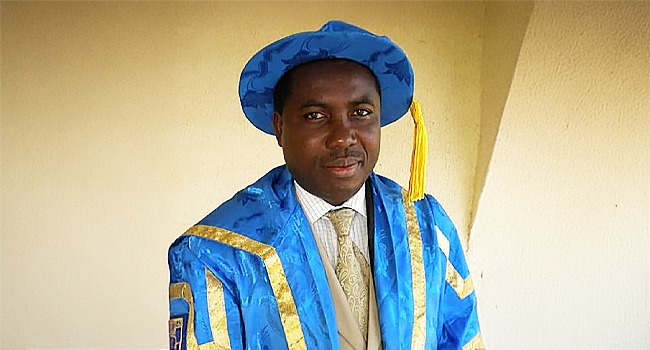
As Nigeria ushers in a new era under Professor Joash Amupitan’s leadership of the Independent National Electoral Commission (INEC), the question of credibility once again looms large. From the flawed polls of the First Republic to the controversial 2023 general elections, the nation’s electoral umpires have struggled to inspire confidence. Now, Amupitan faces a historic test, to either redeem INEC’s battered image or become another chapter in a long tale of broken promises.
Nigeria’s electoral journey is as old as its democracy itself, a story woven through cycles of hope, interruption, and reform. The origin of electoral bodies in the country dates back to the pre-independence era when the Electoral Commission of Nigeria (ECN) was established to conduct the pivotal 1959 elections that laid the groundwork for self-rule. Following independence, the Federal Electoral Commission (FEC) took over in 1960 and supervised the federal and regional elections of 1964 and 1965, before being dissolved after the military coup of 1966.
In 1978, General Olusegun Obasanjo’s military regime created the Federal Electoral Commission (FEDECO), which midwifed the 1979 elections that ushered in the Second Republic under President Shehu Shagari, and later conducted the 1983 general elections. After years of political turbulence, General Sani Abacha in 1995, reintroduced the National Electoral Commission of Nigeria (NECON), which organized elections from the local government to the national level, a democratic process abruptly aborted by his sudden death in 1998.
That same year, General Abdulsalami Abubakar dissolved NECON and established the Independent National Electoral Commission (INEC), which successfully conducted the transitional elections that birthed the Fourth Republic on May 29, 1999. Since then, INEC has remained the custodian of Nigeria’s electoral destiny, an institution constantly evolving, struggling to earn trust, and striving to deliver credible elections capable of sustaining the nation’s fragile democracy.
Since Nigeria’s return to democracy, and even before it, the credibility of elections has often been the country’s Achilles heel. From the days of the ECN in the First Republic to the present-day INEC, the nation’s electoral umpires have too often faltered where integrity, independence, and courage were most needed.
The story of Nigeria’s electoral management is not one of consistent progress but of sporadic flashes of reform amid recurring failure. Each transition has come with renewed hope and, too often, bitter disappointment. Yet, with the recent appointment of Professor Joash Amupitan as INEC Chairman, the country stands once again at a moral and institutional crossroads, one that will test whether Nigeria’s democracy can finally be anchored on truth, transparency, and trust.
Given the foregoing protracted preamble, it is germane to opine that from the first republic to the era of crisis. This is as the journey began with the Electoral Commission of Nigeria (ECN), which oversaw the 1959 elections that ushered Nigeria into independence. Though those polls were described as relatively peaceful, they were also clouded by claims of bias and manipulation that favored certain regional parties. What followed, in the years between 1960 and 1966, was an electoral system heavily influenced by ethnic politics and elite interests, culminating in the crisis that preceded the first military coup.
The Federal Electoral Commission (FEDECO) of the Second Republic, under Chief Michael Ani and later Justice Victor Ovie-Whisky, did little to restore confidence. The 1979 election that brought Alhaji Shehu Shagari to power was decided not by the electorate but by judicial arithmetic, the infamous “twelve two-thirds” ruling that remains a scar on Nigeria’s electoral history. The 1983 elections under the same FEDECO sank even deeper into infamy, characterized by brazen rigging and violence that destroyed what little credibility remained.
Then came the National Electoral Commission (NEC) under Professor Humphrey Nwosu, which organized the June 12, 1993 election, widely regarded as Nigeria’s freest and fairest. Yet, even that moment of democratic promise was stolen by political sabotage and annulment. The lesson? The problem has never been the absence of capable electoral umpires but the absence of political will to let them succeed.
With the advent of the Fourth Republic in 1999, Nigerians looked to the newly established Independent National Electoral Commission (INEC) to right the wrongs of the past. But again, performance fluctuated with leadership.
From Justice Ephraim Akpata through Abel Guobadia, and especially Professor Maurice Iwu, INEC became synonymous with logistical chaos and allegations of partisanship. The 2007 elections, managed under Iwu, were so flawed that late President Umaru Musa Yar’Adua publicly admitted that the process which brought him to power was far from credible.
A glimmer of hope came with Professor Attahiru Jega, whose tenure between 2010 and 2015 saw the introduction of the biometric voter registration system and the Permanent Voter Card (PVC), reforms that significantly curbed electoral fraud. The 2015 elections marked a democratic milestone with the peaceful transfer of power from an incumbent to the opposition for the first time in Nigeria’s history.
Yet, under Professor Mahmood Yakubu, the optimism began to fade. The introduction of the Bimodal Voter Accreditation System (BVAS) and the INEC Result Viewing Portal (IReV) were initially hailed as game-changers, but their inconsistent deployment in the 2023 general elections reignited doubts. Many Nigerians felt betrayed, as the promise of technology-driven transparency was lost in a fog of delayed uploads, conflicting results, and credibility crises.
Now enters Professor Joash Amupitan, stepping into one of Nigeria’s most thankless yet consequential public offices. He inherits not just an institution but a trust deficit, a deep public skepticism born of repeated disappointments.
If he must succeed, Amupitan must do more than administer elections; he must redeem them. He must insulate INEC from political interference, strengthen internal discipline, and ensure that the commission’s innovations are not only technological but ethical. Nigerians no longer want excuses; they want results they can believe in.
The new INEC boss must also prioritize institutional transparency, publishing clear data, communicating promptly, and engaging civil society and the media as partners, not adversaries. Above all, he must remember that the true measure of an electoral umpire is not how well he pleases politicians, but how faithfully he defends the people’s mandate.
History has shown that electoral chairmen can either become symbols of hope or footnotes of failure. From Nwosu’s courage to Iwu’s controversies, from Jega’s reforms to Yakubu’s contradictions, each name evokes a different legacy. The question now is: What will Joash Amupitan’s legacy be?
If he can rise above pressure, put the people before power, and restore the sanctity of the ballot, posterity will remember him not just as an INEC chairman, but as the man who finally gave Nigeria the credible elections it has always deserved.
And if he fails? Well, history will remember that too, harshly, and without mercy.