Africa
Like El Rufai, Let Former Presidents, Governors And Others Come Forward To Prove Their Integrity, by Isaac Asabor

In the Holy Scriptures, Samuel, the revered prophet and leader, stood before the people of Israel and issued a bold challenge. He invited them to bring forth any evidence of his wrongdoing. “Here I am,” he said. “Testify against me in the presence of the Lord and his anointed. Whose ox have I taken? Whose donkey have I taken? Whom have I cheated? Whom have I oppressed?” (1 Samuel 12:3). It was an extraordinary act of courage and integrity, a leader holding himself accountable to the very people he led, daring them to find fault in his governance. Unsurprisingly, the people responded: “You have not defrauded or oppressed us.”
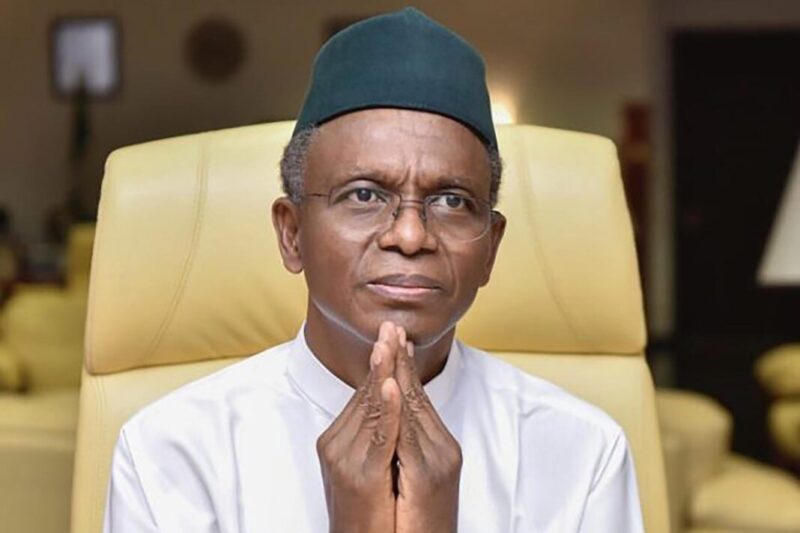
Fast forward to contemporary Nigeria, a country with a rich history of leadership, but one also plagued by the recurring issue of corruption. Nasir El-Rufai, former governor of Kaduna State, recently made a similar declaration to Samuel’s. He proclaimed to Nigerians that throughout his tenure as governor, he had never stolen public funds. El-Rufai, in the same spirit of boldness, invited scrutiny, challenging anyone with evidence to come forward. It was a rare but commendable act in Nigerian politics, a leader opening himself to public judgment with a clean conscience. But can we say the same for other former governors, presidents, and public officials?
Nigeria, often referred to as the “Giant of Africa,” is a country blessed with immense resources. Its people, resilient and industrious, have continued to thrive despite the frequent political mismanagement that has characterized the nation’s leadership. Time and again, the media is flooded with reports of former governors, ministers, presidents, and even lawmakers implicated in corrupt practices. These range from the looting of state coffers to gross mismanagement of funds meant for the development of public infrastructure.
The consequences of such corrupt leadership are all too clear. Nigeria’s roads are deplorable, healthcare is in shambles, the education sector is underfunded, and unemployment continues to skyrocket. Meanwhile, these leaders, past and present, often live in lavish luxury, far removed from the suffering of the common man.
Yet, even in the face of these damning realities, very few Nigerian leaders have come forward with the kind of transparency Samuel demonstrated, or the forthrightness shown by El-Rufai. This raises a critical question: Can any of Nigeria’s past governors or presidents stand before the people, as Samuel did, and say, “I have not stolen. I have not oppressed”? Can they invite scrutiny and confidently state that their hands are clean?
The issue of corruption in Nigeria is not new. From the oil boom of the 1970s to the present day, corruption has been a persistent challenge. Countless investigative reports have revealed the looting of public funds by government officials, many of whom are former governors or presidents. Several of these leaders, after leaving office, have faced investigations by the Economic and Financial Crimes Commission (EFCC) or the Independent Corrupt Practices Commission (ICPC), with varying degrees of success in holding them accountable.
But despite the many cases of alleged corruption, only a handful of former leaders have ever voluntarily subjected themselves to the kind of public accountability we saw with Samuel and, more recently, El-Rufai. Most prefer to hide behind the veil of political immunity or manipulate the system to avoid prosecution.
El-Rufai’s challenge to the Nigerian public is a rare example. He invited anyone with evidence of wrongdoing to step forward, confident that his governance record would stand the test. This challenge should be extended to all former governors and presidents. It is time for them to face the people and account for their time in office. After all, they were elected or appointed to serve, not to enrich themselves at the expense of the masses.
Imagine the profound impact it would have on the nation’s moral fabric if every former governor, president, or public official were required to publicly declare their assets and account for the decisions they made while in office. Imagine the change in public perception if leaders openly invited investigations into their financial dealings, as a demonstration of their integrity and commitment to transparency. It would signify a new era in Nigerian politics, one where integrity and accountability become the norm rather than the exception.
Unfortunately, the silence of many former leaders continues to cast a long shadow over Nigerian politics. While Samuel could proudly challenge his people to prove he had stolen from them, the vast majority of Nigerian leaders cannot do the same. The allegations of corruption, whether founded or unfounded, persist because these leaders have never cleared the air. They remain silent, refusing to open their records for public scrutiny, leaving room for speculation and distrust.
This silence is not without consequence. The enduring lack of accountability erodes public trust in governance, making it difficult for even genuinely honest leaders to gain the confidence of the people. As a result, the Nigerian populace has become increasingly disillusioned, often viewing politicians as self-serving individuals who prioritize personal wealth over public welfare.
The silence also encourages the younger generation of politicians to adopt similar behaviors, knowing that they, too, can enrich themselves without facing significant consequences. This creates a vicious cycle in which corruption becomes entrenched, and the political class continues to operate with impunity.
Nigerians deserve better. They deserve leaders who are willing to be held accountable, who understand that public service is not a path to personal enrichment but a sacred duty to the people. It is time for all former governors and presidents to take a page from Samuel’s book, and from El-Rufai’s, by stepping forward to declare their innocence or face the consequences of their silence.
Accountability should not be a foreign concept in Nigerian politics. It is a fundamental requirement of leadership. If a leader cannot account for their actions while in office, how can they claim to have served the people faithfully? How can they lay any legitimate claim to the title of “leader”?
To effect real change in Nigeria, there must be a collective effort to instill transparency and accountability into the political culture. This will require not only the willingness of leaders to submit themselves to public scrutiny but also the establishment of institutions that can effectively carry out such oversight.
The role of civil society organizations, investigative journalists, and anti-corruption agencies like the EFCC and ICPC cannot be overstated. These groups must be empowered to hold all former and current leaders accountable, ensuring that no one is above the law. Equally, the Nigerian public must continue to demand transparency from their leaders, refusing to accept anything less than full accountability.
The challenge has been laid before all former governors and presidents in Nigeria: come forward, as Samuel did, and declare before the people that you never stole, that you governed with integrity, and that your hands are clean. If you cannot, then perhaps it is time to reflect on the cost of your silence and the damage it continues to inflict on the nation.
Nigeria needs leaders who can confidently stand before the people and say, “I have not defrauded or oppressed you.” Anything less is an insult to the very notion of leadership. It is time for a new era of accountability, one where leaders prove their worth not by their wealth, but by their integrity.