Forgotten Dairies
Making the Case for a National Peace Officers Memorial Day -By Zayd Ibn Isah
If Nigeria establishes a dedicated National Peace Officers Memorial Day, we could become the first African country to establish a national day specifically dedicated to honouring law enforcement officers who died while fighting crime and protecting their communities.

“We can never repay our debt to these officers and their families, but we must do what we can, with all that we have, to live our lives in a way that pays tribute to their memory. That begins, but does not end, by gathering here, with heavy hearts, to carve their names in stone, so that all will know them, and that their legacy will endure. We are grateful to them and we are grateful to you.”
These words were spoken by former United States President Barack Obama at the National Peace Officers Memorial Service in Washington, D.C., on May 15, 2013.
As part of its tradition of honouring the courage and sacrifices of law enforcement officers who died while fighting crime and protecting their communities, the United States observes Peace Officers Memorial Day on May 15 every year.
It is a day set aside to remember police officers and other law enforcement officers who paid the ultimate price in the service of their country. It is also a day to recognise the families they left behind and remind serving officers that the sacrifices of their colleagues will never be forgotten.
The equivalent of this in Nigeria is the Armed Forces Remembrance Day, which honours military personnel who paid the ultimate price defending the territorial integrity of Nigeria.
But we shouldn’t forget that not only military personnel who died protecting the country deserve to be honoured. Police officers who died fighting crime and criminality deserve this honour, as do other law enforcement agents such as Customs, Immigration, Correctional Service, Civil Defence and even vigilantes. They are all fallen heroes.
Some may ask: even vigilantes?
Yes. Vigilante members have played an integral role in ensuring peace and stability in the country and, in some cases, even defending the country’s territorial integrity, such as the Civilian JTF in the North-East.
In fact, they are the unsung heroes in the fight against terrorism and other violent crimes. Some of them are even more dedicated and patriotic than security personnel who are paid with taxpayers’ money to perform their duties. Dozens of them have been killed, yet they continue to defend their communities and the country.
That, to me, is the hallmark of patriotism.
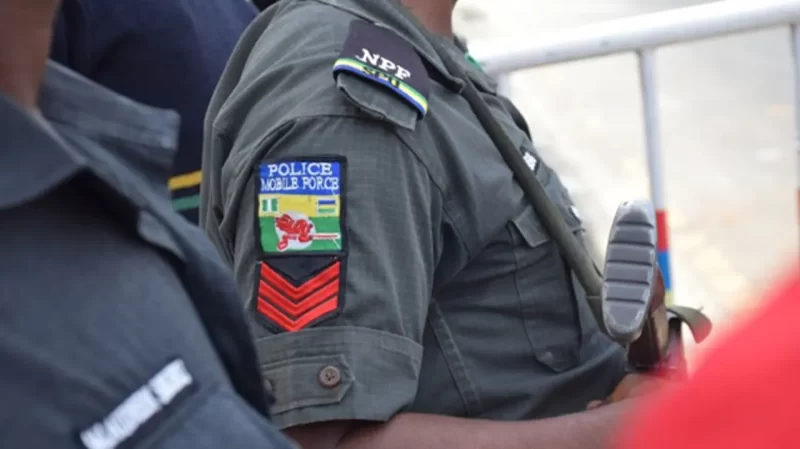
It is on this note that I am making the case for a National Peace Officers Memorial Day to honour the sacrifices of police officers and other law enforcement officers who have given their lives fighting armed robbers, bandits, including the ten police officers who were recently killed by bandits, smugglers, drug cartels, human traffickers and other criminals.
Although it is called National Peace Officers Memorial Service in America, I have chosen to call it National Peace Officers Memorial Day because the word “service” can sound more religious in our context, bringing to mind expressions such as “service of songs.” Ours is a country of religious sensitivity. Before you say “Jack,” a Muslim group might release a statement accusing the President of pursuing a Christianisation agenda. Since his wife is a Christian, the narrative would probably fit quite well.
Away from that, some might ask: what peace are we remembering when there are wanton killings from the North to the East and the West?
They would have a point.
Many Nigerians are so frustrated with their country that they read negative meanings into almost every initiative of government. The truth, however, is that we may not have enjoyed a great deal of peace in our country, but we should not forget that things would have been much worse if there were no men and women among us who sacrificed their lives fighting some of the country’s worst enemies in order to keep us safe.
I know some Nigerians would disagree that terrorists, kidnappers and armed robbers are the country’s worst enemies. They might argue that politicians who failed to deliver on their promises are worse.
Anyway, that will probably be a topic for another day.
Most Nigerians are already familiar with the January 15 Armed Forces Remembrance Day celebrations that occur nationwide, with the central ceremony at the Cenotaph of the Unknown Soldier in Abuja. This annual event usually draws political leaders, senior military officers, veterans, diplomats and citizens together. But I believe that more can still be done, in terms of extending the significance beyond that of a military nature.
Making this vision a reality will require deliberate action. The National Assembly could begin by sponsoring a bill to formally establish National Peace Officers Memorial Day, drawing on the frameworks already used for Armed Forces Remembrance Day. A dedicated date should be chosen and observed with the same solemnity and national attention.
Beyond a single day of remembrance, Nigeria could establish a national memorial wall, similar to the one in Washington, D.C., where the names of fallen officers are permanently inscribed for public visitation. This would give citizens a tangible place to reflect on these sacrifices, and give grieving families a lasting symbol that their loved ones’ service was not in vain.
Government could also consider extending tangible support to the families left behind, such as scholarships for children of fallen officers, healthcare benefits, or priority employment opportunities, so that remembrance is not merely ceremonial but also practical.
We should also remember that honouring law enforcement officers who died in the line of duty will give those who are still alive a sense of belonging. At the very least, they will know that their ultimate sacrifices are being honoured, just like those of their counterparts in the military.
By doing so, we will join countries such as the United States, the United Kingdom, Canada, Australia and other nations that honour their law enforcement officers who have made the ultimate sacrifice.
Curiously, I searched to find out if any African country had established a similar precedent, and I found none. What they have are national days or commemorative events, which we already have in Nigeria. Kenya has something close to it, but it is a joint commemorative service for police and prison officers who died in the line of duty.
If Nigeria establishes a dedicated National Peace Officers Memorial Day, we could become the first African country to establish a national day specifically dedicated to honouring law enforcement officers who died while fighting crime and protecting their communities.
There is no excuse for not honouring these brave and courageous men and women in uniform. Indeed, we should honour their sacrifices every day.
We can never truly repay the debt we owe them and their families for laying down their lives for us. But we can do the barest minimum: live our lives in a way that pays tribute to their memory, as former President Barack Obama reminded us.
Ultimately, honouring these officers costs the nation little compared to what they have already given. What it requires is political will and a collective decision, as a country, to say: your service mattered, your sacrifice is seen, and you will not be forgotten.
Zayd Ibn Isah
lawcadet1@gmail.com