
Africa
Ministerial Conference Promises Economic Growth, Trade and Investment Packages for African States -By Kestér Kenn Klomegâh
Without mincing words, Lavrov has expressed strong confidence that the November dialogue would yield meaningful results. General expectation is that discussions will be productive and help considerably in laying the foundation for future bilateral cooperation. The conference aims at discussing pragmatic measures in bolstering the economic, technological, and energy sovereignty of African states, and also in the context of reviewing relations with the African Union (AU).

On Nov. 19-21, Cairo will host the second Conference of African Foreign Ministers and Russia’s delegation, with an incredible goal of ‘enhancing cooperation’ and designing measures to contain challenges. While economic engagement forms the central agenda, highlighted during the first and second Russia-Africa Summits, little has concretely been achieved across the continent. Bilateral agreements have been renewed and resigned, most often, during subsequent bilateral meetings held in African capitals and in Moscow. Of course, majority of African countries maintain friendly relations with Moscow, and with political maturity sustain certain level of working relations with Washington.
As expected, the ministerial conference promises to give comprehensive account of achievements and further layout strategic plans for the future. In the report adopted at the first conference held in St. Petersburg, African foreign ministers together with Russian colleagues, despite geopolitical challenges, identified several concrete spheres for investment across Africa. Economic sector is overwhelmingly attracting Russian investors, for instance, fixing the crumbling infrastructure. Energy has been identified as one of the top significant spheres, while agricultural exports is already in progress to many African countries. Russia is currently expanding agricultural exports shipments to Senegal, Mali, Burkina Faso, Gambia, Ghana, and Sierra Leone. By 2030, Russian agricultural exports to the region could exceed $450 million.
Russia has also taken noticeable steps in forging appreciable collaboration on humanitarian assistance, on training and education. In pursuit of that, Head of Rossotrudnichestvo, Yevgeny Primakov, seeks to revamp and expand educational activities and promote exchanges to African continent, stated mid-October at the Russia-Africa Expo-2025 held in Moscow that African students’ admission would double from the beginning next academic year, while Rossotrudnichestvo currently operates and supports 14 partner Russian Houses, designed as cultural NGOs – a replica of British Council, across the continent. Primakov’s federal agency for international cooperation has signed agreements to establish Russian Houses in more African countries.
The Director of the Foreign Ministry’s Africa Partnership Department, Tatiana Dovgalenko, whose interview covered the most salient facts and figures, as well as an in-depth discussion on aspects of Russia-Africa relations, underscored trade with Africa as one of the absolute priorities, but there remains a significant imbalance in trade with the regions of the continent: North Africa accounts for 70% of the total across Africa. Reports show that bilateral trade stands approximately at $27.7 billion.
Dovgalenko said: “At the same time, given the existing potential, the achieved figures are far from the limit. We still have a lot to do, especially since the Action Plan for 2023-2026 pays significant attention to trade and economic cooperation with Africa. We are actively working in this direction.”
Undoubtedly, developing a pragmatic mutually beneficial engagement has become the main focus in the economic component of Russian-African relations. At the forthcoming conference, new trade and economic negotiations would be interpreted as a practical confirmation for future partnership with Africa. In fact, Africa needs economic development and growth, Africa has to raise up the large impoverished population and to attain better living standards.
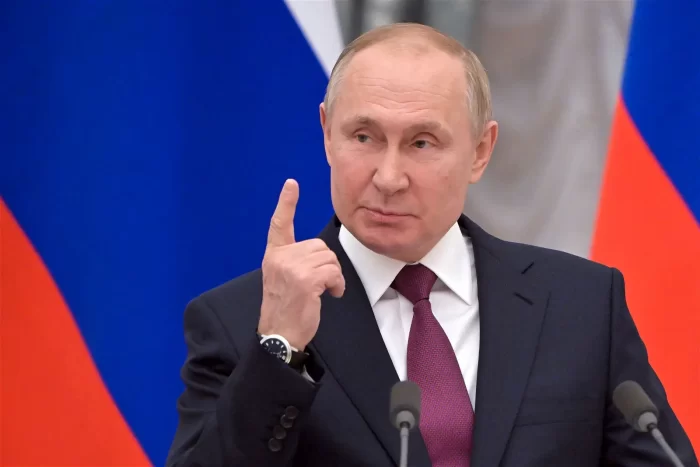
In the Kremlin, President Vladimir Putin has given specific directions to promote mutual engagement in all these fields across Africa. With high sentiments, African leaders offered the signals for an action investment roadmap, expressed readiness for absolute cooperation. In a reciprocal manner, Russia has set up Russia-Africa Development Fund. Given particular significance to mutual dialogue established over the years, Russian Minister of Foreign Affairs, Sergey Lavrov, envisages unwavering financial support for development projects proposed by African leaders. “Africa is on Russia’s priority agenda,” emphasized in several speeches Lavrov, who has been the face of Russian diplomacy for over two decades.
In late October 2025, Lavrov stated Moscow’s broader goal is strengthening Russian-African collaboration, while addressing participants at the Russian-African Raw Materials Dialogue hosted by St. Petersburg Mining University. “Russia and African countries share significant resource wealth, particularly in the mining sector, which plays a vital role in our economies,” Lavrov said in his message, published on the Russian Foreign Ministry’s website. “The commitment to expanding mutually beneficial cooperation in this field is reflected in the Russia-Africa Partnership Forum Action Plan 2023-2026.”
Notwithstanding criticisms, Russia is prominently bolstering its military presence in Africa. The epicenter of terrorist activity is the Sahel region which Moscow has noted an alarming security situation. The maintenance of troops and equipment supplies require significant spending, but these expenditures are settled with African beneficiaries in an agreement to barter their natural resources. Russia has presented itself as a key player especially in Francophone African countries. In the military-technical sphere, Russia continues interaction on defense and security matters, according to Russian Presidential Press Secretary, Dmitry Peskov as reported by the local Russian media Nezavisimaya Gazeta.
“Russia is increasing its presence in Africa. We really intend to comprehensively develop interactions with African countries, placing an emphasis primarily on economic and investment interactions. Among other things, this cooperation also extends to such sensitive areas that are related to defense and security,” stressed Peskov. “In this respect, Russia will also continue its interactions and cooperation with African nations,” he said, when asked what might change in Russia’s presence in Africa after the Wagner Group was replaced by the Africa Corps in Mali.
Essentially, there is high optimism leveraging and strengthening relations for economic growth and for an expanded investment beyond these years of cultural and political symbolism, sloganeering and political dialogues. “We will assess the implementation of agreements that were reached at two Russia-Africa summits held in Sochi in 2019 and in St. Petersburg in 2023, as well as the results of the first ministerial conference of the Russia-Africa Partnership Forum, which took place in Sochi last fall,” Lavrov said ahead of the conference.
Without mincing words, Lavrov has expressed strong confidence that the November dialogue would yield meaningful results. General expectation is that discussions will be productive and help considerably in laying the foundation for future bilateral cooperation. The conference aims at discussing pragmatic measures in bolstering the economic, technological, and energy sovereignty of African states, and also in the context of reviewing relations with the African Union (AU).
On Nov. 5, Deputy Foreign Minister, Sergey Vershinin, held a briefing at the Foreign Ministry for heads of African diplomatic missions to discuss the preparations for the Cairo meeting, and was attended by representatives of Roscongress Foundation, co-operator from Russian side. In addition, Ethiopia is preparing to host the third Russia-Africa Summit in 2026.


















You must be logged in to post a comment Login