
Africa
Nigeria: A Nation Unto Itself? -By Abiodun Komolafe
To address poverty, potential solutions include promoting inclusive economic growth and strengthening public financial management. Effective approaches for vulnerable populations involve establishing robust social protection frameworks, such as unemployment benefits and healthcare access. Additionally, targeted investments in agriculture and vocational skills training programs can enhance employability, food security, and sustainable livelihoods, ultimately contributing to poverty reduction efforts.

One reason many Nigerians voted for the All Progressives Congress (APC) was its manifesto commitment to laying the foundation for a Nordic-Scandinavian and German-style social market economy. This is a model that promises a blend of economic efficiency and social welfare that appeals to the aspirations of a more equitable society.
A social market economy is grounded in achieving macroeconomic stability to foster sustainable development and safeguard living standards. However, this core principle appears to have been overshadowed by the severity of economic challenges faced upon taking office.
Countries that have recently overcome poverty, underdevelopment and stagnation have typically identified and focused on a unifying theme or vision. Nations like South Korea, Singapore, Indonesia and India, even the neighbouring Ghana, each in their own way, have discovered a philosophical anchor that has driven their pursuit of sustainable development. For Nigeria, finding such a guiding principle is even more crucial, given the absence of a unifying national religion, unlike India’s Hinduism or South Korea’s largely homogeneous cultural identity, which can serve as a societal compass.
The fragility of human destiny is that Nigeria is currently a nation in search of itself. It’s story is one of contrasts – of rich cultural heritage and colonial legacy, of abundant natural resources and persistent poverty, of vibrant diversity and fractious divisions. From its colonial past (1914-1960) to its independence (October 1, 1960), and through its tumultuous history, including the Nigerian Civil War (1967-1970), Nigeria has traversed its own uncertain path, searching for a sense of purpose and direction.
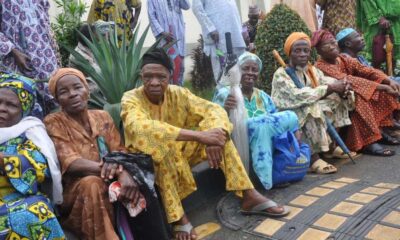
It’s disheartening that Nigeria has become a testing ground for failed policies, where poverty and deprivation severely impact citizens’ lives. In the depths of its struggles, we find a haunting reflection of humanity’s capacity for endurance, with many families surviving on less than 5,000 naira a week. The complexity of our situation is that, even the approved N70,000 per month minimum wage is insufficient to cover basic needs, such as buying a bag of rice, amidst soaring fuel costs.
At a time like this, the Israelites’ journey offers a powerful lens through which to examine our own experiences and challenges. In this context, the notion of a ‘promised land’ resonates deeply, inviting us to consider what kind of nation Nigeria aspires to be. Is it a land of prosperity and opportunity, where all citizens can thrive? Or is it a land of conflict and division, where particular interests prevail over the common good? To move forward, Nigeria must define an operational ethos that serves as a roadmap for sustainable development, guiding the nation’s economic policies and decisions.
The World Bank’s Nigeria Development Update highlights the country’s economic challenges, marked by instability and poverty, due to distortionary policies. Despite projected 3.5% annual growth from 2023 to 2026, poverty is expected to rise, potentially reaching 56-57% by 2027. This concerning trend is driven by factors such as dependence on oil revenues, sluggish economic growth, weak governance and corruption.
Given that governance is both an art and a science, it is crucial to explore alternative approaches. Again, a time like this behooves the Bola Tinubu-led administration to reformat and reinvent itself by setting specific directives to streamline governance costs.
In the era of President Tinubu, who deserves commendation for his efforts amid daunting challenges, Nigeria must give precedence to tackling the root causes of its malaise and reinventing the social market economy concept to suit its context. A social market thrust will move beyond temporary relief measures, also known as palliatives, and instead shift gear towards the rebuilding of institutions to spur sustainable development. To achieve this, Nigeria must create the necessary physical and social infrastructure and redirect resources from ineffective Ministries, Departments and Agencies to sustainable development initiatives. This reallocation should include reviving ‘dead capital’ – dormant investments and underutilized resources that could be leveraged for growth.
Nigeria is dotted with abandoned projects that should be repurposed. A promising approach is the model used to revitalize the National Theatre in Lagos, which not only spawned new commercial enterprises but also created numerous jobs. Adopting this strategy could be a game-changer. By resuscitating and repurposing hundreds of stalled projects, Nigeria can transform them into thriving economic zones. The invigorating effects of such a move will have a multiple effect across the country and trigger-off a ‘feel-good’ sense of optimism and purpose.
Many abandoned initiatives, or ‘dead capital’, still hold value and deserve reconsideration. Obviously, not all were founded on flawed assumptions, and they can contribute significantly to the country’s economic resilience. These projects were often conceived during a period of more structured policy-making and thoughtful consultation, which contrasts sharply with the frequently hasty and ill-conceived initiatives of today. Nigeria would benefit from revisiting the era of meticulous planning and strategic development.
To break free from stagnation, Nigeria needs a broad-based partnership encompassing all political parties and civil society to craft a long-term political economy strategy spanning the next 20-25 years. This forward-thinking approach is crucial as the country will need to revamp its educational curriculum to remain competitive in an era dominated by artificial intelligence. By 2035-2040, the nature of work, careers, and productivity will likely undergo a profound transformation, making it imperative for Nigeria to prepare for this new landscape. Therefore, embracing this challenge will require a proactive and adaptable approach. As we step into “this brave new world”, Nigeria’s readiness will depend on its ability to innovate, adapt and evolve.
Nigeria’s development trajectory raises important questions about the human cost of economic reform. With rising poverty levels, it’s clear that employment alone cannot lift people out of poverty without productive jobs, which require macro-fiscal stability, growth and private sector development. Policies targeting women and youth can boost the labour market’s impact on poverty reduction. Nigeria’s development ultimately hinges on balancing economic stability with social welfare. It requires a nuanced approach that prioritizes both growth and human well-being.
To address poverty, potential solutions include promoting inclusive economic growth and strengthening public financial management. Effective approaches for vulnerable populations involve establishing robust social protection frameworks, such as unemployment benefits and healthcare access. Additionally, targeted investments in agriculture and vocational skills training programs can enhance employability, food security, and sustainable livelihoods, ultimately contributing to poverty reduction efforts.
We have lost out in the past because Nigeria as a rent-seeking state has never been prepared. For instance, two decades ago, Nigeria could have positioned itself, like Vietnam and South Africa, to capture jobs and industries that China would shed as it ascends the manufacturing value chain. Had Nigeria done so, it might have attracted relocated processes, creating approximately 400,000 direct and 500,000 indirect jobs, mostly export-oriented, which would have significantly improved the country’s balance of payments.
To prosper, Nigeria must shift its focus towards competitiveness. The rent-seeking state model has become counterproductive and needs to be reformed. With Nigeria’s population growth outpacing economic growth, the country faces an impending crisis. Forging a broad consensus among various interest groups on transitioning into a productive state requires achieving and sustaining a growth rate of around 7% over the next 20-25 years by leveraging human capital and resources effectively. Moreover, the focus should shift from short-term growth metrics to fostering genuine sustainable development that yields lasting benefits.
As the world rapidly changes, there’s an urgent need for Tinubu’s government to demonstrate a clear departure from the past, especially with visible implementation of programmes, policies and projects that have direct impact on the citizenry. There’s no alternative! With the Jagaban Borgu in office and in power, Nigeria should be able to bid phony projects a final goodbye. After all, politics is about what to give, not what to get!
May the Lamb of God, who takes away the sin of the world, grant us peace in Nigeria!
*KOMOLAFE wrote from Ijebu-Jesa, Osun State, Nigeria (ijebujesa@yahoo.co.uk; 08033614419 – SMS only)






















You must be logged in to post a comment Login