
Forgotten Dairies
Nigeria At 66: A Nation Must Not Only Celebrate Its Age; It Must Examine Its Progress -By Yasir Shehu Adam
But if we invest seriously in education, healthcare, security, agriculture, industry, technology and human capital, Nigeria can still become the country we have always imagined. The World Bank’s recent assessment makes the point clearly: improving effective years of schooling in Nigeria could significantly increase long-term labour earnings.

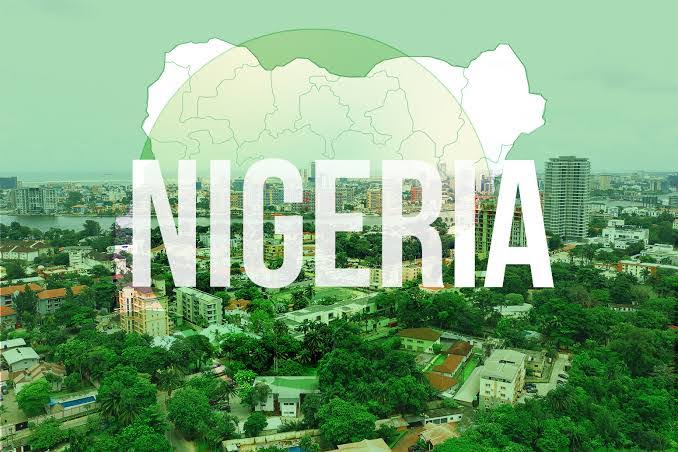
Nigeria is 66 years old.
Sixty-six years of independence. Sixty-six years of hopes, promises, elections, governments, policies, budgets, reforms and development plans.
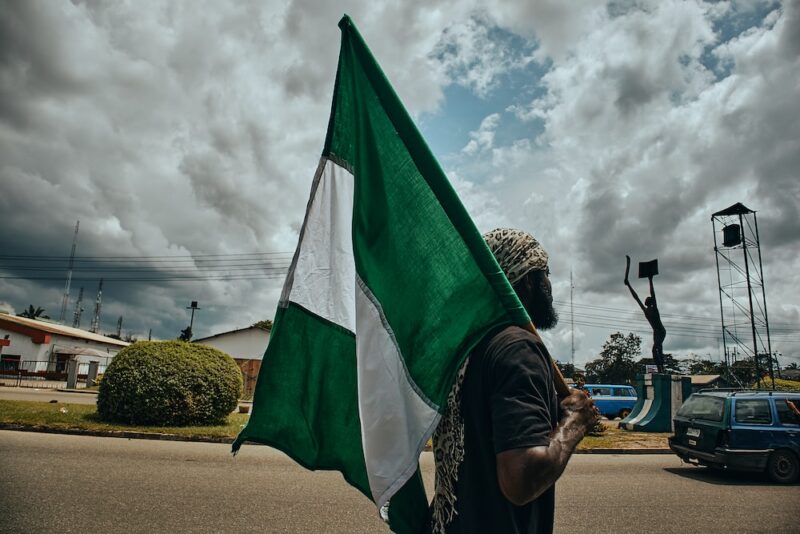
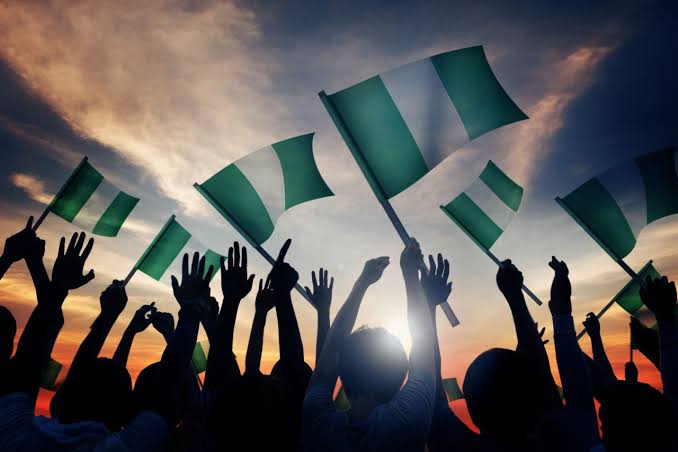
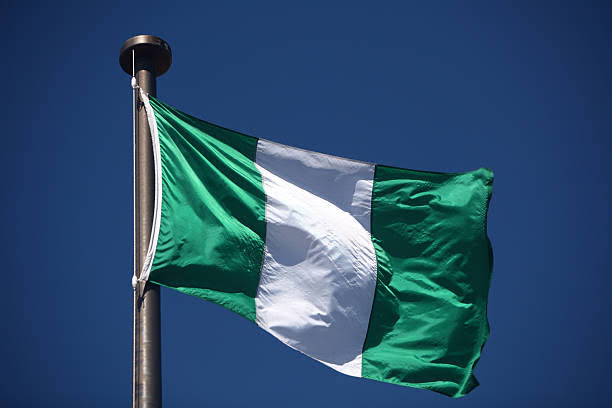
Today, we celebrate our independence with flags, speeches, prayers and messages of patriotism.
But beyond the celebrations, there is a question we must have the courage to ask:
After 66 years, are we truly moving forward, or are we simply growing older?
This is not a question against Nigeria. It is a question for Nigeria.
It is a question every leader, politician, civil servant, businessman, teacher, doctor, student, farmer, security officer and ordinary citizen should ask.
Because a nation is not measured only by the number of years it has existed. A nation is measured by the quality of life its citizens enjoy.
Nigeria Then and Nigeria Now
When Nigeria became independent in 1960, the country was young, but there was a strong belief that the future could be better.
Our population was much smaller. Our problems were different. Our institutions were still developing.
Today, Nigeria has become one of Africa’s largest economies and most populous countries. We have universities, airports, highways, technology companies, banks, telecommunications, a growing creative industry and millions of educated citizens.
There is certainly progress.
Nigeria has produced doctors, engineers, professors, entrepreneurs, journalists, scientists, artists and professionals working successfully around the world.
We have made achievements that should not be ignored.
But the question is:
Has our progress moved at the same speed as our population and our expectations?
That is where the national conversation becomes uncomfortable.
Education: Are We Producing Graduates or Building Human Beings?
Education should be the foundation of every serious nation.
But today, Nigeria still faces a serious education crisis.
UNICEF says about 10.5 million Nigerian children aged 5–14 are out of school, while only about 61 percent of children aged 6–11 regularly attend primary school.
And going to school is not the same as learning.
A recent UNICEF report found that in 2022, 49 percent of Primary 3 learners, 67 percent of Primary 5 learners and 86 percent of Junior Secondary 2 learners did not reach minimum proficiency in mathematics.
This should worry every Nigerian.
Because what happens when millions of children attend school but do not receive the knowledge and skills required to compete?
What happens when a university graduate leaves school without the practical skills required by the labour market?
What happens when parents spend their life savings educating their children, only for those children to graduate and spend years searching for employment?
The World Bank reported in 2026 that Nigerian student test scores in 2025 were still one point below their 2010 level. It also estimated that Nigeria’s education pillar score remained below the median for lower-middle-income countries.
We cannot continue to measure educational success simply by the number of schools built or certificates issued.
The real question is: what are our children learning?
Healthcare: Why Should Getting Sick Become a Financial Disaster?
A nation cannot develop when its citizens are afraid of hospitals.
Healthcare should not be a privilege reserved for those who can afford expensive private treatment.
Nigeria has made improvements in some areas of health, but serious problems remain.
WHO data show Nigeria’s health expenditure was about 3.9 percent of GDP in 2023, while health expenditure per person was about US$61.60. WHO also reports a maternal mortality ratio of roughly 1,000 deaths per 100,000 live births in 2023.
These are not just numbers.
Behind every number is a mother.
A child.
A father.
A family.
Someone who may have died because treatment came too late, a hospital lacked equipment, medicine was unavailable, or the family could not afford the cost.
We must therefore ask ourselves:
After 66 years, why should a Nigerian travel abroad for medical treatment when the country has talented doctors and medical professionals?
Why should ordinary citizens sell land, houses or livestock to pay hospital bills?
Why should a family fear an emergency because they do not have money?
Nigeria does not lack intelligent medical professionals.
What we need is a health system strong enough to support them.
Security: Can a Nation Truly Develop Without Safety?
Security is the first responsibility of any serious government.
Without security, education suffers.
Agriculture suffers.
Business suffers.
Investment suffers.
Tourism suffers.
Families suffer.
Today, insecurity remains one of Nigeria’s biggest national challenges.
The World Bank continues to identify banditry, kidnapping, insurgency and separatist violence among the country’s major challenges.
Recent ACLED analysis also shows that kidnapping remains a serious problem in Nigeria, particularly in parts of the North and Middle Belt, even though some forms of mass kidnapping declined from their 2025 peak during 2026.
This is why the security question cannot simply be about how many weapons we buy or how many security personnel we deploy.
We must ask:
Why are young people joining criminal networks?
Why are rural communities afraid to farm?
Why are parents afraid to send their children to school?
Why are some roads becoming dangerous after sunset?
Why are communities losing confidence in their ability to protect themselves?
Security is not only about defeating criminals.
Security is also about building a society where young people have something legitimate to live for.
The Nigerian Youth: Our Greatest Opportunity or Our Greatest Neglected Asset?
Nigeria’s greatest resource is not crude oil.
It is not gold.
It is not gas.
It is the Nigerian people — especially the young.
Every year, millions of young Nigerians enter the labour market.
The World Bank estimates that about 3.5 million people enter Nigeria’s labour force every year, while the country continues to struggle with creating enough quality jobs.
This should be treated as a national emergency and a national opportunity at the same time.
A young Nigerian with education, skills, capital and opportunity can build a company.
He can create jobs.
She can invent something.
A young farmer can feed thousands.
A young software developer can serve customers across the world.
A young mechanic can build a successful automobile business.
A young journalist can expose corruption and defend society.
But when the same young people have education without jobs, skills without capital and dreams without opportunity, frustration begins to grow.
And a frustrated population is dangerous for any country.
The solution is not endless speeches about “the leaders of tomorrow.”
Young Nigerians are not only leaders of tomorrow. They are workers, taxpayers, entrepreneurs, voters, professionals and citizens of today.
They deserve opportunities today.
But Let Us Also Be Fair: Nigeria Has Not Failed in Everything
It is important to say this.
Nigeria has not stood still in every area.
Telecommunications have transformed the way Nigerians communicate and conduct business.
Digital technology has created opportunities that were unimaginable decades ago.
Our creative industry has placed Nigerian music, films and culture on the global stage.
Our private sector has produced innovative companies.
Our universities and professionals continue to produce people making significant contributions nationally and internationally.
There have also been improvements in infrastructure, financial technology, education programmes, health initiatives and social protection.
The World Bank, for example, reports that programmes supporting adolescent girls had reached millions of girls through improved school infrastructure, scholarships and digital literacy initiatives by 2025.
So the argument is not that Nigeria has achieved nothing.
The argument is that our achievements are not yet enough for a country with Nigeria’s human and natural potential.
The Bigger Problem: We Have Normalised What Should Shock Us
Perhaps the greatest danger is not poverty itself.
It is becoming comfortable with poverty.
We have started to see bad roads as normal.
Power failure as normal.
Hospital suffering as normal.
Unemployment as normal.
Corruption as normal.
Children outside school as normal.
Kidnapping as normal.
Graduates without jobs as normal.
Citizens travelling abroad for basic medical care as normal.
Politicians making promises they do not fulfil as normal.
Nothing about these things should be normal.
A country must have the courage to look at itself in the mirror.
And Nigeria’s mirror is showing us two different pictures.
One picture shows a country with enormous potential, talented citizens, natural resources, technology, entrepreneurs and a growing economy.
The other picture shows poverty, insecurity, weak human capital, unemployment and public services that are still far below what millions of Nigerians deserve.
Both pictures are Nigeria.
So, Are We Moving Forward or Backward?
The honest answer is more complicated than simply saying “forward” or “backward.”
Nigeria has moved forward in some areas and fallen behind in others.
The economy has grown, but many households still struggle with the cost of living.
Technology has advanced, but millions of children remain outside school.
We have more universities and graduates, but quality and employment remain serious concerns.
We have highly trained doctors, but healthcare access remains difficult for many citizens.
We have a large security architecture, but insecurity continues to threaten communities.
We have one of Africa’s largest youth populations, but we have not created enough productive opportunities for them.
That is the contradiction of Nigeria at 66.
We have potential without enough delivery.
We have resources without enough transformation.
We have policies without enough implementation.
We have plans without enough continuity.
And sometimes, we have more political arguments than practical solutions.
Nigeria Does Not Need Another Speech. Nigeria Needs Results.
At 66, Nigerians should demand something simple from their leaders.
Not miracles.
Not magic.
Results.
A child should be able to enter a public school and receive quality education.
A sick person should be able to enter a hospital and receive proper treatment.
A farmer should be able to travel to his farm without fear.
A graduate should have a realistic opportunity to work or build a business.
A small business owner should be able to operate without being crushed by taxes, insecurity and poor infrastructure.
A citizen should be able to sleep peacefully because the state is capable of protecting life and property.
And public money should produce public value.
This is not too much to ask.
It is the basic meaning of government.
The Responsibility Is Also Ours
But let us not place everything on government.
Citizens also have responsibilities.
We must stop selling our votes.
We must stop celebrating leaders simply because they give us small gifts from public resources.
We must demand accountability without hatred.
We must reject tribal and religious divisions when choosing leaders.
We must teach our children honesty.
We must respect public property.
We must pay legitimate taxes.
We must support good businesses.
We must fight corruption not only when it affects us, but also when our friends and political allies are involved.
Democracy is not only about voting every four years.
Democracy is also about asking questions every day.
At 66, Let Us Change the Question
For decades, we have asked:
“What has Nigeria done for me?”
Perhaps we should also ask:
“What kind of Nigeria are we building for the next generation?”
Our children will inherit whatever we create today.
They will inherit our schools.
Our hospitals.
Our roads.
Our institutions.
Our debts.
Our security problems.
Our values.
Our choices.
If we continue to postpone serious reforms, the next generation will inherit the same problems with bigger numbers.
But if we invest seriously in education, healthcare, security, agriculture, industry, technology and human capital, Nigeria can still become the country we have always imagined.
The World Bank’s recent assessment makes the point clearly: improving effective years of schooling in Nigeria could significantly increase long-term labour earnings.
That means the solution is not hidden.
Human beings are the solution.
Educate them.
Protect them.
Treat them when they are sick.
Give them skills.
Give them opportunities.
Then allow them to build.
The Nigeria We Want
At 66, Nigeria does not need to be ashamed of its age.
But Nigeria must be honest about its condition.
We should celebrate our achievements.
But we must also confront our failures.
We should praise those who are doing well.
But we must question those who are not delivering.
We should defend Nigeria.
But defending Nigeria should not mean defending every government action.
Loving Nigeria should not mean remaining silent when Nigerians are suffering.
Patriotism is not silence.
Sometimes, patriotism is asking difficult questions.
Sometimes, patriotism is telling the truth.
Sometimes, patriotism is saying:
“This is not good enough. We can do better.”
Nigeria is 66.
The question is no longer whether Nigeria has potential.
Everybody knows that Nigeria has potential.
The real question is:
When will that potential become the everyday reality of the ordinary Nigerian?
A nation should not measure its success by the wealth of a few, the number of political appointments, the size of government buildings or the number of projects announced.
Measure Nigeria by the child who can read.
By the mother who survives childbirth.
By the farmer who safely reaches his farm.
By the graduate who finds meaningful work.
By the entrepreneur whose business grows.
By the community that sleeps without fear.
By the citizen who believes that tomorrow can be better than today.
That is the Nigeria we should build.
And that is the Nigeria worth celebrating.
Happy 66th Independence Anniversary, Nigeria.
But beyond the flags, speeches and celebrations, let us ask ourselves one more time:
Are we truly moving forward — or are we simply getting older?
Yasir Shehu Adam (Dan Liman)
Journalist and Writer, Bauchi State








You must be logged in to post a comment Login