Africa
Nigerian Politicians: Stop The Charade, Leadership Is Action, Not Just Titles, by Isaac Asabor

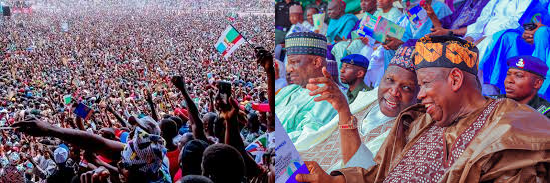
In Nigeria, politics has unfortunately become synonymous with power grabs, grandstanding, and empty promises. Our politicians, both elected and appointed, seem more interested in wielding the title of “leader” than embodying the essence of true leadership. While the facade of leadership is worn as a badge of honor, the practical results of governance are often lacking, leaving millions of Nigerians disillusioned. This begs the question: “when will Nigerian politicians stop acting like leaders and start governing as true ones?”
Throughout Nigeria, from the bustling streets of Lagos to the quiet villages that are located across the 774 local governments, political leaders abound, by title. We have governors, senators, members of the House of Representatives, and local government chairmen. On the surface, the architecture of leadership appears formidable, but scratch deeper, and the substance is missing. Leadership is not about the title one holds or the office they occupy. It is about the capacity to make tough decisions, the will to deliver results, and the commitment to prioritizing the needs of the people over personal gain. Unfortunately, many Nigerian politicians fall woefully short in these areas.
A leader is defined by their actions, not by their speeches or the size of their motorcade. Yet, we have witnessed countless politicians who deliver eloquent speeches, promising the moon, only to retreat into the comfort of luxury living once elected. The gap between their words and their deeds is glaring. They come across as leaders in their rhetoric, but in practice, they are missing in action where it matters most, delivering good governance.
One of the core problems with Nigerian politicians is the perversion of leadership from service to self-interest. Instead of focusing on solving the critical issues plaguing Nigeria, such as poverty, unemployment, insecurity, and corruption, many politicians are obsessed with consolidating power and amassing wealth. The offices they occupy are seen as stepping stones to personal enrichment, and the welfare of the people takes a backseat.
True leadership is about service. It requires empathy, sacrifice, and a deep understanding of the people you are elected to serve. Unfortunately, many of our politicians view public office as an opportunity to enrich themselves, their families, and their cronies. This is why political offices in Nigeria are so fiercely contested. When you observe the lengths to which politicians go to secure a position, it becomes clear that the motivation is not to serve the public but to protect their own interests. Leadership in Nigeria has become a means to an end rather than an opportunity to improve the lives of citizens.
Nigerians are no strangers to empty promises. During every election cycle, politicians inundate the public with pledges to fix roads, build hospitals, provide jobs, and eradicate poverty. They plaster their smiling faces on campaign posters, attend town hall meetings, and go on television to assure voters of the bright future ahead. But once the elections are over, those promises vanish into thin air.
Take, for example, the much-heralded promises of infrastructure development. Many Nigerian cities are littered with unfinished or poorly executed projects, roads that lead to nowhere, abandoned hospital buildings, and non-functional schools. Politicians cut ribbons and pose for photos at ground-breaking ceremonies, but when it comes to completing these projects, they are nowhere to be found. Leadership is not about starting things; it is about seeing them through to completion.
Another glaring example is the issue of job creation. Politicians regularly boast about creating millions of jobs, yet the unemployment rate continues to soar. Youth unemployment, in particular, has reached alarming levels, leaving millions of young Nigerians frustrated and hopeless. A true leader would prioritize the creation of sustainable economic opportunities, but many politicians are more interested in short-term solutions that serve their political expediency rather than long-term economic growth.
Perhaps the most disturbing aspect of Nigeria’s political class is their detachment from the realities facing the average Nigerian. While many Nigerians struggle to make ends meet in the face of rising inflation, insecurity, and a weak economy, our politicians live in a parallel universe of opulence and privilege. They are often chauffeured around in luxury cars, live in mansions, and receive salaries and allowances that are disproportionate to the economic realities of the country.
This disconnect breeds resentment. When politicians flaunt their wealth and live extravagantly, they alienate themselves from the people they claim to serve. How can a leader who has no idea what it means to queue for fuel, or experience power outages, or struggle to afford basic food items, truly understand the challenges faced by ordinary Nigerians? True leadership demands that politicians get in touch with the struggles of the people and work relentlessly to alleviate them. It is not enough to speak about the challenges of the masses from a distance; politicians must feel their pain and reflect it in their policies and actions.
There is a saying that “actions speak louder than words,” and nowhere is this truer than in leadership. Nigerian politicians need to lead by example. It is not enough to simply make promises; they must be willing to make the tough choices that result in tangible progress. This may involve cutting down on government waste, ensuring accountability in public office, and instituting policies that prioritize the welfare of the people over personal gain.
Furthermore, true leadership requires humility. Politicians must be willing to admit when they are wrong and make necessary adjustments to their policies. They must be open to feedback from the people and surround themselves with competent advisers who will help them make informed decisions.
If Nigerian politicians are serious about being true leaders, several things need to change. First, there needs to be a fundamental shift in the mindset of politicians. Leadership is not a title; it is a responsibility. Politicians must begin to see their role as servants of the people, not overlords. They must prioritize the needs of the public over their personal ambitions.
Second, transparency and accountability must be at the forefront of governance. Politicians should be held accountable for their actions and inactions. It is time to move away from the culture of impunity where politicians can make promises with no intention of fulfilling them.
In fact, there must be a genuine commitment to improving the lives of ordinary Nigerians. Politicians should focus on creating sustainable solutions to the country’s problems rather than temporary fixes that serve only to boost their popularity.
Finally, Nigerian politicians need to stop coming across as leaders and start practicing true leadership. The time for empty rhetoric and symbolic gestures is over. Nigerians are tired of the charade. What the country needs now are leaders who are willing to roll up their sleeves, make the tough decisions, and deliver real, tangible results that improve the lives of the people. Leadership is not about holding a position; it is about action, integrity, and service. It is time for Nigerian politicians to rise to the occasion and be the leaders they claim to be.